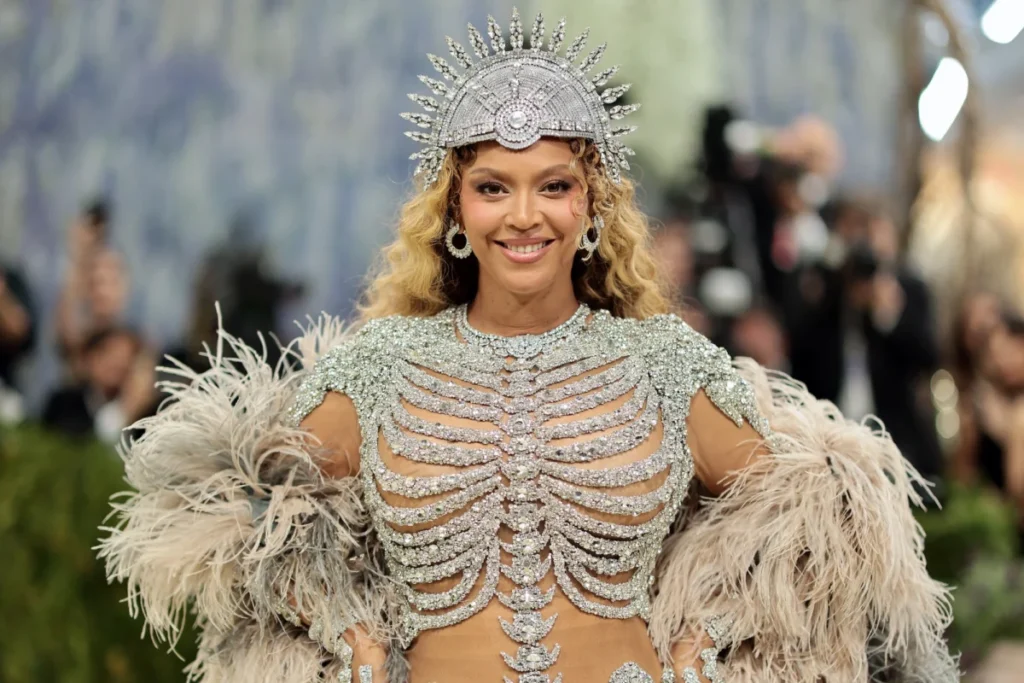
On September 4, as the world celebrated the birthday of one of the most influential entertainers in history, Beyoncé Knowles-Carter chose to shift the spotlight from her own milestones to a cornerstone of cultural preservation. Marking her 45th birthday, the global superstar announced a transformative $2 million donation to the Studio Museum in Harlem, a historic institution that serves as a lighthouse for Black artistic expression. This act of philanthropy, rather than a self-serving celebration, underscores the singer’s long-standing, often quiet commitment to the visual arts and her dedication to democratizing access to cultural narratives.
The Intersection of Music and Visual Art
For decades, Beyoncé has transcended the traditional boundaries of a pop star. Her career is not merely defined by record-breaking sales or Grammy dominance—she currently holds the record for the most Grammy wins of any artist in history with 35—but by a deliberate infusion of fine art into the mainstream consciousness.
Alongside her husband, the music mogul and ARTnews Top 200 collector Jay-Z, Beyoncé has curated a private collection that acts as a repository of Black history and contemporary excellence. Their involvement in the art world is neither passive nor peripheral; it is a fundamental aspect of their brand and their advocacy. The couple famously brought global attention to the Louvre in 2018, shooting their music video for "Apeshit" amidst the museum’s most sacred relics, effectively challenging the exclusionary history of Western art spaces.
This latest gift to the Studio Museum is a natural evolution of that narrative. By anchoring her birthday—a day usually associated with personal indulgence—to a $2 million investment in public art, Beyoncé is reinforcing the idea that art is a communal resource.
A Legacy of Stewardship: The Studio Museum in Harlem
To understand the weight of this donation, one must look at the trajectory of the Studio Museum in Harlem. Founded in 1968, the institution emerged from a grassroots effort to provide a dedicated space for Black artists at a time when the broader art world was largely indifferent to, or dismissive of, their contributions.
Operating initially out of a temporary space in a Fifth Avenue loft, the museum evolved into the definitive authority on art of the African diaspora. Its recent history has been defined by a bold physical and institutional expansion. In November, the museum unveiled its new $160 million home on 125th Street, designed by the world-renowned architect David Adjaye. The structure is more than just a building; it is a manifestation of the museum’s ambition to serve as a permanent, anchor institution for Harlem.
The building’s debut, following a seven-year closure, was met with critical acclaim. Maximiliáno Durán, writing for ARTnews, described the facility as "stunning," a sentiment echoed by the art community at large. The museum has recently cemented its status as a destination for masterpieces, notably receiving a significant gift of a Jean-Michel Basquiat painting from financier Joseph Perella and his wife, Amy, in 2023—a rarity in the institutional landscape of the United States.
The Philosophy of Access: Why the Studio Museum?
In a press release accompanying the announcement, Beyoncé articulated her rationale, grounding it in the necessity of storytelling.
"Art tells all our stories; the past and the present, but is not always accessible to everyone," the artist stated. "I have always been impressed with the Studio Museum in Harlem because of its intention to make the museum an integral part of the community. I have been introduced to several of my favorite young and upcoming Black artists through exhibits at the Museum. It is a place of inspiration where all audiences can discover new stories through the canvases of diverse storytellers that reflect our humanity."
This statement reflects a shift in how modern celebrity-philanthropists approach the arts. It is not just about the acquisition of blue-chip works; it is about the institution as a social mechanism. By funding the Studio Museum, Beyoncé is supporting an ecosystem that nurtures emerging talent, provides education, and facilitates the conversation between the artist and the public.
Official Responses and Institutional Impact
Thelma Golden, the director and chief curator of the Studio Museum, expressed profound gratitude for the contribution. Golden, a towering figure in the art world who has spent years steering the museum toward this moment of global prominence, noted that the gift carries symbolic weight beyond the dollar amount.
"I am deeply grateful to Beyoncé, both for the generosity of this gift, especially on her birthday, and for recognizing the vital role that the Studio Museum plays in people’s lives," Golden remarked. "Our institution was founded to shift the arts landscape and reimagine who that landscape serves. This gift will allow us to continue strengthening our work for Harlemites, New Yorkers, and audiences across the globe."
While the specific allocation of the $2 million remains under discussion, the infusion of capital into an institution that has just completed a massive capital project is critical. Such funds often provide the "runway" necessary for programming, community outreach, and the acquisition of new works, ensuring that the museum’s doors remain open and its exhibits remain inclusive.
Cultural Implications: The "Beyoncé Effect" on the Art World
Alex Greenberger, writing for ARTnews in 2020, aptly noted that "each time Beyoncé releases new music, it might as well be considered an art-world event too." The impact of her involvement in the art world is measurable. When she highlights a specific artist or institution, the "Beyoncé effect" creates a ripple of interest that transcends typical museum demographics.
Her 2020 visual album Black Is King was a deliberate synthesis of film, fashion, and fine art. By featuring the works of various Black creators and curators behind the scenes, she normalized the presence of Black excellence in high-art spheres. This $2 million gift is the financial counterpart to that artistic philosophy. It serves as a validation of the museum’s mission: that the Studio Museum is not merely a local Harlem institution, but a global cultural landmark.
Looking Ahead: Sustaining the Vision
The relationship between the Studio Museum and the art world’s most prominent figures—from collectors like the Carters to benefactors like the Perellas—signifies a changing tide. For decades, museums relied on a static donor base. Today, the focus has shifted toward institutional sustainability that reflects the diversity of the artists represented on the walls.
As the Studio Museum enters this new chapter in its David Adjaye-designed home, the challenges remain significant: maintaining the building, growing the collection, and continuing to host exhibitions that challenge the status quo. The works of Barkley K. Hendricks, Kerry James Marshall, Howardena Pindell, Faith Ringgold, and Carrie Mae Weems—all of which were highlighted during the museum’s grand reopening—are now part of a legacy that is better secured thanks to this birthday gift.
While the museum has yet to finalize the specifics of how these funds will be deployed, the gesture itself has already served a purpose: it has reignited a conversation about the role of the modern museum in society. By linking her personal milestone to the institutional health of a Black-centered cultural space, Beyoncé has once again redefined what it means to be a global icon in the 21st century.
In a city defined by its constant state of change, the Studio Museum in Harlem stands as a testament to the power of community, history, and, increasingly, the support of those who recognize that art is not a luxury—it is a necessity. As the institution looks toward its future, it does so with the backing of a partner who understands that the canvas of our humanity is constantly being repainted, and that it is the responsibility of those in power to ensure that the brushes remain in the hands of the storytellers.