By [Your Name/Journalist Name]
As the global art market pivots from the summer hiatus toward the high-stakes November auction season in New York, a quiet but fierce "consignment war" has erupted behind the scenes. At the center of this struggle is the estate of Herbert Lust, the legendary investment banker, scholar, and eccentric collector who passed away this May at the age of 99.
Lust, a fixture of the postwar art world for over seven decades, amassed a collection that was as vast as it was idiosyncratic. Now, sources familiar with the negotiations tell ARTnews that his estate is shopping approximately 300 pieces to the world’s leading auction houses, with a collective valuation estimated in the range of $60 million. The looming dispersal represents one of the most significant single-owner opportunities of the upcoming season, pitting the "rainmakers" of Christie’s and Sotheby’s against one another in a bid to secure a collection defined by deep intellectual curiosity and blue-chip pedigree.
Main Facts: The $60 Million Consignment
The Lust estate offering is a complex assembly of works ranging from modest day-sale items to "trophy" lots that could define the evening sales. Of the roughly 300 pieces currently on the table, approximately 10 are considered major works of international significance.
The undisputed crown jewel of the collection is a large sculpture by Alberto Giacometti, an artist with whom Lust shared a personal history. Other high-value works include pieces by Robert Indiana, Frank Stella, Mary Bauermeister, and Hans Bellmer. While the top lots will command eight-figure sums, the majority of the collection consists of modestly scaled works with lower price points, likely destined for the mid-season "Day Sales" where the volume of the Lust name will provide a significant provenance boost.
Lust was also known for his "obsessive" approach to specific artists. He famously claimed to own more works by the Surrealist Hans Bellmer than the top four global museums combined. This depth—rather than mere breadth—makes the estate particularly attractive to auction houses looking to curate specialized sections within their November catalogues.
Chronology: A Century of Collecting and Connection
To understand the significance of the Lust collection is to understand the man himself, whose life spanned nearly a century of art history.
- 1949: The Paris Awakening. Lust arrived in Paris on a Fulbright scholarship. It was here that he first encountered the European avant-garde. Initially, he found the attenuated, skeletal figures of Alberto Giacometti "awful." However, after immersing himself in the Existentialist writings of Jean-Paul Sartre, Lust had an intellectual epiphany. He realized that if the leading thinkers of the era hailed Giacometti as a genius, the fault lay in his own perception. He soon began acquiring Giacometti’s work, eventually becoming a close acquaintance of the artist.
- The Postwar Decades: Building the "Storeroom." Over the next 50 years, Lust balanced a successful career in investment banking with a relentless pursuit of art. His collecting was not driven by market speculation but by "love"—a word he frequently used to describe his acquisitions. He moved comfortably between the worlds of European Surrealism and American Pop and Minimalism, befriending artists like Robert Indiana and Alexander Calder.
- 2017–2019: The Sotheby’s Courtship. Recognizing the value of the Lust holdings, Sotheby’s began a multi-year campaign to cultivate a relationship with the collector. In 2017, the house successfully auctioned 27 works by Robert Indiana from his collection. In 2019, they produced a documentary-style film at his home in Greenwich, Connecticut, where a 93-year-old Lust "held court" surrounded by a staggering density of masterpieces.
- 2020: Philanthropic Dispersal. In his later years, Lust began thinning his collection through significant museum donations, including a massive gift of photography to the Hirshhorn Museum and a diverse array of works to the Tel Aviv Museum of Art.
- May 2024: The Passing of a Titan. Herbert Lust died at age 99, leaving behind a residuary estate that remains one of the last great "undiscovered" private troves of his generation.
Supporting Data: The Giacometti Factor and Market Comps
The financial success of the Lust estate sale will largely hinge on the performance of the Giacometti sculpture, identified as an edition of Figure, demie grandeur.
The Trophy Lot
The work in question is a bronze sculpture, approximately 45 inches tall, conceived in 1964. According to the Giacometti Foundation, these were produced in an edition of six. Lust once described this specific work as "the only nude [Giacometti made] that has a real face."
Market analysts point to several "comparables" to estimate its potential value:
- Femme de Venise III (1958): A 46-inch bronze that sold for $25 million at Christie’s New York in 2022.
- Femme Leoni (1947/1960): A five-foot standing figure that fetched $28.4 million at Sotheby’s in 2023.
- L’Homme au doigt (1947): While a different series, this remains the gold standard for Giacometti, having sold for $141 million in 2015.
Given the provenance of the Lust collection and the rarity of the Figure, demie grandeur edition, the sculpture is expected to be a primary driver of the $60 million total estimate.
The Bellmer and Indiana Markets
Lust’s pragmatism was famously summarized in his quip that he could buy "50 great Bellmers for the price of one great Magritte." By cornering the market on Hans Bellmer, Lust became the primary source for the artist’s "Die Puppe" (The Doll) series and related drawings. While Bellmer’s market is more niche than Giacometti’s, the sheer volume of high-quality examples in the Lust estate could create a "market moment" for the artist this November.
Official Responses and Auction Dynamics
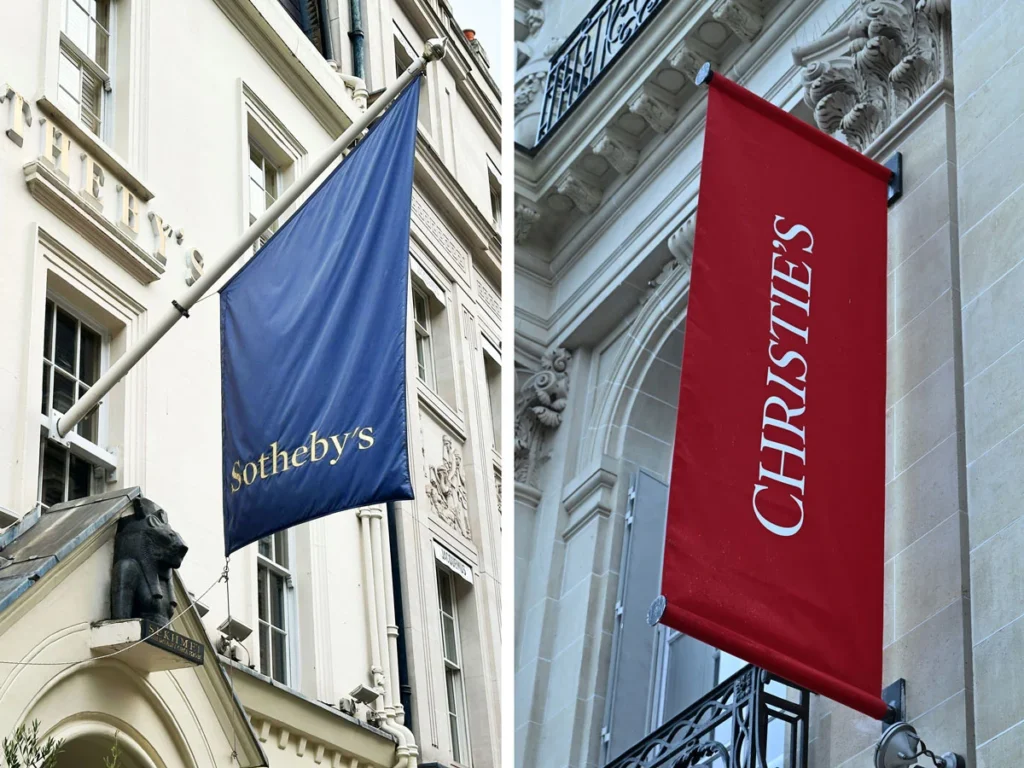
As is standard during active negotiations for major estates, both Christie’s and Sotheby’s have officially declined to comment on their pursuit of the Lust collection. However, industry insiders suggest that Sotheby’s may have a strategic advantage.
The 2019 Sotheby’s documentary and the 2017 Indiana sale indicate a deep-seated institutional knowledge of the collection. Furthermore, the estate’s executors are likely weighing the benefits of "guarantees"—financial arrangements where the auction house (or a third party) promises a minimum sale price to the estate regardless of the bidding outcome. In a fluctuating market, such guarantees are often the deciding factor in where a $60 million collection lands.
The Philanthropic Footprint
While $60 million worth of art is headed for the auction block, it is important to note that Lust had already secured his legacy through massive institutional gifts.
The Tel Aviv Museum of Art has been the primary beneficiary, receiving over 200 Giacometti works, five Bellmers, and three Man Rays over several decades. In the United States, the Hirshhorn Museum and Sculpture Garden received a landmark gift of 70 photographs in 2020, including works by Berenice Abbott and Henri Cartier-Bresson.
This October, the Hirshhorn will debut "Carlotta Corpron: Light Is a Plastic Medium," an exhibition featuring 54 recent gifts from Lust. These donations ensure that while the "trophies" may disappear into private hands this November, Lust’s scholarly contribution to the history of photography and Surrealism will remain accessible to the public.
Implications: A Litmus Test for the Modern Market
The dispersal of the Herbert Lust collection serves as a critical litmus test for the "Post-War and Contemporary" category.
- Provenance Premium: In an era where the market is increasingly selective, "fresh-to-market" works from a renowned, eccentric collector like Lust often command a premium. Collectors are willing to pay more for works that have been "off the grid" for decades in a private home rather than those that have frequently cycled through galleries.
- The "Middle Market" Challenge: While the $25 million Giacometti will likely find a buyer, the 290 more "modest" works will test the depth of the middle market. If these works perform well, it will signal a healthy recovery for the art trade; if they struggle, it may indicate that buyers are only interested in "masterpiece" level assets.
- The End of an Era: Lust was one of the last collectors who bought directly from the giants of the 20th century. His passing and the subsequent sale of his collection represent the final closing of a chapter on the "Fulbright generation"—those American intellectuals who bridged the gap between European Modernism and the New York school.
As November approaches, the art world waits to see which house will raise the gavel on the Lust estate. Regardless of the venue, the sale marks the final act for a man who famously advised: "Always buy what you love." For the buyers at the upcoming auctions, that love will come with a multi-million dollar price tag.