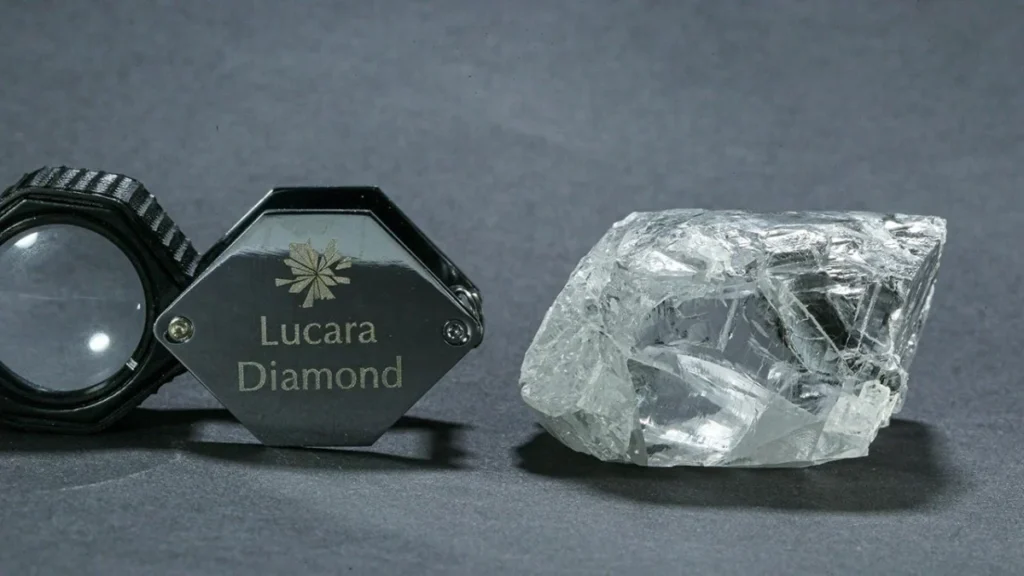
In the volatile landscape of the global diamond market, resilience is often measured not by the absence of challenges, but by the ability to maintain long-term strategy in the face of temporary disruption. Lucara Diamond Corp., the Vancouver-based mining firm renowned for its high-value assets in Botswana, has signaled this resilience by reaffirming its full-year revenue forecast, despite a challenging start to the 2024 fiscal year marked by environmental hurdles and lower-grade ore processing.
While the company reported a notable decline in first-quarter revenue—a result of severe weather impacting operations at its flagship Karowe mine—management remains steadfast in its belief that the annual revenue will land between $100 million and $130 million. This optimism is anchored in a projected shift in operational focus, as the company prepares to transition back to higher-quality mining areas in the coming months.
Main Facts: A Snapshot of Q1 Performance
The first quarter of 2024 proved to be a testing period for Lucara. The miner reported a revenue of $21.8 million for the three months ending March 31, representing a 28% decline compared to the same period in the previous year. This downturn was largely attributed to a decrease in the proportion of large, high-value stones supplied through its long-standing offtake agreement with HB Antwerp.
Despite the drop in revenue, the operational metrics painted a complex picture. The volume of carats sold actually increased by 9% to 79,744 carats. This paradox—higher sales volume coupled with lower total revenue—is a direct consequence of the "run-of-mine" (ROM) stockpile processing necessitated by the suspension of primary pit operations. When a miner is forced to rely on stockpiles rather than active, high-grade ore, the average value per carat inevitably fluctuates, even if total volume remains high.
The financial fallout was more pronounced on the bottom line. Lucara reported a net loss of $14.6 million for the quarter, a significant widening from the $100,000 net loss reported in the same period last year. This deficit highlights the elevated costs of maintaining operations while navigating significant logistical and environmental obstacles.
Chronology of Disruption: The Path to Q1 Results
To understand the current state of Lucara’s operations, one must look at the timeline of events that defined the first quarter.
The Weather-Induced Operational Pivot
The primary driver of the quarter’s difficulties was the extreme weather encountered in Botswana. Elevated water levels in the open-pit section of the Karowe deposit forced the company to suspend traditional mining activities. These conditions are not merely a nuisance; they are a logistical threat that compromises safety and extraction efficiency.
To maintain continuity, Lucara pivoted to processing ROM stockpile material. While this decision ensured that the processing plant did not sit idle, the trade-off was a reduction in the average quality of the recovered diamonds. The ROM material, which had been previously set aside, generally does not contain the same concentration of "specials"—stones weighing 10.8 carats or more—that the primary pit offers.
The Recovery Window
Looking forward, the company has communicated a clear timeline for normalization. The operational strategy hinges on returning to the higher-quality ore zones within the pit. Lucara anticipates this transition will occur during the second quarter. As the water levels recede and the company clears the logistical backlog, the return to high-grade mining is expected to provide the influx of premium-quality diamonds necessary to meet the annual revenue guidance.
Supporting Data: Dissecting the Numbers
A deeper dive into the numbers reveals the nuances of Lucara’s sales channels and the state of its diamond recovery.
Sales Channels and HB Antwerp
Lucara utilizes a tripartite sales strategy:
- Quarterly Tenders: Allowing for competitive market pricing.
- Clara Digital Platform: A proprietary, AI-driven platform that matches buyers with specific rough diamonds, reducing friction in the supply chain.
- HB Offtake Agreement: A strategic partnership with HB Antwerp for all stones exceeding 10.8 carats.
The HB channel, historically the backbone of Lucara’s revenue, accounted for 62% of total sales in Q1. While this is down slightly from 64% a year ago, the revenue generated from this channel fell 30% to $13.6 million. The decline is not a reflection of a breakdown in the partnership, but rather a reflection of the "inventory mix." Because the company was processing lower-grade stockpiles, it recovered fewer large stones that would typically be channeled into the HB contract.
Recovery Statistics
The "specials" are the lifeblood of the Karowe mine. During the first quarter, the company recovered 100 special-sized stones, a significant decrease from the 139 recovered during the same period in 2025. Among these, five diamonds exceeded 100 carats.
Notably, the company unearthed a 36.92-carat blue, Type IIb diamond. Such discoveries are rare and serve as a reminder of the mine’s geological potential. Even in a quarter defined by processing lower-quality stockpiles, the Karowe deposit continues to yield high-value, rare stones, bolstering confidence in the mine’s long-term viability.
Official Responses and Strategic Outlook
In its formal disclosure, Lucara Diamond Corp. emphasized that the first quarter’s performance was an anomaly created by external factors rather than a systemic decline in asset value.
"The focus remains on the transition back to high-grade ore," a company representative indicated in their recent news release. By maintaining the annual revenue forecast of $100 million to $130 million, the executive team is signaling to shareholders that the second, third, and fourth quarters are expected to outperform the first significantly.
The company is also leaning heavily into its digital transformation. The Clara platform remains a key strategic pillar, providing the company with a buffer against the volatility of traditional auction markets. By digitizing the rough diamond buying process, Lucara can maintain tighter margins and better inventory control, even when the overall diamond market faces headwinds.
Implications: What This Means for the Market
The current situation at Lucara offers a window into the broader challenges facing the diamond mining industry.
The Volatility of "Specials"
The mining of high-value diamonds is a high-stakes endeavor. Unlike gold or base metals, where value is largely tied to weight and purity, the diamond market is hyper-sensitive to the specific characteristics of individual stones. A single "special" can dramatically alter a quarter’s financial report. When weather or technical difficulties prevent the recovery of these stones, companies like Lucara face outsized revenue swings.
Resilience Through Diversification
Lucara’s revenue mix—balancing the stability of the HB contract against the agility of the Clara platform—is designed to withstand such fluctuations. However, the Q1 results underscore that even a diversified strategy is vulnerable to fundamental operational failures at the mine site. The ability to return to the pit in Q2 is now the most critical catalyst for the company’s stock and investor sentiment.
Industry-Wide Trends
The global diamond industry is currently grappling with a "wait and see" approach from major consumers and a softening in demand for luxury goods. For mid-tier miners like Lucara, the pressure to demonstrate consistent production is immense. If the company successfully hits its $100 million-plus revenue target, it will likely be viewed as a success story in operational recovery. If the weather-related delays persist into the second half of the year, however, the narrative may shift toward more cautious financial outlooks.
Conclusion: The Path Forward
Lucara Diamond Corp. stands at a crossroads. The first quarter of 2024 was undeniably difficult, characterized by the realities of environmental volatility and the limitations of stockpile processing. Yet, the underlying geological quality of the Karowe mine remains intact, and the company’s operational roadmap for the remainder of the year provides a clear path to recovery.
The recovery of the 36.92-carat blue diamond serves as a potent reminder of why the Karowe mine remains a globally significant asset. As the company moves to resume operations in the primary pit, the focus for investors and industry analysts alike will be on the volume and quality of "specials" recovered in the coming months.
In the diamond industry, patience is as valuable as the stones themselves. Lucara’s decision to hold its full-year guidance steady suggests that the company is not merely weathering a storm, but actively preparing for a period of renewed productivity. Whether they can deliver on this promise will depend on the stability of the Botswana environment and the consistency of the geological yield in the quarters to come. As it stands, the company’s strategy remains clear: navigate the temporary, leverage the digital, and wait for the high-grade recovery that defines the Karowe legacy.