
In the rapidly evolving landscape of enterprise technology, few subjects have commanded as much attention—or generated as much anxiety—as the rise of artificial intelligence. While the initial wave of AI integration focused on generative models and basic automation, the current frontier is dominated by "agentic AI"—autonomous systems capable of executing complex workflows, making decisions, and interacting with sensitive data with minimal human oversight.
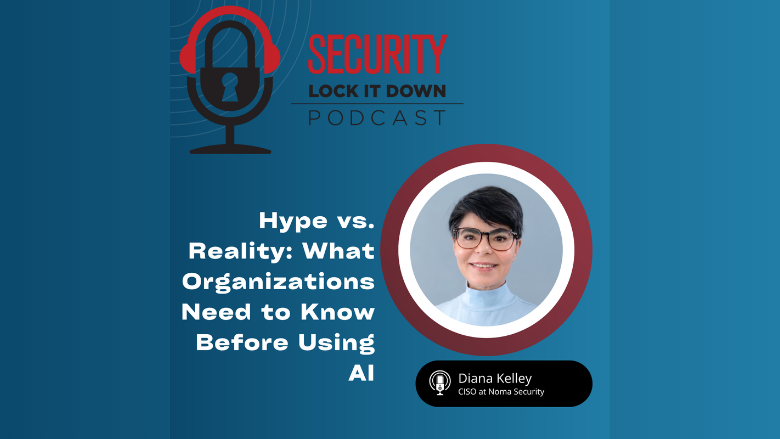
In the latest episode of Lock It Down with Security Magazine, I had the privilege of sitting down with Diana Kelley, Chief Information Security Officer (CISO) at Noma Security, to dissect the critical gap between AI hype and operational reality. As organizations scramble to remain competitive, the question is no longer if they should implement AI, but how they can do so without compromising their security posture.
The Evolution of the AI Frontier
Nearly a year ago, Kelley and I explored the nascent stages of agentic AI. At the time, the conversation centered on the theoretical benefits and the foundational risks associated with delegating tasks to autonomous agents. Today, the landscape has shifted from theory to widespread adoption.
Recent industry data suggests that over 90% of organizations are currently utilizing or actively planning to deploy AI agents for tasks ranging from automated IT support to sensitive security operations. This rapid acceleration has outpaced the development of comprehensive security frameworks, leaving many enterprises exposed. The core challenge lies in the "black box" nature of these systems—when an AI agent makes a decision, do we have the visibility to understand why it made that choice?
Chronology of Adoption: From Experimentation to Integration
To understand the current state of AI readiness, we must look at how the corporate adoption curve has unfolded:
- Phase One: The Generative Surge (2023): Organizations began experimenting with Large Language Models (LLMs) for content creation and coding assistance. The primary risk profile was limited to data leakage via public chatbot interfaces.
- Phase Two: Tooling and Integration (Early 2024): Companies moved toward integrating AI into existing software stacks (e.g., GitHub Copilot, Microsoft 365 Copilot). Security teams focused on access controls and prompt injection vulnerabilities.
- Phase Three: The Agentic Shift (Late 2024–Present): The current era involves agents that can traverse networks, access databases, and perform transactions—such as the recent headlines surrounding AI-driven stock trading and automated procurement. This phase demands a total re-evaluation of identity management and "least privilege" principles.
The Security Paradox: Balancing Innovation with Risk
During our discussion, Kelley emphasized that readiness is not a binary state. It is a continuous process of governance, visibility, and defensive engineering. "Organizations are often lured by the productivity gains of agentic AI," Kelley noted. "However, the security implications of granting an autonomous agent access to an internal API or a sensitive database are vastly different from using a simple chatbot."
The Core Risks of Agentic AI
- Privilege Escalation: If an agent is granted excessive permissions, a single vulnerability or "jailbreak" can allow an attacker to move laterally through the network.
- Shadow AI: Similar to the Shadow IT crises of the past decade, employees are increasingly deploying unauthorized AI agents to streamline their workflows, bypassing traditional security vetting processes.
- Data Poisoning: As agents rely on real-time data to make decisions, malicious actors may attempt to manipulate the datasets that these agents use, leading to biased or catastrophic operational decisions.
Official Perspectives: What Does Readiness Look Like?
For security leaders, the road to readiness involves a systematic audit of the AI lifecycle. Kelley advocates for a "Secure by Design" approach that includes:
- Inventory Management: You cannot secure what you cannot see. Organizations must maintain an exhaustive registry of all AI agents deployed across the enterprise, including their capabilities, access levels, and the data sources they interface with.
- Zero Trust for AI: We must stop treating AI agents as trusted internal entities. Instead, every action taken by an agent should be subject to Zero Trust verification, requiring authentication and authorization at every step of an autonomous workflow.
- Human-in-the-Loop (HITL) Controls: For high-impact decisions—such as financial transactions or changes to infrastructure configurations—there must be a mandatory human intervention step.
- Continuous Monitoring and Red Teaming: Traditional penetration testing is insufficient for AI. Organizations must invest in "Red Teaming" specifically for AI, simulating adversarial attempts to trick agents into performing unauthorized actions.
Implications for the Security Industry
The implications of this shift are profound. The role of the CISO is expanding to include "AI Governance," a discipline that requires a deep understanding of data science, machine learning models, and traditional cybersecurity.
Furthermore, the legal and regulatory landscape is tightening. With frameworks like the EU AI Act setting precedents, organizations will soon be held accountable for the "behavior" of their autonomous agents. Failing to implement robust guardrails is no longer just a technical oversight; it is a significant legal and financial liability.
Moving Beyond the Hype
The primary takeaway from my conversation with Diana Kelley is that the excitement surrounding AI must be tempered by a sober assessment of organizational maturity. Many companies are attempting to run before they can walk. Implementing AI agents without first hardening the underlying infrastructure is akin to building a skyscraper on a foundation of sand.

As we look toward the remainder of 2026 and beyond, the winners in the AI race will be those who prioritize resilience over velocity. Organizations that successfully integrate AI will be those that have mastered the art of "governed autonomy"—a state where agents can function effectively, but remain tethered to the security and ethical policies of the firm.
Key Questions Every CISO Should Ask Today:
- Do we know exactly which agents are currently accessing our production environment?
- Have we mapped the "blast radius" of every AI agent? If an agent were compromised, what is the maximum damage it could inflict?
- Do we have a clear incident response plan for AI-driven breaches, which may occur at machine speed?
Conclusion
The era of agentic AI is here, and it promises to transform every facet of the enterprise. However, the path to adoption is fraught with peril for the unprepared. By focusing on fundamental security hygiene, rigorous governance, and a culture of continuous learning, organizations can harness the power of AI without falling victim to its risks.
To hear the full, in-depth conversation with Diana Kelley, I invite you to listen to the latest episode of Lock It Down on the Security Magazine website or via Apple Podcasts. As the industry continues to navigate this technological frontier, remember: stay vigilant, stay informed, and always verify before you delegate.
Jordyn Alger is the managing editor for Security magazine. She specializes in the intersection of physical and cyber security, providing insights into the leaders and technologies shaping the future of the industry. For more expert analysis, follow Security magazine on all major podcast platforms.
Are you looking to share these insights with your team?
Professional reprints of this article, including high-resolution PDFs and custom-branded plaques for your office, are available through BNP Media. Contact us today to secure your copies.