In a brazen daylight operation that has sent shockwaves through the international art community, two unidentified men successfully executed a high-stakes heist at Vienna’s Museum of Applied Arts (MAK) this past Thursday. The target was a singular, priceless artifact: a platinum Van Cleef & Arpels diamond necklace once owned by Egyptian royalty. With the efficiency of professional thieves and the casual demeanor of ordinary tourists, the perpetrators bypassed security measures, shattered a display case, and vanished into the bustling streets of the Austrian capital before authorities could mount a response.
The theft marks a dark chapter for European cultural institutions, which have faced a recent resurgence in high-profile museum robberies. As the MAK shuttered its doors indefinitely, the incident has prompted a massive manhunt and a renewed debate over the security protocols governing the world’s most precious historical treasures.
The Anatomy of the Heist: A Chronology of Events
The precision of the theft suggests a level of planning that belies the simplicity of the execution. According to reports from the Austrian newspaper Kronen Zeitung and subsequent statements from the Vienna police, the events unfolded with terrifying speed during the museum’s regular operating hours.
The Entry
The two suspects entered the MAK museum as standard visitors. They did not wear masks or disguises, opting instead to blend into the crowd of tourists and art enthusiasts visiting the "Glanzstücke" exhibition. By moving through the museum during peak hours, the thieves utilized the chaotic environment of a public space to their advantage.
The Strike
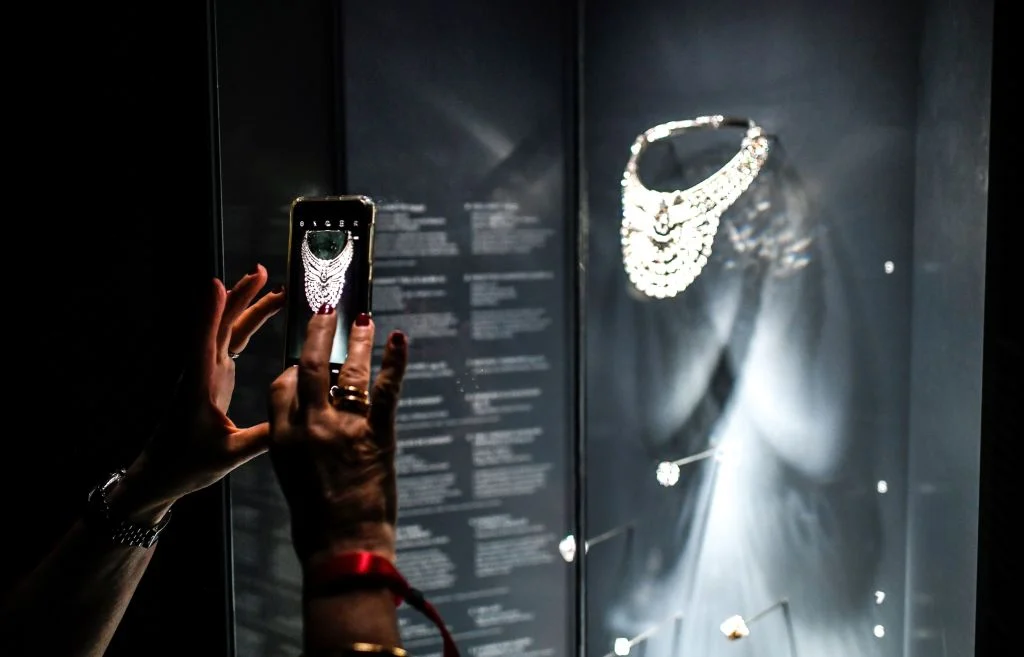
Upon reaching the section of the exhibition dedicated to the exquisite works of the French jewelry house Van Cleef & Arpels, the men identified their target: a historic platinum necklace. Armed with a hammer, the suspects abruptly smashed the reinforced glass display case. The sound of shattering glass—an anomaly in the hushed, reverent atmosphere of a museum gallery—was the only warning provided.
The Escape
The entire act, from the smashing of the case to the seizure of the necklace, lasted mere seconds. Before museum security could intervene or other visitors could fully process the gravity of the situation, the two men fled the building. There were no reported injuries to staff or patrons, as the thieves appeared intent solely on the acquisition of the jewelry, avoiding any physical confrontation. By the time police were notified, the suspects had successfully disappeared into the urban density of Vienna.
The Loot: A Treasure of Historical and Financial Magnitude
The stolen necklace is not merely a piece of high-end jewelry; it is a significant historical artifact with a provenance that links it to the highest echelons of 20th-century royalty.
Design and Composition
The piece is a marvel of mid-century craftsmanship. Composed of platinum and set with 673 individual diamonds, the necklace boasts a total weight of more than 200 carats. It was commissioned and designed by Van Cleef & Arpels, an institution synonymous with the pinnacle of luxury jewelry design.
Royal Provenance
The necklace carries an immense historical legacy, having been commissioned for the Egyptian royal family. It achieved international fame in 1939 when it was worn by Queen Nazli of Egypt at the wedding of her daughter, Princess Fawzia, to the then-Crown Prince of Iran, Mohammad Reza Pahlavi. The prince would later ascend to the throne as the last Shah of Iran. The necklace represents a bridge between two of the most influential monarchies of the 20th century.
Market Value
In 2015, the necklace made headlines at a Sotheby’s New York auction, where it fetched a staggering $4.3 million. However, experts in the art and jewelry trade note that the "market price" is often a poor reflection of the object’s true value. Given its historical significance, unique design, and the rarity of the diamonds involved, the piece is effectively "un-sellable" on the open market. Its provenance makes it an instantly recognizable item that would trigger an immediate international alert if brought to any reputable auction house or private buyer.
The "Glanzstücke" Exhibition: A Curatorial Masterpiece
The stolen item was the centerpiece of the MAK’s "Glanzstücke" (Masterpieces) exhibition. This ambitious show, which opened in June, was designed to create a dialogue between the opulent, delicate jewelry of Van Cleef & Arpels and the broader, more industrial design objects within the MAK’s permanent collection.
The exhibition featured roughly 500 objects, including over 300 pieces from the French jewelry house and 200 from the museum’s own holdings. The goal was to showcase the interplay between fashion, status, and industrial artistry. The exhibition was scheduled to run through September 27; however, in the wake of the theft, the MAK has announced that the entire exhibition is closed indefinitely. The museum has remained tight-lipped regarding the future of the show, citing the ongoing police investigation as the primary reason for their silence.
Official Responses and the Investigation
Vienna law enforcement has initiated a massive, multi-agency investigation. Forensic teams have spent the last 48 hours combing the gallery for physical evidence, while cyber-crime units are performing a frame-by-frame analysis of the museum’s surveillance footage.
The Surveillance Lead
Unlike many sophisticated museum heists, the thieves made no attempt to conceal their faces. High-definition security cameras captured clear imagery of both men. Police have released these images to the public in hopes that facial recognition technology or tips from the public will lead to their identification.
The Balkan Connection
According to reports from Kronen Zeitung, investigators are currently exploring the theory that the theft was a contract job. There is speculation that the heist may have been commissioned by a sophisticated criminal syndicate based in the Balkans, known for specializing in the movement of high-value stolen goods across borders. While the police have not officially confirmed this theory, the professional nature of the strike—combined with the speed of the exit—points toward a well-organized criminal network rather than opportunistic thieves.
Implications: A Global Crisis in Museum Security
The heist at the MAK is the latest in a series of high-profile thefts that have rattled the global art world. It forces a difficult conversation about the balance between "public access" and "security."
The Shadow of the Past: The Saliera Heist
The current event inevitably draws comparisons to one of Austria’s most infamous cultural crimes: the 2003 theft of Benvenuto Cellini’s Saliera. In that incident, a thief famously scaled scaffolding surrounding the Kunsthistorisches Museum, entered through a window, and stole the gold-and-enamel masterpiece, which was valued at roughly $58 million. While the Saliera was eventually recovered three years later, the theft left a lasting scar on the Austrian cultural sector and forced a radical overhaul of museum security standards across the country.
The Paris Precedent
The Vienna incident also arrives less than a year after a shocking robbery at the Louvre in Paris. In October 2025, thieves breached the museum’s Galerie d’Apollon, making off with eight pieces of the French crown jewels, including items associated with Empress Eugénie and Queen Marie-Amélie. That heist, which took less than eight minutes, resulted in the loss of items valued at $102 million. The recurring nature of these thefts suggests that criminals are becoming increasingly adept at identifying gaps in the security of even the most prestigious institutions.
The Future of Exhibition Design
Museums are now facing an existential dilemma. The modern visitor expects an immersive, close-up experience with historical artifacts, often demanding that objects be displayed in ways that allow for detailed viewing without thick barriers. However, the MAK heist proves that such accessibility comes at a cost. Security experts are now predicting a shift toward more restrictive viewing practices: the return of thick, bulletproof glass, increased armed presence in galleries, and the potential for digital replicas to replace original items in public view.
As the hunt for the two men continues, the international community watches with bated breath. For the MAK, the immediate focus is on the return of a stolen royal treasure. For the broader museum community, the incident is a sobering reminder that the more precious the history, the more vulnerable it remains to the greed of the present.