
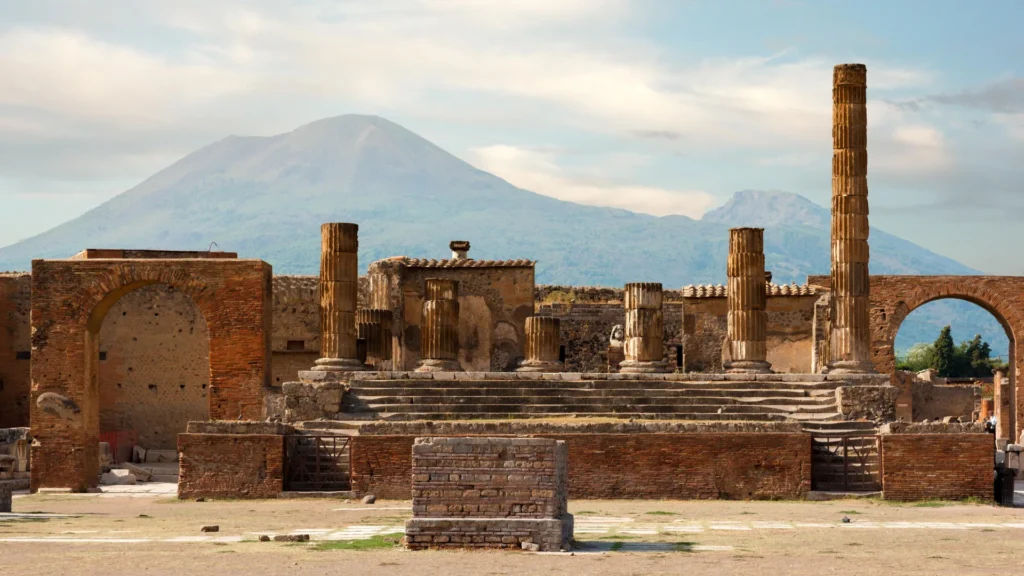
Nearly two millennia ago, the sky above the Bay of Naples turned to ash. Pliny the Younger, observing the cataclysm from across the water, chronicled the fury of Mount Vesuvius—an eruption that claimed the life of his uncle, the elder Pliny, and entombed the Roman cities of Pompeii and Oplontis in a time capsule of volcanic debris. Today, that ancient disaster is serving a purpose far beyond historical preservation. Researchers from the Berkeley Geochronology Center (BGC), UC Berkeley, and the University of Padua have utilized this historical benchmark to achieve a breakthrough in argon-argon dating, a cornerstone technique for determining the age of rocks and volcanic events.
Published in the journal Science Advances, this study represents a milestone in geochronology. By calibrating the argon-argon method against the historical eruption date of 79 CE, scientists have significantly tightened the precision of one of Earth science’s most vital "clocks." This development promises to refine our understanding of everything from the timing of mass extinctions to the volcanic hazards facing modern, densely populated regions.
A Convergence of History and Hard Science
At the heart of the research is the quest for "precision" and "accuracy"—two concepts that are often conflated but distinct. Accuracy refers to how close a measurement is to the "true" age of an event, while precision reflects the reproducibility of that measurement. In the world of geology, where researchers attempt to piece together the sequence of Earth’s history across millions of years, the gap between a guess and a precise measurement can define the difference between understanding a phenomenon and merely speculating about it.
"If you want to put together the eruptive history of a volcano in relatively recent time, precision and accuracy really count," said Paul Renne, study leader and director of the Berkeley Geochronology Center. "The study shows that you can achieve that kind of highly useful precision and accuracy into the historical realm."
To test the recalibrated method, the team analyzed eight samples of sanidine—a potassium-rich volcanic mineral—collected from the deposits of the 79 CE Vesuvius eruption. The resulting measurements placed the eruption at 1,938 ± 13 years before the 2025 analysis. When compared against the historical benchmark of 1,946 years, the results revealed a remarkable 0.7% precision and 0.4% accuracy, effectively turning a radioactive decay process into a precise historical instrument.
Chronology: From Roman Pumice to Modern Mass Spectrometry
The path to this calibration was a multi-decadal journey. The foundation was laid in 1997, when researchers from UC Berkeley first utilized sanidine from the 79 CE eruption to test the limits of argon-argon dating. At that time, they predicted that technological advancements would eventually allow them to reduce the uncertainty of their measurements to less than 1%.
It took nearly 30 years to reach that target, a process that required a blend of serendipity and modern analytical rigor. In 1998, co-author Andrea Marzoli of the University of Padua collected pristine pumice samples from Oplontis, a site buried during the earliest, most explosive phase of the Vesuvius eruption. Because magma chambers are stratified, potassium-rich magma—which is essential for accurate dating—often rises to the top and is expelled first. Consequently, the material found at the bottom of the ash layers is the most valuable for geochronologists.
These samples sat in storage for decades until a team of graduate students and researchers—including Caroline Hasler, Anthony Fuentes, and Andy Tholt—revisited the material. By combining these high-potassium samples with modern, ultra-sensitive mass spectrometers and updated neutron irradiation techniques, the team finally achieved the long-sought reduction in uncertainty.
Supporting Data: The Physics of Radioactive Decay
Argon-argon dating relies on the predictable radioactive decay of potassium-40 into argon-40. Because argon-40 is a gas, it is typically absent from volcanic minerals at the moment of an eruption. As the lava or ash cools, the clock begins to tick: potassium-40 atoms decay at a known rate, trapped within the mineral lattice.
To measure this, researchers expose rock samples to a nuclear reactor, which converts a portion of the non-radioactive potassium-39 into argon-39. By measuring the ratio of argon-40 (the product of decay) to argon-39 (a proxy for total potassium), scientists can calculate the age of the rock.
A critical variable in this equation is the "half-life" of potassium-40—the time it takes for half of the isotope to decay. Previous values, derived from nuclear physics experiments, carried significant margins of error. By using the Vesuvius eruption as a "fixed point" in time, the researchers were able to refine this half-life to 12.044 billion years, with an uncertainty of ± 0.088 billion years. This new value is twice as precise as the previous standard, providing a more stable foundation for every study that relies on this dating method worldwide.
Official Responses and Peer Perspective
The rigor of the study required a deep dive into historical records to ensure the "benchmark" itself was solid. A long-standing debate existed among historians regarding the date of the Vesuvius eruption. While Pliny the Younger’s letters point to August 24, some scholars have argued for a fall date, citing coins found in Pompeii that suggest a later timeframe.
Caroline Hasler took on the task of reconciling these discrepancies. By conducting a comparative analysis of Roman currency from that era, Hasler concluded that the coins in question were likely minted well before September, supporting the traditional August timeline. While the team allowed for a two-month window of uncertainty in their final model, this was sufficient to confirm the dating calibration without compromising the integrity of the physics involved.
"They came up with a Bayesian scheme—published in 2025—to intercalibrate these two most important geochronometers that we have, which have not been giving us consistent results over the years," noted Renne. This interdisciplinary approach, which merges historical analysis with Bayesian statistical modeling, represents the future of the field.
Implications: A New Era for Earth History
The implications of this research extend far beyond the slopes of Vesuvius. The ability to achieve decadal-level accuracy in volcanic dating is a game-changer for risk assessment. In regions such as Naples, Mexico City, and Yogyakarta, where millions live in the shadow of active volcanoes, understanding the frequency and timing of past eruptions is essential for predicting future threats.
Furthermore, the recalibrated argon-argon clock will serve as a vital anchor for other dating methods. It can now be used to verify radiocarbon dating—the standard for organic materials under 55,000 years old—and even assist in calibrating uranium-lead dating, which is used to measure the oldest rocks on the planet.
For Paul Renne, the ultimate goal is the unification of geologic dating. "We’re hoping to really unify as many geologic dating methods as we can by using the same mathematics, the same Bayesian approach, and just bringing more data, more raw observations into that mix," he said.
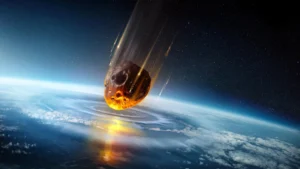
This work also mirrors previous high-profile studies from the Berkeley lab. A decade ago, Renne used argon-argon dating to link a massive meteor impact to the extinction of the dinosaurs. By proving that the asteroid strike and massive volcanic activity in India occurred within a narrow, critical window 66 million years ago, the team helped cement the "one-two punch" theory of the Cretaceous-Paleogene extinction. The new Vesuvius calibration ensures that as technology continues to evolve, our ability to map the causality of Earth’s most transformative events will become increasingly sharp.
As geologists look toward the future, the lessons learned from the 79 CE eruption serve as a reminder that history is not just found in books, but in the very strata of the Earth. By listening to the echoes of Vesuvius, modern science has ensured that the "clock" used to measure the history of our planet is more reliable than ever before.
This research was supported by the National Science Foundation (grants 2102788 and 2030393), the Ann and Gordon Getty Foundation, and the Berkeley Geochronology Center.