
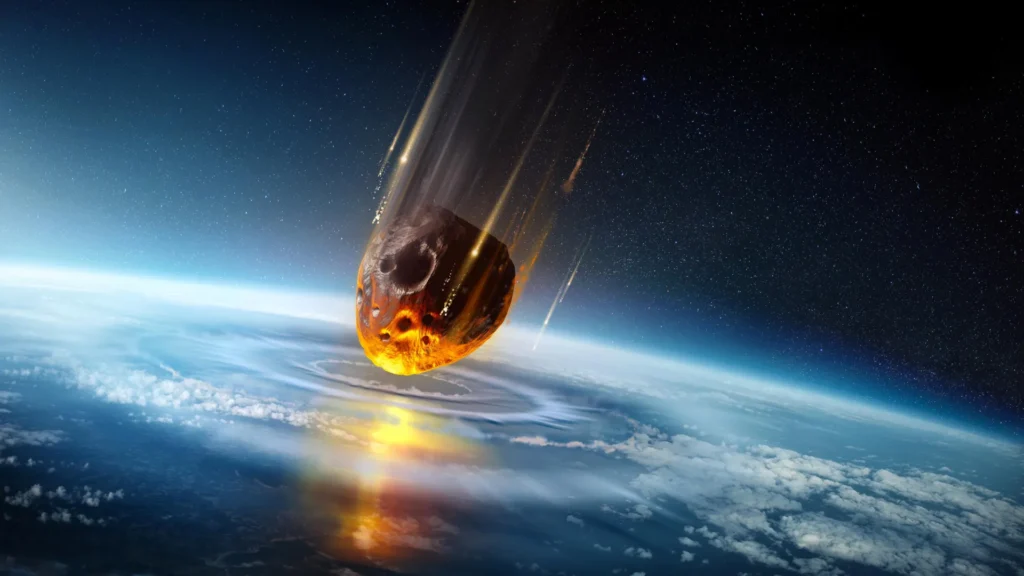
Deep beneath the rolling plains of Ames, Oklahoma, lies a geological ghost. For decades, scientists believed a massive meteorite slammed into this region during a pivotal moment in Earth’s ancient history—the Ordovician Meteor Event. However, a groundbreaking study from The University of Texas at Austin has fundamentally rewritten this narrative. By applying cutting-edge geochronology to microscopic crystals, researchers have discovered that the Ames impact is nearly 100 million years younger than previously assumed, potentially shifting our understanding of mass extinction events and the forces that shape our planet.
The Ames Crater: A Buried Titan
The Ames impact structure is not merely a scientific curiosity; it is a sprawling, multi-mile-wide scar hidden beneath layers of sediment. While invisible to the casual observer, the crater is well-known to the energy industry as a prolific reservoir for oil and natural gas. For geologists, the site has served as a primary case study for understanding crater formation and the distribution of impact-related materials.
For years, the scientific consensus placed the Ames impact alongside a cluster of other North American craters, all purportedly formed roughly 467.5 million years ago. This era, the Middle Ordovician, was characterized by a spike in documented impact sites, leading some researchers to propose a dramatic hypothesis: Earth may have once been ringed by a debris field, similar to Saturn’s rings, following the breakup of a massive asteroid. The Ames crater was long considered a cornerstone of this "Ordovician Meteor Event" theory.
Chronology of a Correction
The re-dating process began with a rigorous re-examination of the evidence. Historically, the age of the Ames crater was derived from "biostratigraphy"—the use of fossils found within the rock to estimate its age. Researchers had identified the teeth of conodonts, extinct eel-like marine creatures, preserved within the crater’s debris. Because these organisms were known to have lived during the Ordovician period, the crater was assumed to be of that same age.
However, the UT team, led by Associate Professor Elizabeth Catlos of the Department of Earth and Planetary Sciences, suspected a flaw in this logic. "The fossils were likely already millions of years old by the time the asteroid struck," Catlos explained. The impact, a violent cataclysm of heat and pressure, likely churned up ancient, fossil-rich sediment, mixing older biological material into the younger impact zone.
To bypass the limitations of fossil dating, the team turned to zircon crystals. Zircons are remarkably resilient, microscopic minerals that act as "geological clocks." By analyzing the radioactive decay of uranium into lead within these crystals, the team determined that the Ames crater was actually formed approximately 370 million years ago—during the Late Devonian period.
The Mechanics of Discovery: Zircon U-Pb Dating
The precision of this new timeline is owed to the sophisticated analytical techniques employed by the Jackson School of Geosciences. Danny Stockli, Dean of the Jackson School and a co-author of the study, emphasized that zircon U-Pb (uranium-lead) dating is the gold standard for chronometry in Earth sciences.
"These small crystals allow us to go back in time and learn about the major changes to Earth’s ancient landscapes," Stockli noted. To ensure the accuracy of their findings, the researchers collaborated with NASA to image the internal structure of the zircons. Using cathodoluminescence and electron backscatter diffraction, the team identified the tell-tale signature of an impact: the crystals had recrystallized in a unique pattern caused by the extreme pressures of the meteorite strike.
This structural evidence confirmed that the zircons were not merely "hitchhiking" in the rock from an earlier era; they were permanently altered by the specific event that created the Ames crater. This transition from fossil-based estimation to isotopic precision represents a massive leap forward in the geological record of North America.
Implications for Mass Extinctions
The shift in dating has profound implications for how we view the history of life on Earth. By moving the Ames impact from the Ordovician period to the Late Devonian, the researchers have placed the event in the vicinity of the Frasnian-Famennian extinction, one of the "Big Five" mass extinctions in Earth’s history. Occurring about 372 million years ago, this extinction event decimated marine ecosystems, and scientists have long debated whether it was triggered by internal planetary processes—such as massive volcanic eruptions—or by external cosmic forces like asteroid impacts.
"With this research, we’re basically taking a major pawn out of the Ordovician Meteor Event and dumping it into the Frasnian-Famennian event," Catlos said. By recalibrating the timing of the Ames impact, scientists can now more accurately investigate whether this specific crater played a role in the Late Devonian crisis.
This study invites a broader reassessment of other craters across the continent. If one major impact site was misdated by 100 million years due to the presence of older fossils, how many other sites have been incorrectly categorized? The research team advocates for a continent-wide re-evaluation of impact craters, suggesting that a more precise timeline is essential to distinguishing between the impacts of space debris and the influence of Earth’s internal volcanic cycles.
A Legacy of Discovery
The study, published in the July issue of Meteoritics & Planetary Science, is also a tribute to the collaborative and sometimes bittersweet nature of academic research. The project was originally spearheaded by Andrew Parisi, a graduate student at the Jackson School who graduated in 2018. Parisi was instrumental in obtaining the rock core samples from the Oklahoma Geological Survey and pioneering the initial extraction of the zircon crystals. His passing before the project’s completion marks the loss of a bright young mind in geosciences.
The team also included the late Michael Brookfield, an affiliated researcher whose expertise was vital to the study. Their contributions, alongside those of Research Professor Sean Gulick and Professor Emeritus Mark Cloos, have ensured that the Ames crater will no longer be a source of confusion in the geological timeline, but rather a beacon for future research.
Moving Forward: The Future of Impact Science
The re-dating of the Ames crater serves as a cautionary tale in paleontology and geology: proximity in the rock record does not always equate to coincidence in time. The "Ordovician Meteor Event" may still be a valid theory, but the Ames crater is no longer the evidence that supports it.
As the scientific community digests these findings, the focus will likely shift toward high-resolution mapping of other impact structures. The ability to use zircon imaging to verify the conditions of an impact allows researchers to untangle the messy, chaotic history of our planet’s surface.
"It would be great to do this for more of the meteor impact sites across the continent," Stockli remarked. "We need an accurate timeline to understand these major events." By refining our understanding of when these collisions occurred, we move closer to solving the larger puzzle of Earth’s evolution—a story written in stone, now being reread with far greater accuracy than ever before.
The Ames impact site, once thought to be a piece of a Saturn-like ring puzzle, has proven itself to be something even more significant: a key to unlocking the mysteries of the Frasnian-Famennian extinction and a testament to the power of modern geochronology. As researchers continue to analyze the remnants of our planet’s turbulent past, the "younger" Ames crater will remain a pivotal landmark in the narrative of life, death, and planetary transformation.