By Zaki Laïdi
October 12, 2026
Introduction: The Shadow Over the Élysée
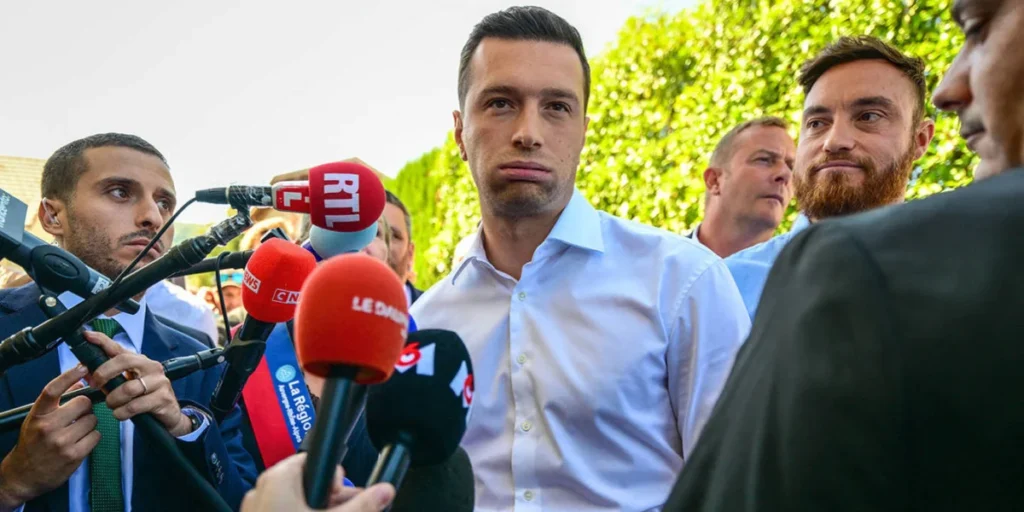
In the high-stakes theater of French politics, the National Rally (RN) has spent years cultivating an image of "dédiabolisation"—the strategic scrubbing of the party’s historical associations with extremism and antisemitism. Yet, as the 2027 presidential election approaches, this carefully constructed façade is showing severe structural cracks. At the center of this turmoil is Jordan Bardella, the party’s golden boy and Marine Le Pen’s designated choice for Prime Minister.
A recent scandal involving inflammatory and antisemitic remarks attributed to Bardella has sent shockwaves through the French political establishment. While the RN leadership hopes the controversy will dissipate into the static of the 24-hour news cycle, political analysts suggest that the incident may prove to be a defining moment. As Marine Le Pen eyes the presidency, she faces a precarious dilemma: maintain loyalty to her heir apparent or sacrifice him to preserve the legitimacy of her campaign.
Main Facts: The Anatomy of a Scandal
The controversy centers on a series of unearthed statements that critics argue reveal a persistent strain of antisemitism within the inner circles of the National Rally. Despite Bardella’s attempts to frame his political brand as modern, pragmatic, and centered on economic sovereignty and security, these comments have reignited long-standing fears regarding the party’s true ideological core.
For voters who have migrated toward the RN under the impression that it has shed its past, the revelations have served as a jarring reminder of the party’s roots. The scandal is not merely an isolated PR disaster; it strikes at the heart of the "respectability strategy" that Le Pen has employed to move from the political fringes to the gates of the Élysée Palace.
Chronology of the Controversy
To understand the gravity of the situation, one must look at the timeline of events that brought the party to this juncture:
- Spring 2026: Jordan Bardella solidifies his status as the public face of the RN, leading polling efforts and acting as the primary surrogate for Le Pen.
- Late Summer 2026: Investigative journalists begin circulating archival materials and digital records containing the controversial remarks.
- Early October 2026: The comments gain mainstream traction, dominating the front pages of major French dailies and sparking outrage across the political spectrum.
- October 10, 2026: The RN issues a formal statement denying the context of the comments, characterizing them as a "coordinated smear campaign" by political opponents.
- October 12, 2026: The scandal persists, with calls for an internal investigation mounting, even from within some factions of the right.
Supporting Data: The Electoral Landscape
The stakes of this scandal are amplified by the current electoral climate. According to recent data from the IFOP group (Baromètre de l’élection présidentielle), the National Rally is polling at historic highs. For the first time in the history of the Fifth Republic, a far-right candidate appears to have a clear, statistically significant path to the presidency.
However, the margin for error is razor-thin. The French electorate remains deeply polarized. While the RN’s base is galvanized, the "republican front"—the traditional coalition of voters who unite to block the far-right in runoff elections—is fragile. Should the scandal alienate the moderate, conservative voters whom Le Pen has spent years courting, the party’s polling lead could evaporate as quickly as it materialized.
The data suggests that while the "hard core" of the RN electorate is unlikely to abandon the party over these comments, the "soft" voters—those concerned with inflation, security, and immigration—are highly sensitive to accusations of bigotry.
Official Responses: The Fortress Mentality
The reaction from the National Rally leadership has been one of disciplined, if desperate, defense. Marine Le Pen has publicly stood by her protégé, characterizing the backlash as a predictable maneuver by an "establishment elite" terrified of the party’s inevitable victory.
"Jordan is the victim of a character assassination," a spokesperson for the RN stated. "The French people care about their purchasing power and the safety of their streets, not the dredging up of old, out-of-context remarks."
Conversely, the political opposition has been swift in its condemnation. Leaders from the Renaissance party and the Left-wing coalition have argued that the remarks prove the National Rally has not changed its spots. "This is the true face of the RN," remarked one high-ranking government minister. "To appoint such an individual as Prime Minister would be an affront to the values of the Republic."
Implications: Three Scenarios for the Future
As the dust begins to settle, three distinct scenarios emerge for the National Rally’s leadership, each with profound consequences for the 2027 election.
1. The "Ride it Out" Strategy
In this scenario, the party succeeds in drowning out the controversy with a pivot toward aggressive economic populism. If the media cycle moves on and the public’s attention shifts back to the cost-of-living crisis, the scandal becomes a historical footnote. Le Pen wins the election, and Bardella is appointed Prime Minister. This maintains the party’s current trajectory but leaves a permanent stain on the administration’s legitimacy, potentially sparking early protests and domestic instability.
2. The Strategic Sacrifice
If the polling numbers among moderate voters begin to slide, Le Pen may decide that Bardella has become a "toxic asset." In a cold-blooded political maneuver, she could distance herself from him, potentially appointing a more "technocratic" or "acceptable" face as her Prime Minister-designate. While this would solve the immediate PR crisis, it would create deep internal fissures within the party, alienating Bardella’s loyalist base and potentially causing the RN to fragment.
3. The Pyrrhic Victory
Perhaps the most dangerous scenario for the party is one where Le Pen wins the presidency, but the scandal creates a "lame duck" effect. If the public remains deeply distrustful of her inner circle, the newly elected government could face immediate gridlock in the National Assembly. A government led by a tainted Prime Minister might find it impossible to pass legislation, leading to a constitutional crisis or a snap election within the first year of her term.
Conclusion: The Test of Maturity
The Bardella scandal is more than just a momentary lapse; it is a stress test for the National Rally’s evolution. France is currently at a crossroads, and the way this controversy is resolved will signal whether the RN has truly matured into a governing party or if it remains trapped by the ghosts of its own past.
For Jordan Bardella, the path forward is narrow. He must navigate a media landscape that is no longer content to accept the party’s curated narrative. For Marine Le Pen, the challenge is even greater: she must decide whether the pursuit of power is worth the cost of the very people she has chosen to help her wield it.
As the spring of 2027 approaches, the French public will be watching closely. They are not just looking for a new leader; they are looking to see if the rhetoric of the National Rally matches the reality of its character. The scandal surrounding Bardella may be the first, but it is unlikely to be the last, hurdle for a party that is knocking harder than ever on the doors of power.
Zaki Laïdi is a columnist focusing on European politics and the evolving landscape of French democratic institutions.