

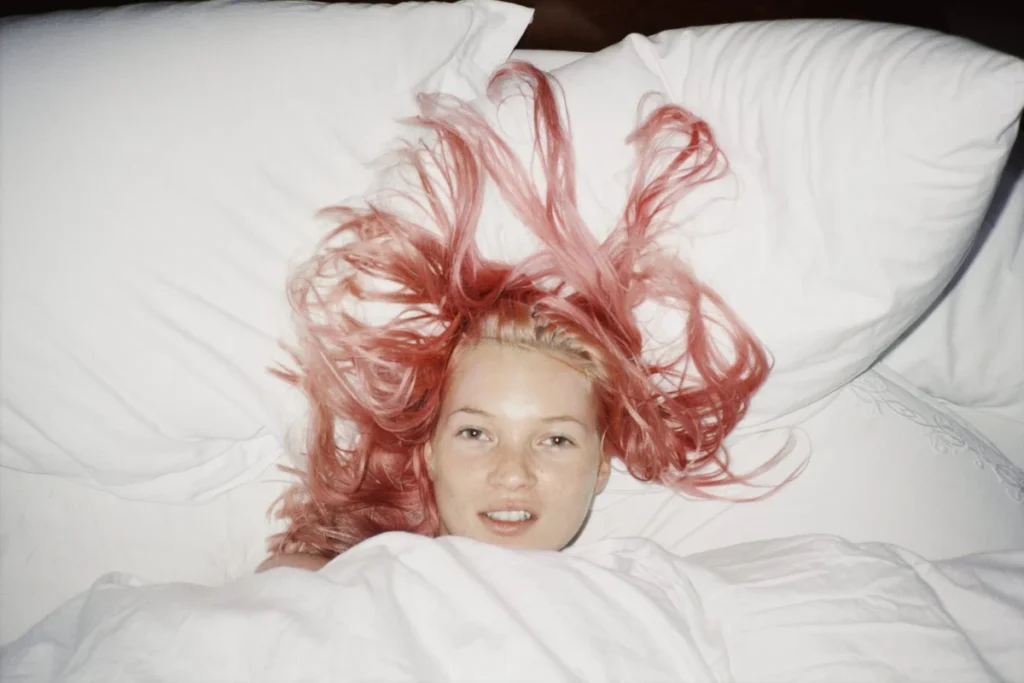
The fashion world had barely folded its tents in Paris following the conclusion of Louis Vuitton’s latest runway spectacle when the epicenter of cultural conversation shifted sharply to London. On Tuesday night, the doors of Tate Britain swung open for the highly anticipated—and intensely polarizing—exhibition, "The 90s: Art and Fashion."
The opening gala was a masterclass in cross-industry crossover, drawing a glittering crowd that bridged the chasm between high-concept galleries and the front rows of couture houses. Attendees included design luminaries such as Donatella Versace, Givenchy’s Sarah Burton, and Burberry’s Daniel Lee, alongside cultural titans like legendary photographer Ellen von Unwerth and British Museum director Nicholas Cullinan. The heavy concentration of fashion elite was hardly a surprise, given the exhibition’s primary curator: Edward Enninful. As the former editor-in-chief of British Vogue (2017–2024), Enninful is credited with infusing the legacy publication with a modern, inclusive, and unapologetically glamorous vitality. He led the curatorial charge alongside a team of Tate experts, including Jessica Vaughan, Helen Little, Dominique Heyse-Moore, Alex Farquharson, and Celeste McEvoy.
Yet, despite the A-list guest list and the prestige of the institution, the exhibition has ignited a firestorm of criticism within the British art press, raising fundamental questions about the intersection of commerce, curation, and historical revisionism.
A Chronology of the 1990s: From Thatcher to Britpop
To understand the friction surrounding the exhibition, one must first look at the decade it attempts to codify. The 1990s in Britain were a period of rapid, often volatile, transformation. Following the long shadow cast by the Thatcher era, the decade witnessed the rise of "Cool Britannia," a cultural renaissance fueled by the explosion of Britpop, the dominance of the Young British Artists (YBAs), and a radical shift in London’s nightlife and fashion scenes.
The exhibition attempts to trace this trajectory through a multi-disciplinary lens. It seeks to show how the raw, provocative energy of the art world—epitomized by Damien Hirst’s formaldehyde-preserved sharks and Tracey Emin’s unmade bed—fed into the aesthetic sensibilities of designers and photographers like Juergen Teller and Corinne Day. It is a portrait of a decade where the lines between the gallery, the nightclub, and the magazine page were not just blurred—they were obliterated.

Supporting Data: The Curatorial Intent
Behind the glossy marketing posters of Kate Moss, there lies a more nuanced curatorial agenda. Jessica Vaughan, one of the exhibition’s lead curators, argues that the show’s goal is not merely to rehash the well-trodden narrative of the white, male-dominated YBA scene. Instead, it aims to "spotlight Britain beyond the YBAs."
"The story of the YBAs is really well-known," Vaughan explained during an interview. "Some of the criticism we’ve received so far is that we haven’t included those big names enough. There are works by Tracey Emin and Damien Hirst there, but we just wanted to spotlight other artists who we didn’t think got their dues."
The exhibition deliberately pairs established giants with artists whose contributions have historically been sidelined, such as Hamad Butt, Eileen Perrier, Yinka Shonibare, and Barbara Walker. By doing so, the curators are attempting a structural re-evaluation of 1990s British art, moving away from the "provocation-for-provocation’s-sake" model and toward a broader, more representative history.
The Critics’ Verdict: A Divided House
The reception to this curatorial pivot has been sharply divided. On one side are the detractors, who argue that the exhibition fails the basic test of artistic rigor.
Waldemar Januszczak, chief art critic for The Times of London, was scathing in his assessment: "I expected a celebration of the Nineties—instead it was a fashion disaster." This sentiment was echoed by Jonathan Jones of The Guardian, who gave the show a brutal one-out-of-five-star rating. Jones argued that the exhibition lacks the breathing room required for artistic contemplation, noting, "This isn’t an exhibition, it’s a magazine spread. You leave as dissatisfied as you might after flicking through a 30-year-old copy of The Face in a dentist’s waiting room."

However, not all critics were as dismissive. The Daily Telegraph’s Alastair Sooke awarded the show five stars, describing the experience as one that left him "buzzing." Stephen Armstrong of The Independent similarly found depth in the curation, observing that "the hope on the walls of this five-star exhibition is heartbreaking."
The tension, it seems, lies in the delivery. While the marketing campaign—heavily focused on high-fashion photography—may have alienated those expecting a traditional, austere art historical survey, others argue that this crossover approach is exactly what makes the show relevant to a contemporary audience.
The Power of the Marginalized Narrative
One of the most compelling aspects of the exhibition is its focus on queer themes and the experience of inhabiting a marginalized body—narratives that were often buried beneath the sensationalist headlines of the 1990s art press.
A centerpiece of this focus is the work of Hamad Butt, a queer South Asian artist whose 1992 installation Familiars is included in the collection. The piece consists of vacuum-sealed glass bulbs containing toxic chemicals. It is a visceral, dangerous metaphor for the AIDS crisis, highlighting the tension between attraction and threat. The piece carries a dark history; when it was last shown at the Tate in the 1990s, a vial cracked, forcing a full gallery evacuation.
Similarly, the exhibition features Steve McQueen’s 1993 film Bear, which captures two Black men wrestling in a state of both combat and tenderness. By centering these works, the curators are correcting the record, demonstrating that the 1990s were not solely defined by the shock tactics of the YBAs, but also by profound explorations of identity, race, and sexuality.

Furthermore, the show addresses the female experience of the decade. Works like Sam Taylor-Johnson’s Fuck, Suck, Spank, Wank (1993) and Sarah Lucas’s Chicken Knickers (1997) serve as direct counters to the prevailing male-gaze imagery of the time. "We wanted to capture what it was to be a young woman at that time and to counter the images of Kate Moss by Corrine Day and others," Vaughan noted.
Implications: A Mirror to the Present
Perhaps the most significant aspect of "The 90s: Art and Fashion" is its unintended resonance with the current socio-political climate in the United Kingdom.
In a time where the UK is grappling with a shift toward right-wing populism—marked by recent massive donations to the Reform UK party—the exhibition’s focus on the post-Thatcher era feels eerily prescient. The rooms dedicated to disused urban spaces and the gritty realism of 1990s photography serve as a reminder of the cyclical nature of economic decay and cultural resilience.
Moreover, the exhibition serves as a memorial to a lost era of nightlife. With more than a quarter of London’s late-night venues shuttered between 2020 and 2025, the gallery’s homage to the diverse sounds of the 90s—from acid house to drum and bass—carries a heavy, poignant nostalgia.
Critics who dismissed the show as a "magazine spread" may have missed the point. By elevating the aesthetic of the 90s to the level of a high-art installation, the Tate is inviting viewers to consider how the "frivolity" of fashion and pop culture can, in fact, be the most effective mirror for our own political and social anxieties. Whether it is a "disaster" or a "revelation" depends largely on whether the viewer is looking for the art of the past or trying to understand the trajectory of the present. As the exhibition opens to the public today, it stands as a loud, messy, and undeniably vital contribution to the ongoing conversation about what defines the British cultural spirit.



