For decades, the “Big One” has been the terrifying centerpiece of Pacific Northwest folklore and geological forecasting—a looming magnitude 9.0+ megathrust earthquake along the Cascadia Subduction Zone (CSZ). However, a groundbreaking study published in the journal Geosphere suggests that the catastrophe we have been preparing for may be only the opening act of a much larger, multi-state geological nightmare. According to new research, a rupture in the Cascadia zone may possess the latent power to trigger a secondary, high-magnitude earthquake along California’s San Andreas Fault, effectively turning a regional disaster into a West Coast-wide tectonic collapse.
The Tectonic Architecture of the Pacific Rim
To understand the gravity of this discovery, one must first look at the complex tectonic "zipper" that defines the western edge of North America. North of Cape Mendocino, California, the Juan de Fuca plate is slowly diving beneath the North American plate, creating the Cascadia megathrust—a 600-mile-long fault line capable of producing the most powerful earthquakes on the planet.
South of this junction, the geological regime shifts dramatically. The Pacific and North American plates transition from a subduction interface to a transform boundary—the San Andreas Fault. Here, the two plates grind horizontally past one another, a movement that historically produces devastating, shallow-crustal events like the 1906 San Francisco earthquake.
For years, these two systems were treated by geologists as distinct entities. While both are recognized as high-risk, the idea that a rupture in one could influence the other was largely relegated to the realm of speculative fiction. That changed with a navigational mishap that altered the course of paleoseismology.
A Navigational Error That Rewrote History
In 1999, a team of researchers led by Dr. Chris Goldfinger, a prominent paleoseismologist at Oregon State University, embarked on a research cruise with a singular mission: to map the history of Cascadia earthquakes by extracting sediment cores from the seafloor. The sediment, they hoped, would act as a prehistoric ledger of past seismic activity.
However, the expedition took an unexpected turn when a graduate student inadvertently entered the wrong latitude into the ship’s navigation system overnight. By the time the sun rose, the research vessel was 90 kilometers south of its intended target, drifting into waters influenced by the San Andreas Fault rather than the Cascadia margin.
"When I woke up, I was pretty hot," Dr. Goldfinger recalls. "But, once we were there, I thought, ‘well, let’s take a core here.’" That moment of scientific pragmatism turned out to be the most significant decision of the expedition. The core taken from Noyo Canyon, near Fort Bragg, California, contained a history of tectonic violence that had remained hidden for millennia.
Deciphering the "Doublet" Mystery
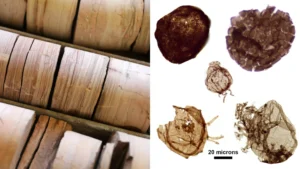
The Noyo Canyon core was a revelation. It contained a 3,000-year record of "turbidites"—sedimentary deposits formed when underwater landslides, triggered by intense seismic shaking, send torrents of sand and silt rushing down the continental slope.
Under normal conditions, a turbidite exhibits a specific grain-size gradation: heavier, coarser sand settles first at the bottom, with progressively finer silt and clay settling on top. However, the Noyo Canyon samples displayed a baffling anomaly: "doublet" events. These consisted of two distinct layers deposited in rapid succession. When the researchers compared these cores to samples taken from the Cascadia region to the north, they found the same double-layer pattern.
"There were these big, thick, sandy doublet events where it had a fine-grained element, and on top of it was a very coarse-grained sandy unit," Goldfinger explains. "We were just scratching our heads."
The team utilized radiocarbon dating to determine the age of these layers. The results were startling: the paired deposits from sites north and south of Cape Mendocino were contemporaneous. Within the margin of error, the sediment layers suggested that the two fault systems had been "talking" to each other for thousands of years.
The Theory of Seismic Coupling
The researchers hypothesized that the "doublets" were the physical signatures of a chain reaction. The first layer in the doublet, characterized by finer sediment, likely represented a Cascadia megathrust event that caused regional shaking. The second layer, a coarser, sandier unit, indicated a subsequent, high-energy rupture of the nearby San Andreas Fault.
The geological mechanism proposed is one of stress transfer. A magnitude 9 earthquake in Cascadia releases a staggering amount of energy, potentially destabilizing the crustal stress field in neighboring tectonic regions. If the San Andreas Fault is already "primed"—meaning it is nearing its own failure point due to the slow creep of tectonic plates—the shockwaves from a Cascadia event could be the proverbial straw that breaks the camel’s back.
The time interval between these events remains the most concerning variable. In some samples, the lack of intervening sediment suggests the second rupture followed the first within mere minutes or hours. In such a scenario, emergency responders would be hit by a secondary, devastating earthquake while still in the initial stages of assessing the Cascadia impact.
Implications for Emergency Management
The prospect of a "cascading earthquake" scenario forces a radical re-evaluation of disaster preparedness. Currently, state-level emergency response plans in Oregon, Washington, and California operate largely in silos.
If a megathrust event in the Pacific Northwest is followed by a major San Andreas rupture, the strain on national infrastructure would be unprecedented. The electrical grid, telecommunications networks, and supply chains—already crippled by the initial earthquake—would be subjected to a second, massive blow. Furthermore, search-and-rescue teams would be spread thin across a massive geographic area, potentially delaying aid to the most vulnerable populations.
Dr. Goldfinger’s personal assessment is blunt: "I’m from the Bay Area originally. If I were in my hometown of Palo Alto, and Cascadia went off, I think I would drive east. There looks to me like a very high risk the San Andreas would go off next."
Official Response and Scientific Caution
While the scientific community is taking the findings seriously, official bodies are cautioning against panic. The USGS and regional emergency management agencies emphasize that the study suggests a possibility rather than a certainty. The complex nature of fault mechanics means that a triggering event depends on the exact state of stress at the moment of the first quake.
Nonetheless, the study has reinvigorated the debate regarding multi-hazard planning. Dr. Goldfinger and his colleagues are now calling for updated risk models that account for the potential of "event sequences" rather than isolated quakes. This includes bolstering bridge reinforcement, updating building codes to handle multi-directional seismic stress, and developing cross-state response protocols that assume the worst-case scenario.
Conclusion: The New Frontier of Risk Assessment
The discovery of linked fault activity is a sobering reminder of the limits of human knowledge regarding the earth’s crust. What began as a simple navigational error has blossomed into a critical warning for the Pacific Coast.
As we look toward the future, the goal of seismology is shifting from merely predicting the "Big One" to understanding the interconnected nature of our tectonic environment. The Cascadia-San Andreas link is a testament to the fact that, in the high-stakes world of geology, the most dangerous events are often those we have yet to fully visualize. For those living along the Pacific coast, the research serves as a final, urgent prompt: preparation for a single disaster is no longer sufficient. We must now prepare for the possibility of a sequence of events that could redefine the geography of the American West.