The Arctic, often described as the "canary in the coal mine" for global climate change, is losing its frozen cover at a rate that has consistently outpaced the most sophisticated predictive models. Now, a groundbreaking study published in the journal Nature Geoscience suggests that the situation is even more dire than previously anticipated. By looking back 6,000 years into the Earth’s past, researchers have identified a systematic bias in current climate projections, revealing that the Arctic could lose approximately one million square kilometers more winter sea ice than earlier models suggested.
This discovery is not merely a quantitative update to climate statistics; it represents a fundamental shift in how scientists use paleoclimate evidence to calibrate the future of our planet. As the global community grapples with the erratic weather patterns of the 21st century, this study provides a crucial, high-resolution lens through which to view the coming decades.
Main Facts: The New Reality of Arctic Winter Decline
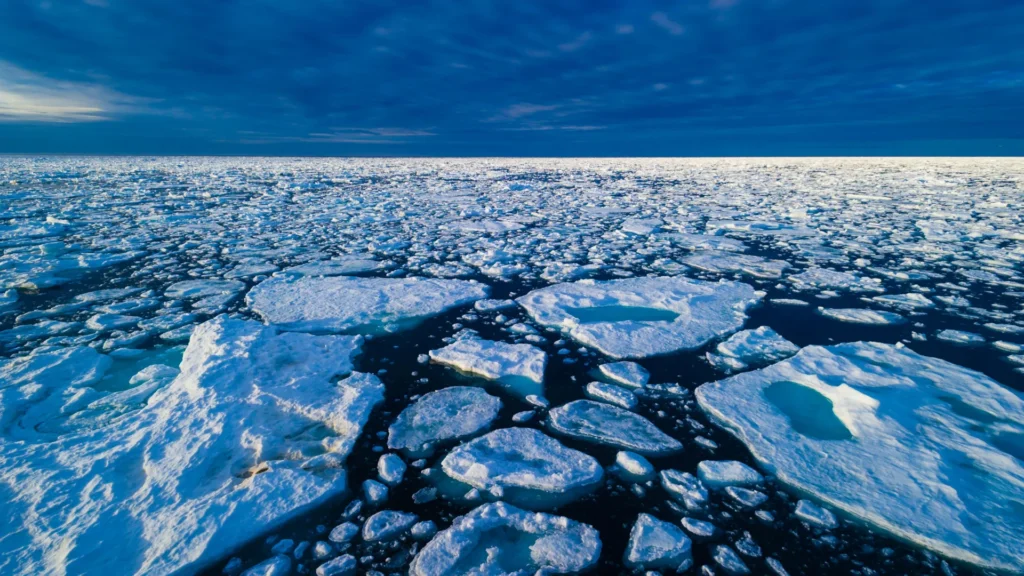
For years, the international climate science community has focused its gaze on the dramatic summer retreat of Arctic sea ice. The images of blue, open water where white, reflective ice once reigned have become a hallmark of a warming world. However, the winter season—when the Arctic is supposed to be in its state of maximum recovery—has been largely under-scrutinized.
The new research, led by a collaborative team from the University of Cambridge and Mexico’s Centro de Investigación en Matemáticas (CIMAT), highlights a critical discrepancy. While summer ice loss is stark, winter sea ice is essential for the thermal regulation of the Northern Hemisphere. The study reveals that current climate models have been consistently overestimating the resilience of this winter ice. By applying a statistical method known as "Bayesian weighting" to ancient sediment records, the researchers determined that the future loss of winter ice will be significantly more extensive—a full million square kilometers greater—than previously estimated.
A Chronological Perspective: From the Mid-Holocene to the Present
To understand where we are going, the research team looked back at the Mid-Holocene, a period roughly 6,000 years ago. During this epoch, the Earth’s orbit underwent subtle shifts that induced a warmer climate in the Arctic, resulting in less extensive ice cover. This period serves as a "natural experiment" that allows scientists to see how sea ice responds to sustained thermal stress.
The Timeline of Discovery
- The Mid-Holocene (c. 6,000 years ago): Changes in Earth’s orbital parameters lead to a warmer Arctic. Sea ice retreats, leaving behind biological signatures in the ocean floor sediment.
- The Modern Era (20th–21st Century): Rapid anthropogenic warming begins to shrink the Arctic cryosphere. Modern monitoring systems are established to track this decline.
- March 2025–2026: The Arctic hits a troubling milestone, matching the lowest annual maximum winter sea ice extent since the beginning of modern satellite observations.
- The Study (Present Day): By bridging the gap between Mid-Holocene sedimentary records and 27 current climate models, the research team recalibrates the future projections, reducing uncertainty by 85%.
Supporting Data: Decoding the Ancient Ocean Floor
The core of this research lies in the innovative use of chemical markers. The team assembled the largest database of its kind, centered on IP25, a highly specific biomarker produced by algae that thrive exclusively within sea ice.
By analyzing sediment cores, researchers were able to reconstruct the exact extent of sea ice 6,000 years ago. These findings were then contrasted with simulations from 27 climate models that were tasked with recreating that same ancient period. The comparison was stark: the models were "too optimistic." They predicted a thicker, more extensive ice cover than the physical evidence from the ocean floor supported.
The Power of Bayesian Weighting
To rectify this, the team utilized Bayesian weighting. This statistical technique essentially acts as a "filter" for scientific accuracy. Models that were proven to have failed at recreating the known conditions of the Mid-Holocene were downgraded, while models that aligned with the biological evidence were given higher influence.
"When we apply the model weights to historical simulations, we completely eliminated the positive bias," explains lead author Crystal Fu of Cambridge’s Scott Polar Research Institute. By applying these weights to future projections, the researchers achieved a 85% reduction in uncertainty regarding the range of potential ice loss outcomes, providing policymakers with a much sharper, more reliable forecast.
Official Responses and Scientific Context
The scientific community has lauded the methodology as a milestone in paleoclimatology. The challenge has long been the "uncertainty gap"—the difficulty of linking historical records to future projections because both carry their own margins of error.
"The scientific community has amassed lots of paleoclimate records over recent decades, but it’s remained a challenge to directly link these records to future projections," says Fu. By narrowing that gap, the team has turned an academic exercise into a robust tool for climate risk assessment.
Co-author Marco Aquino-López of CIMAT emphasizes the utility of these new maps: "By using evidence from the past, we can now produce more reliable maps of where Arctic winter sea ice is likely to disappear. These give us a much clearer picture of what the Arctic might look like in the coming decades, and how much uncertainty remains."
When confronted with the difference between natural warming 6,000 years ago and human-induced warming today, Fu remains firm: "It doesn’t matter if the warming is natural variation or caused by human activity: if it warms, sea ice is going to melt. The physical principles remain consistent."
Implications: A Cascading Effect on Global Weather
The disappearance of an additional million square kilometers of winter sea ice is not an isolated event. It is a catalyst for meteorological changes that will be felt far beyond the Arctic Circle. Winter sea ice acts as a protective lid on the Arctic Ocean, controlling the exchange of heat and moisture between the sea and the atmosphere. As this lid vanishes, the resulting atmospheric shifts are expected to influence weather patterns in the United Kingdom, northern Europe, and North America.
Shifting Weather Patterns
The study’s improved weighting model suggests that current climate projections are underestimating future snowfall in southeastern Greenland and rainfall in the Mediterranean.
- Greenland’s Stability: Increased snowfall over the Greenland ice sheet may seem paradoxical in a warming world, but it can actually accelerate instability by altering the ice sheet’s mass balance and drainage patterns.
- Mediterranean Flooding: The shift in rainfall patterns could lead to increased flooding risks across southern Europe, a region already struggling with the dual pressures of drought and extreme precipitation.
- The European Winter: The loss of Arctic ice has been repeatedly linked to "polar vortex" disruptions, which can drive bitter, arctic air southward into the United Kingdom and continental Europe, creating colder winters and unpredictable snowstorms.
Conclusion
This research underscores that the Arctic is not a distant, static environment, but a dynamic engine that drives global climate. By refining our ability to predict the loss of winter sea ice, scientists have uncovered a more precarious future than we previously imagined. The findings published in Nature Geoscience serve as both a warning and a guide: while we cannot reverse the warming of the past 6,000 years, we now have a significantly clearer understanding of the challenges ahead. As the Arctic continues its transition, the data provided by these ancient sediments will be essential for global efforts to adapt to a rapidly changing climate.
The study received support from the US National Science Foundation and the Cambridge Trust, highlighting the international nature of the effort to map the future of our frozen north. As Crystal Fu and her colleagues have demonstrated, the past is not just a prologue—it is the key to surviving the future.