The relationship between wildfire and geological instability is one of the most perilous environmental phenomena in the American West. In California, where the topography is defined by steep, rugged mountains and a climate prone to extreme fluctuations, the aftermath of a wildfire is rarely the end of the danger. Instead, it often serves as the precursor to a secondary, equally destructive disaster: the post-wildfire mudslide.
As climate patterns shift and the frequency of "dry thunderstorms" increases, the Golden State finds itself in a cycle of destruction. When the flames subside, the true test of structural integrity begins. Understanding the mechanics of how fire strips the earth of its defenses—and the subsequent legal and physical implications for homeowners—is essential for those living in vulnerable corridors from the Sierra Nevada to the sprawling hillsides of Los Angeles.
The Mechanics of Destruction: Why Fire Begets Floods
To understand the lethality of a post-wildfire mudslide, one must first look at the landscape post-combustion. Under normal conditions, California’s diverse vegetation acts as a natural sponge and anchor. Roots bind the soil, while the canopy intercepts rainfall, allowing water to infiltrate the ground slowly.
When a wildfire tears through these regions, it leaves behind a "hydrophobic" soil layer. The intense heat of the blaze releases organic compounds from burning vegetation, which then seep into the soil, cooling to form a waxy, water-repellent seal. When the rains finally arrive, the earth can no longer absorb the moisture. Instead of soaking into the ground, the water gathers on the surface, picking up ash, charred timber, and loose sediment. This creates a viscous, high-velocity slurry—a mudslide—that gains momentum as it descends.
Chronology of a Disaster: From Ember to Erosion
The timeline of a mudslide event typically follows a tragic, predictable trajectory:
- The Ignition Phase: Summer lightning strikes or human-caused sparks ignite dry brush. During this phase, the focus is on immediate fire suppression and evacuation.
- The Sterilization Phase: As the fire consumes the landscape, the soil’s structure is compromised. The death of root systems and the creation of the hydrophobic layer render the hillside unstable.
- The Waiting Period: The landscape remains a "ticking time bomb." The area may appear quiet, but the terrain is fundamentally altered, waiting for the first significant precipitation event.
- The Rainfall Trigger: A winter storm or atmospheric river hits. Because the soil is hydrophobic, water runoff is near 100%. Within minutes, a heavy downpour can transform a dry slope into a flowing river of mud, rocks, and debris.
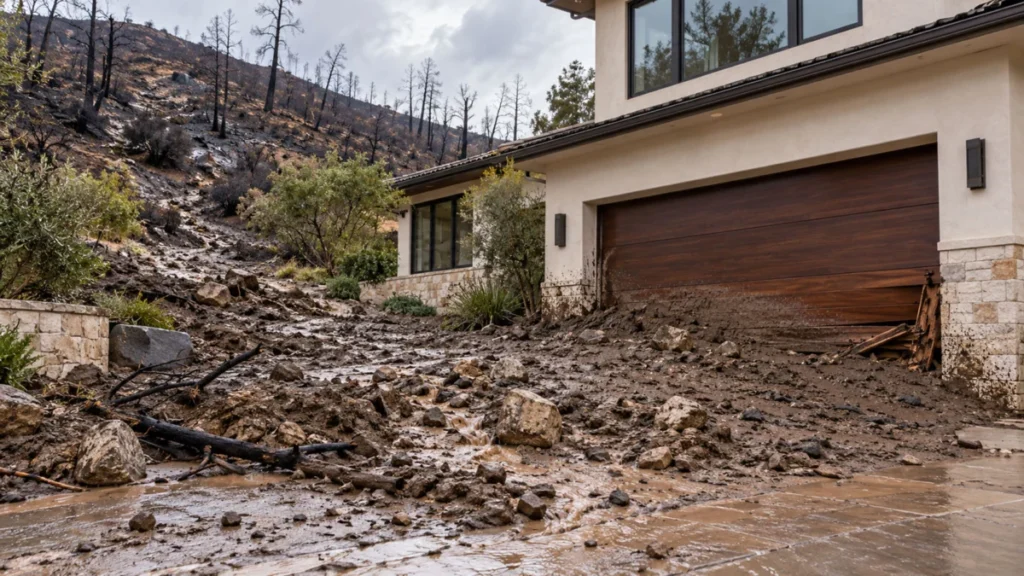
- The Impact Event: The slide reaches residential areas. The kinetic energy of the mud, often carrying massive boulders, strikes homes, roads, and infrastructure with the force of a battering ram.
Types of Property Damage: When the Earth Reclaims the Home
The destruction wrought by mudslides is comprehensive and often total. Unlike wind or fire, which may leave structural skeletons behind, a major mudslide often buries the evidence of a home entirely.
Structural Foundation and Wall Collapse
The lateral force exerted by a wall of moving mud is immense. Foundations are rarely designed to withstand the sheer weight of saturated earth moving at high speeds. When this pressure is applied against a foundation wall, it causes catastrophic cracking and structural failure. Often, the force is enough to displace a house from its footings entirely, causing it to slide or tilt.
The Burial of Infrastructure
One of the most insidious aspects of mudslides is the inundation of ground-level spaces. Garages, basements, and first-floor living areas can be completely filled with slurry. This is not merely an inconvenience; it is a hazardous environment filled with sharp debris, heavy ash, and potentially toxic materials. Once a structure is buried, the cost of excavation and restoration often exceeds the cost of demolition.
Mechanical and Vehicular Destruction
Vehicles caught in the path of a slide are often written off as total losses. Beyond the obvious crushing damage, the fine-particulate mud is highly corrosive. It infiltrates engines, transmission systems, and electrical components. Even if a car is not physically mangled, the internal contamination makes it functionally impossible to salvage.
Property and Health Contamination
The mud is not "clean" soil. It is a cocktail of charred remains, ash, chemicals from burnt household goods, and sediment. When this mixture enters a home, it contaminates furniture, insulation, and drywall. The environmental health risks—ranging from mold growth to the presence of heavy metals or toxic ash residue—often necessitate professional hazardous material remediation.
Supporting Data and Risks
The statistics surrounding these events are sobering. Across the United States, mudslides—often referred to in scientific literature as debris flows—are responsible for 25 to 50 deaths annually. In California, the risk is magnified by the density of high-value real estate built into mountainous terrain.
Geological surveys indicate that the risk of a debris flow is highest in the first two years following a fire. While vegetation begins to return after the first rainy season, it takes years, and sometimes decades, for root systems to re-establish the soil stability necessary to prevent large-scale movement during extreme weather.
Official Responses and Public Safety
State and local governments in California have shifted their strategy toward "pre-emptive mitigation." This includes the installation of debris basins and the implementation of early warning systems. Agencies like the U.S. Geological Survey (USGS) now produce post-fire debris-flow hazard assessments, which help officials identify which neighborhoods should be evacuated when a storm approaches.
However, despite these efforts, the sheer scale of the landscape makes it impossible to "wall off" every home. Residents are encouraged to monitor local emergency alerts and understand their property’s position in relation to natural drainage channels, known as "canyons" or "washes," which are the primary highways for mudslides.
Implications: Liability and Compensation
The legal landscape regarding mudslide damage is as complex as the geological one. The question of liability often hinges on the cause of the preceding wildfire.
The Question of Negligence
If a wildfire was caused by the negligence of a utility company—such as faulty power lines or failing to clear brush around infrastructure—the subsequent mudslide damage may be considered a direct result of that negligence. Under California law, entities that recklessly cause fires can be held accountable for the resulting damages, including the secondary damage caused by landslides.
Navigating Legal Recourse
Homeowners facing massive losses should prioritize the following steps:
- Documentation: Before any cleanup begins, document the damage extensively. Photographs, videos, and professional assessments are vital for insurance and legal claims.
- Identifying Liable Parties: A legal professional can determine if the fire was a "natural act" or the result of human error. If a utility or private entity is found to be at fault, they may be liable for damages far beyond what a standard homeowner’s insurance policy might cover.
- Understanding Policy Limitations: Standard insurance policies often have specific exclusions for "earth movement" or "mudflow." However, if the event is tied to a wildfire, legal arguments can sometimes be made to trigger different coverage clauses.
Conclusion: A Future of Vigilance
The intersection of wildfire and mudslides is a permanent feature of the California landscape. As residents, we must look beyond the immediate trauma of the fire and prepare for the secondary risks that the changing climate will bring. Recognizing the warning signs, maintaining defensible space, and understanding one’s legal standing in the event of a disaster are the best tools for recovery.
While the earth may shift, the resolve of the community to rebuild and seek justice for preventable damages remains the cornerstone of resilience in the American West. If you find your property damaged in the wake of such a disaster, do not navigate the recovery process alone. Professional legal counsel can help untangle the web of liability and ensure that you receive the compensation necessary to restore your home and your peace of mind.