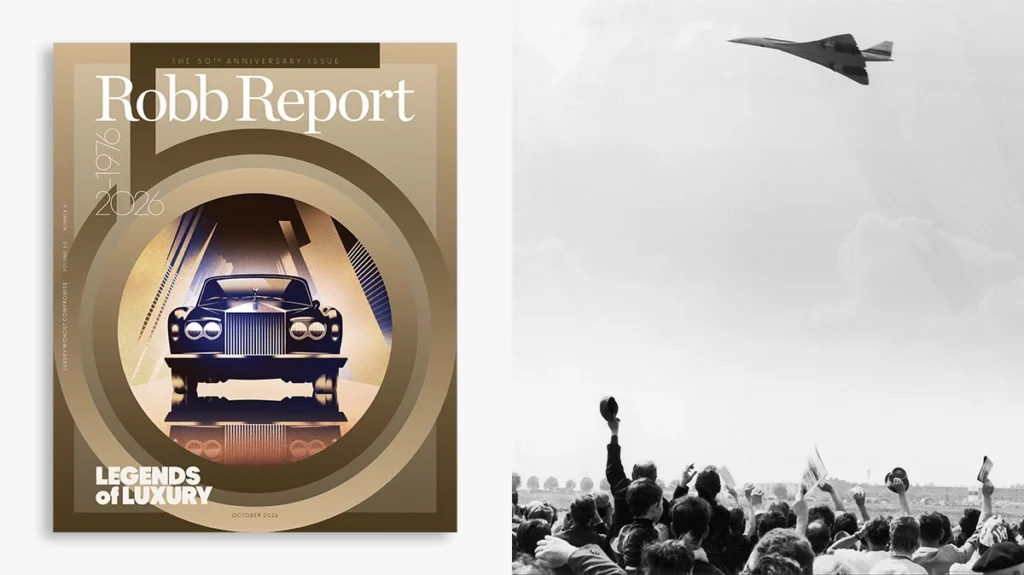
On January 21, 1976, the world seemed to shrink overnight. As the Concorde commenced its inaugural commercial flight at twice the speed of sound, a new publication—Robb Report—hit the stands with the ambition to chronicle the intersection of daring innovation and high-end lifestyle. For five decades, the magazine has acted as a lighthouse for the affluent, charting the evolution of what it means to live well. As we celebrate our 50th-anniversary issue, we find ourselves not merely looking back at the artifacts of the past, but analyzing the transformative power of luxury as a harbinger of the mainstream.
The Arc of Innovation: A Half-Century Chronology
The history of the last 50 years is a tapestry woven with radical shifts in technology, fashion, and social mores. When Robb Report first launched, the Rolls-Royce Silver Shadow was the standard-bearer for automotive excellence. Today, that same spirit of design excellence informs our 50th-anniversary cover, proving that while technology evolves, the pursuit of perfection remains constant.
The 1980s: The Dawn of the Digital Status Symbol
The early 1980s heralded the birth of the personal mobile revolution. In 1984, the Motorola DynaTAC 8000X debuted with a price tag of $4,000—equivalent to roughly $12,000 today. Weighing nearly two pounds, the "Brick" was the ultimate badge of status. While its bulk makes it a punchline for modern smartphone users, it fundamentally altered the DNA of human communication. What was once the exclusive domain of Wall Street titans like the fictional Gordon Gekko has become the universal utility of the 21st century.
The 1990s and 2000s: Soft Power and Culinary Science
Luxury is not always measured in silicon. In the late 1970s and through the 90s, Giorgio Armani redefined masculinity by stripping the rigid structure from the traditional suit. By softening the shoulders and loosening the trousers, Armani introduced a louche, sophisticated aesthetic that transcended the boardroom.
Simultaneously, the culinary world underwent a seismic shift at El Bulli. Ferran Adrià’s application of scientific principles to gastronomy—molecular gastronomy—challenged the very nature of the dining experience. While the movement was later diluted by subpar imitators focusing on gimmicky "foams," the underlying philosophy of innovation permanently elevated the standards of fine dining globally.

The 2010s to Present: The Age of Exploration
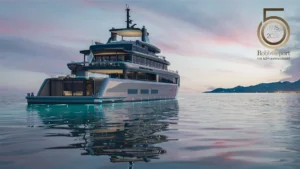
The shift toward experiential luxury was perhaps best exemplified by Paul Allen’s Octopus. When the 414-foot vessel was delivered in 2003, it bridged the gap between super-yacht decadence and rugged expedition capability. It shifted the luxury narrative from passive leisure to active discovery. Today, the "explorer yacht" is a staple of every major shipyard’s portfolio, signaling a shift in the values of the ultra-high-net-worth individual.
Supporting Data: The Lifecycle of Luxury Trends
To understand the trajectory of these innovations, one must look at the "Luxury-to-Necessity" pipeline.
- The Early Adopter Phase: Luxury items often debut at price points inaccessible to the masses, acting as "prestige experiments."
- The Refinement Phase: As seen with the transition from the DynaTAC to modern smartphones, the technology shrinks, the cost stabilizes, and the utility becomes indispensable.
- The Cultural Integration Phase: Styles like the unstructured suit or the "expedition" mindset migrate from high-fashion runways and private docks into the cultural vernacular.
However, not all trends follow this linear path. History is littered with "the next big thing" that never quite materialized. Our editorial archives include predictions that missed the mark—most notably our early skepticism regarding the longevity of the internal combustion engine, which remains remarkably resilient. Conversely, the rapid rise and fall of speculative bubbles like "Bored Ape" NFTs serve as a humbling reminder that the market for innovation is as volatile as it is lucrative.
Official Perspectives: The Evolution of "Legends of Luxury"
In curating our "Legends of Luxury" feature, our editorial team spent months sifting through 74 distinct objects, people, and experiences that defined the last 50 years. We sought to identify the items that did more than just signify wealth; we sought the ones that dictated the world to come.
"We knew we wanted to celebrate our 50th with a retrospective," notes the editorial staff. "But as we looked back, we realized the objects we chose were rarely just about the object itself. They were about the friction between the status quo and the future. Whether it was the speed of the Concorde or the culinary science of Ferran Adrià, these were moments where the future showed up dressed as a luxury."

The Implications: Where Do We Go From Here?
The primary implication of our 50-year retrospective is that luxury remains the most accurate testing ground for societal change. When a new technology or design philosophy emerges, it frequently appears first at the top of the economic pyramid.
Predictive Patterns
- Miniaturization: Like the phone, high-end electronics will continue to shrink and integrate into the body or immediate environment.
- Sustainability as the New Opulence: As resources become scarcer, the "luxury" of the next 50 years will likely pivot toward extreme sustainability—materials that are not just beautiful, but regenerative.
- The Return to Human Craft: In an era of AI-generated content, the ultimate luxury will be the "human touch"—bespoke goods that bear the unmistakable mark of a master artisan.
Conclusion: A Future Built on Experience
As we stand at the threshold of our next 50 years, Robb Report remains committed to the same curiosity that defined our first issue in 1976. We do not pretend to know which trends of 2026 will be the standard of 2076, but we recognize the pattern: the future shows up first as a luxury.
We have seen the rise of the internet, the democratization of travel, and the blurring lines between fashion and function. Through it all, our mission remains clear: to identify the daring, the ingenious, and the truly extraordinary.
We have learned that predicting the future is an exercise in humility. We have been wrong, we have been right, and we have been constantly surprised. But as we look toward the next half-century, we are invigorated by the pace of change. Whether it is the next iteration of supersonic travel or a breakthrough in the way we sustain our planet, we will be there to chronicle it.
Here’s to the next 50 years of exploration. Enjoy the issue.