
Deep beneath the churning waves of the East China Sea, south of the Japanese archipelago, a silent, subterranean process is underway that could redefine our understanding of the planet’s most destructive geological phenomena. Thousands of years after producing one of the most cataclysmic volcanic eruptions in the history of the Holocene epoch, the Kikai caldera is once again showing signs of life.
Recent findings by researchers at Kobe University, published in the journal Communications Earth & Environment, reveal that this massive supervolcano is slowly refilling its enormous underground magma reservoir. This discovery provides a rare, unprecedented glimpse into the life cycle of supervolcanoes, offering a blueprint for how these gargantuan systems store, replenish, and eventually unleash the forces that reshape the Earth’s crust.
The Anatomy of a Supervolcano: Main Facts
A supervolcano is defined by its ability to produce an eruption of "VEI-8" magnitude—the highest level on the Volcanic Explosivity Index. To put this in perspective, such an event releases more than 1,000 cubic kilometers of material. The sheer scale of these eruptions is difficult to comprehend: a single event can bury a city the size of New York under 12 kilometers of volcanic debris.
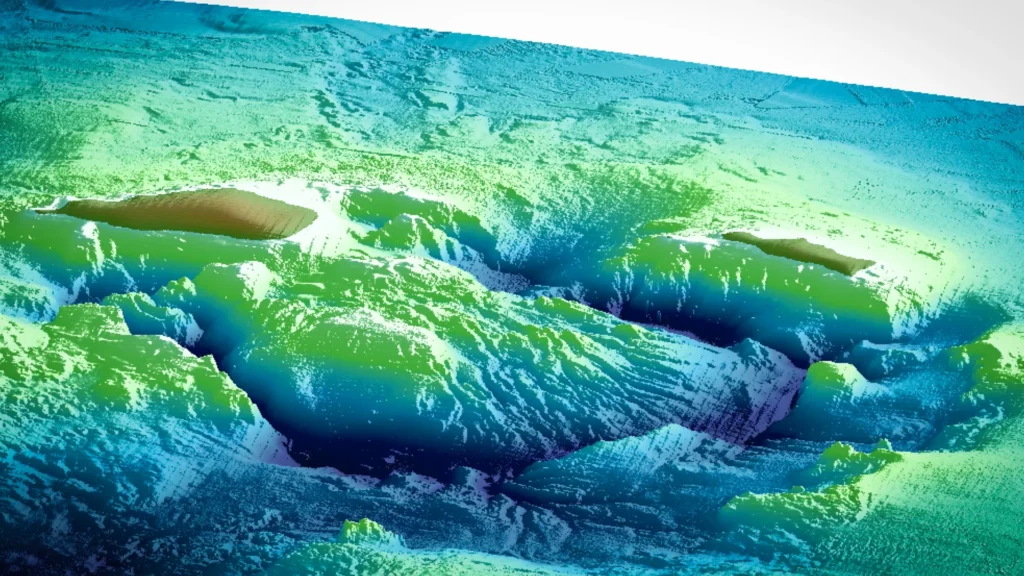
When these systems discharge such gargantuan volumes of magma, the internal pressure that once supported the overlying crust vanishes. The result is a dramatic structural failure: the ground collapses into the emptied chamber, forming a broad, shallow basin known as a caldera. These depressions are the signatures of Earth’s most powerful historical eruptions, including the iconic sites of Yellowstone in the United States and Lake Toba in Indonesia.
The Kikai caldera, a largely submerged volcanic complex, is the site of the Akahoya eruption, which occurred approximately 7,300 years ago. As the largest known volcanic event of the Holocene, it fundamentally altered the climate and landscape of the region. For geophysicists, the central question has remained: How does a volcano that has "emptied its tank" recover, and how long does that process take before it becomes a threat once more?
Chronology of a Catastrophe and Recovery
The geological timeline of Kikai serves as a cautionary tale of nature’s immense power.
- 7,300 Years Ago: The Akahoya eruption occurs. It is an event of such staggering proportions that it produces the largest volcanic deposit of the Holocene. The volcanic structure collapses, creating the caldera we see today.
- 3,900 Years Ago: Evidence suggests the beginning of a new phase of activity. A lava dome begins to form near the center of the caldera. Unlike explosive eruptions, this suggests a more viscous, steady accumulation of magma rising toward the surface.
- The Modern Era: Through the collaborative efforts of Kobe University and the Japan Agency for Marine-Earth Science and Technology (JAMSTEC), scientists initiate a series of high-resolution seismic surveys.
- Present Day: Seismic data confirms that a massive, molten reservoir is active beneath the floor of the caldera, indicating that the system is not dormant, but in a state of active replenishment.
Supporting Data: Peering Beneath the Waves
Investigating a submerged volcano presents significant logistical challenges. However, the team from Kobe University turned this hurdle into an advantage. Because the caldera is located entirely underwater, researchers were able to conduct wide-scale, systematic seismic surveys that would be impossible on land, where infrastructure and complex topography often interfere with data collection.
Led by geophysicist Nobukazu Seama, the team utilized powerful airgun arrays. These devices emit intense seismic pulses—acoustic waves that travel downward through the water column and into the rocky crust of the seafloor. By placing a grid of ocean-bottom seismometers, the team captured the "echoes" of these pulses as they traveled through different subterranean densities.
The physics of the survey are straightforward: seismic waves travel rapidly through solid, cold rock, but their velocity drops significantly when they encounter molten or partially molten material. By mapping these velocity changes, the researchers generated a high-resolution "ultrasound" of the crust.
The results were unequivocal: a massive region containing a high proportion of magma sits directly beneath the site of the ancient eruption. The spatial extent and depth of this reservoir confirm that it is not a new, unrelated feature, but the very same magma storage system that facilitated the cataclysm 7,300 years ago.
Chemical Evidence: The Re-injection Model
One of the most critical aspects of the study is the chemical composition of the material currently feeding the volcano. If the reservoir were merely "leftover" magma from the 7,300-year-old event, one would expect the chemical signature to be uniform. However, chemical analyses of the lava dome and more recent volcanic ejecta tell a different story.
The material found today differs significantly from the rocks produced during the Akahoya eruption. This discrepancy is the "smoking gun" for what scientists call the "re-injection model." It indicates that the reservoir is being actively recharged by fresh injections of molten rock—basaltic magma—rising from deep within the Earth’s mantle or lower crust.
"This means that the magma that is now present in the magma reservoir under the lava dome is likely newly injected magma," explains Dr. Seama. This continuous infusion of fresh, hot material provides the thermal energy necessary to keep the reservoir in a liquid state, preventing it from cooling and solidifying into inert rock.
Official Responses and Scientific Implications
The implications of the Kikai study extend far beyond the coast of Japan. The scientific community has long debated how caldera systems maintain their activity over millennia. The Kobe University study provides a robust, data-driven framework that supports the theory of periodic re-injection.
"This magma re-injection model is consistent with the existence of large shallow magma reservoirs beneath other giant calderas like Yellowstone and Toba," says Seama. By establishing this model, researchers can now compare the "recharge rate" of Kikai against its international counterparts.
However, the team is careful to manage expectations regarding immediate danger. The fact that a reservoir is recharging does not, by itself, signal that a massive eruption is imminent. Supervolcanoes operate on geological timescales; the process of accumulation can take thousands or even tens of thousands of years.
"We must understand how such large quantities of magma can accumulate to understand how giant caldera eruptions occur," Seama notes. By identifying the signals of re-injection, scientists are effectively learning how to read the "heartbeat" of a supervolcano.
Looking Toward the Future: The Quest for Predictive Power
The research conducted at Kikai is not just an academic exercise in mapping the past; it is a foundational step toward a future of improved volcanic monitoring. The goal is to move from passive observation to predictive capability.
The researchers at Kobe University and JAMSTEC are now focused on refining their seismic imaging techniques. The goal is to gain a real-time understanding of how magma moves through the crust—specifically, how it transitions from the deep mantle into the shallow storage reservoirs where it can eventually trigger an eruption.
"We want to refine the methods that have proved to be so useful in this study to more deeply understand the re-injection processes," says Seama. "Our ultimate goal is to become better able to monitor the crucial indicators of future giant eruptions."
As the scientific community continues to analyze the data from the Kikai caldera, one thing is clear: our planet’s most dangerous volcanoes are not static objects. They are dynamic, breathing systems that require constant vigilance. Through the marriage of advanced seismic technology and deep geological insight, humanity is slowly shedding light on the dark, molten depths that have the potential to change the face of our world.
This research was funded by the Ministry of Education, Culture, Sports, Science and Technology (MEXT) under the Third Earthquake and Volcano Hazards Observation and Research Program, and supported by the Japan Society for the Promotion of Science (grant 20H00199).