

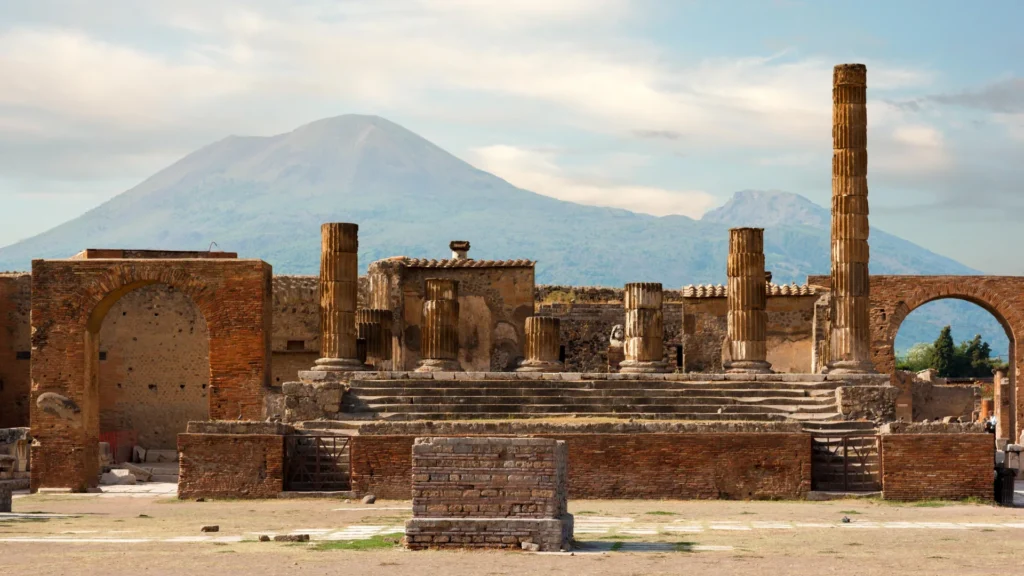
Nearly two millennia ago, the Roman polymath Pliny the Younger stood at a safe distance and watched in horror as Mount Vesuvius unleashed a cataclysmic eruption, burying the cities of Pompeii and Herculaneum under a suffocating shroud of ash and pumice. His detailed letters, written to the historian Tacitus, provided the world’s first eyewitness account of a volcanic eruption. Today, those same letters are serving a purpose far beyond historical preservation: they have become a cornerstone in a scientific breakthrough that significantly refines our ability to date the history of our planet.
A team of researchers from the Berkeley Geochronology Center (BGC), the University of California, Berkeley, and the University of Padua in Italy has announced in the journal Science Advances that they have achieved a new level of precision in "argon-argon" dating. By calibrating this geochemical clock against the historically documented eruption of Vesuvius in 79 CE, scientists have sharpened one of the most vital tools in geology, archaeology, and paleontology.
Main Facts: A New Benchmark for Geochronology
Argon-argon (Ar-Ar) dating is a cornerstone of geochronology, used to determine the age of rocks by measuring the radioactive decay of potassium-40 into argon-40. While the method is robust, its accuracy has long been limited by uncertainties in the decay constant—the rate at which potassium transforms into argon.
By utilizing the 79 CE Vesuvius eruption as a "calibration anchor," the research team has reduced these uncertainties to unprecedented levels. The study demonstrates that argon-argon dating can now achieve a precision of 0.7% and an accuracy of 0.4% when applied to samples of sanidine, a potassium-rich volcanic mineral. This advancement transforms the technique from a broad-brush approach into a fine-tuned instrument capable of pinpointing geological events within the span of human history.
The Chronology: Reconstructing the Timeline
The path to this discovery was decades in the making, bridging the gap between Roman history and 21st-century mass spectrometry.
The 1997 Foundation
In 1997, Paul Renne, director of the Berkeley Geochronology Center, led an initial study using sanidine samples from the 79 CE eruption. At that time, the team predicted that future technological advancements would eventually reduce the margin of error in argon-argon dating to below 1%.
The Oplontis Collection (1998)
The following year, co-author Andrea Marzoli of the University of Padua collected high-quality pumice samples from Oplontis, a Roman settlement near Pompeii. These samples were unique because they originated from the earliest phase of the eruption. Because volcanic magma chambers are stratified—with potassium-rich, lighter magma sitting at the top—the first material expelled is often the most ideal for geochemical analysis. These samples were carefully stored, waiting for technology to catch up with their potential.
The Modern Synthesis (2020–2025)
Decades later, a team of graduate students and fellows at the BGC, including Caroline Hasler, Anthony Fuentes, and Andy Tholt, returned to the Oplontis samples. Utilizing advanced mass spectrometers and updated neutron irradiation techniques, the team processed the material, successfully fulfilling the promise of the 1997 study. This work was integrated into a 2025 Bayesian analytical scheme designed to reconcile argon-argon dating with uranium-lead dating—the two "gold standards" of rock dating—which had previously yielded inconsistent results.
Supporting Data: Behind the Radioactive Clock
The scientific validity of this study rests on three pillars: better samples, superior instrumentation, and rigorous historical verification.
The Physics of Decay
Argon-argon dating relies on the radioactive decay of potassium-40 (K-40). Before an eruption, argon-40—a gas—escapes the molten magma. Once the rock cools and solidifies, the argon becomes trapped. By bombarding samples with neutrons in a nuclear reactor, scientists convert non-radioactive potassium-39 into argon-39. By comparing the ratio of argon-40 to argon-39, researchers can calculate exactly how much time has passed since the rock cooled. The team’s refined measurement of the K-40 half-life now stands at 12.044 billion years (± 0.088 billion), offering a doubling of precision over previous physics-based values.
Validating Pliny
A significant hurdle was the debate surrounding the exact date of the eruption. While August 24, 79 CE, is the traditional date, some historians have argued for a later date based on archaeological evidence, such as Roman coins found in the ruins. Caroline Hasler conducted a comprehensive review of these numismatic findings, concluding that the coins were likely minted earlier than previously thought. The team ultimately accounted for a two-month window of uncertainty, ensuring their calibration remained rock-solid regardless of the minor historical debate.
Official Responses: Insights from the Field
"If you want to put together the eruptive history of a volcano in relatively recent time, precision and accuracy really count," said Dr. Paul Renne. "The study shows that you can achieve that kind of highly useful precision and accuracy into the historical realm."
Renne, who has previously used these dating methods to link the Chicxulub meteor impact to the extinction of the dinosaurs, emphasizes that this is about more than just checking the time on old rocks. "This lets us more precisely infer causality between events in the geologic record, for example, a meteor impact structure and a mass extinction," he noted.
The collaborative nature of the study was highlighted by the inclusion of multiple institutions. By bringing together the stratigraphic expertise of the University of Padua with the isotopic precision of UC Berkeley, the team was able to overcome decades of analytical inconsistency. Bill Cassata, a co-author on the paper, was cited by Renne as playing a pivotal role in designing the analytical strategy that allowed the disparate data points to align.
Implications: Why It Matters for the Future
The implications of this recalibration extend far beyond the study of ancient Rome.
Volcanic Hazard Assessment
Understanding the eruptive history of active volcanoes is critical for public safety. Regions such as Naples (near Vesuvius), Mexico City (near Popocatépetl), and Yogyakarta (near Merapi) house millions of people. By establishing a more accurate "clock," geologists can better predict the frequency and intensity of future eruptions, allowing for more reliable risk modeling.
Unifying Geochronology
The scientific community has long struggled with "intercalibration"—the process of ensuring that different dating methods (carbon-14, uranium-lead, and argon-argon) agree with one another. Because carbon-14 dating is the standard for organic materials under 55,000 years, and argon-argon is the standard for volcanic rock, the ability to anchor both to a common mathematical framework is a "holy grail" for Earth scientists.
"We’re hoping to really unify as many geologic dating methods as we can by using the same mathematics, the same Bayesian approach, and just bringing more data, more raw observations into that mix," Renne said.
A Legacy for Earth Science
As the researchers look forward, they view this project as a proof of concept. The study demonstrates that historical records—when paired with high-precision analytical chemistry—can act as a bridge between the human timeline and the deep history of the Earth. What began as a tragedy documented by a Roman observer has, nearly 2,000 years later, become an essential tool for understanding our past and securing our future.
The work, funded by the National Science Foundation, the Ann and Gordon Getty Foundation, and the Berkeley Geochronology Center, stands as a testament to the idea that science is a cumulative endeavor, where the meticulous efforts of the past provide the necessary foundation for the breakthroughs of the future.



