Main Facts: A $35 Million Testament to Cultural Curation
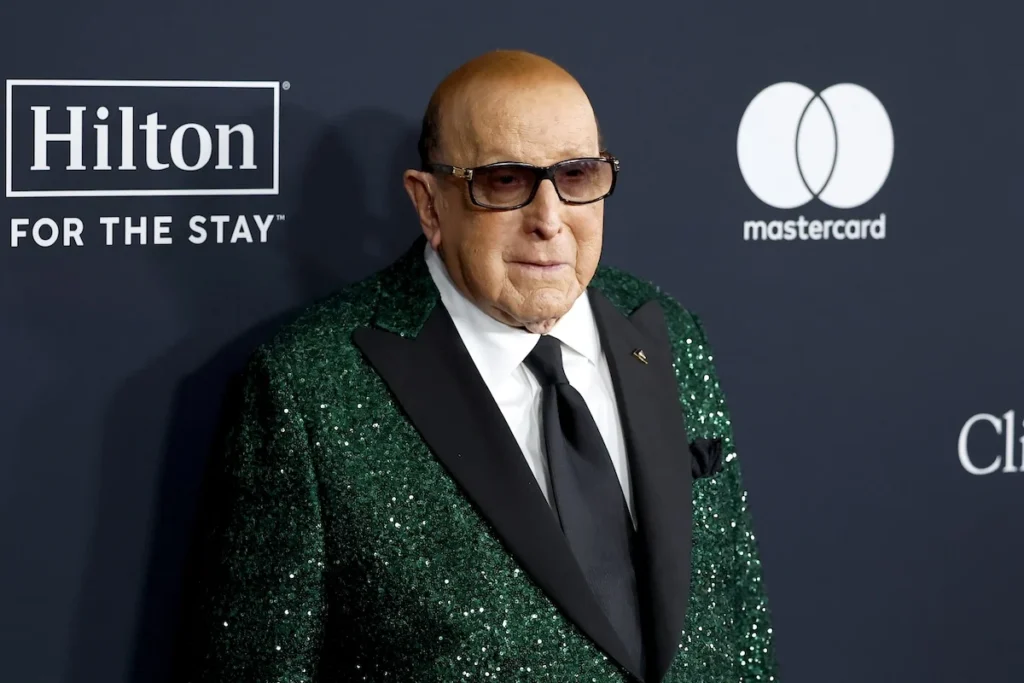
In a reveal that has sent ripples through the international art market, eight masterworks from the private collection of the late, legendary music executive Clive Davis are set to headline Christie’s marquee November contemporary art sales in New York. The collection, which had remained largely shielded from public view during the producer’s lifetime, is valued at upwards of $35 million.
While Davis was globally renowned for his unerring ear—having steered the careers of icons ranging from Janis Joplin and Bruce Springsteen to Whitney Houston and Alicia Keys—this upcoming auction introduces a new dimension to his public legacy: that of a sophisticated, deeply engaged connoisseur of the visual arts. The selection headed for the auction block features high-caliber pieces by some of the most influential names in postwar and contemporary art, including Andy Warhol, David Hockney, Joan Mitchell, Frank Stella, George Condo, and Robert Motherwell.
Chronology: From Studio Walls to Auction Heights
The trajectory of Clive Davis’s life was defined by an obsession with excellence and a relentless pursuit of "the next big thing." Born in Brooklyn and rising through the ranks of the music industry to become one of its most pivotal figures, Davis’s journey was characterized by his uncanny ability to bridge the gap between niche talent and mass-market success.
The Development of a Private Eye
For decades, Davis’s primary canvas was the recording studio. However, as his influence in the music world solidified, his personal life became increasingly marked by an aesthetic refinement that mirrored his professional output. While his peers in the music industry were often associated with ostentatious displays of wealth, Davis’s relationship with art was characterized by intellectual curiosity and quiet acquisition.
The November Reveal
The decision to bring these works to market this November follows the passing of Davis this past June. Christie’s, having secured these pieces as some of the most significant early consignments for their fall season, has positioned the collection as a curated narrative of taste. The selection process appears to have been guided by a desire to reflect the same vitality and emotional resonance that Davis sought in the music he championed.
Supporting Data: The Highlights of the Collection
Though Christie’s has yet to release individual estimates for each of the eight works, the caliber of the artists represented suggests a robust competitive bidding environment. The collection serves as a visual "who’s who" of the 20th and 21st centuries.
A Portrait of Friendship: Andy Warhol’s Aretha Franklin (ca. 1986)
Perhaps the most poignant piece in the collection is Warhol’s portrait of the "Queen of Soul," Aretha Franklin. The work serves as a testament to the decades-long professional and personal bond between Davis and Franklin. Davis was instrumental in maintaining Franklin’s relevance and artistic integrity throughout various stages of her career, and the presence of this silkscreen in his home highlights the intersection of his two greatest passions: the sounds that defined an era and the images that immortalized them.
The Hockney Connection
The collection also features a 2009 landscape by David Hockney. The inclusion of a Hockney is particularly significant given the artist’s own history with Davis; the British master once painted a portrait of the music mogul, capturing the sharp, discerning gaze that allowed Davis to identify talent in its most nascent stages.
Abstraction and Depth
Beyond the figurative works, the collection demonstrates a profound appreciation for the visceral energy of abstract expressionism. A 1992 work by Joan Mitchell stands as a centerpiece of the collection, reflecting Davis’s attraction to the raw, emotive power of the medium. Complementing the Mitchell are works by Frank Stella, whose geometric rigor offers a structural counterpoint to the fluidity of Mitchell’s brushwork, and the psychologically charged, vibrant canvases of George Condo. The inclusion of Robert Motherwell rounds out the collection, rooting it in the mid-century tradition that bridged the gap between surrealist automatism and the bold gestures of the New York School.
Official Responses: Cultivating Talent and Taste
The narrative surrounding this collection is being carefully framed by Christie’s, emphasizing the synergy between Davis’s professional instincts and his private collecting habits.

Sara Friedlander, Christie’s chairman of postwar and contemporary art, offered a statement that sought to link the two halves of Davis’s life. "Clive Davis had the unique ability to recognize and cultivate great talent in its most nascent phase," Friedlander noted. "Through the generational musical voices that he nurtured, he created the soundtrack to all our lives; his legacy has been with us at all our greatest moments. It is a profound honor to bring this collection to auction."
The Collector’s Own Voice
Perhaps the most telling insight into the collection comes from a rare, reflective statement left by Davis himself, which was included in the Christie’s release. He described his collecting not as a financial strategy, but as an ongoing educational journey:
"I am extraordinarily passionate about art, and I am always learning about it. I spend hours going through auction house catalogs, reading about the artists and their work. I’m guided by what moves me, what I find beautiful, what I find exciting. The process of discovering something new always excites me."
This statement challenges the image of the celebrity collector as a passive investor. Instead, it presents a man who approached art with the same analytical rigor he applied to a demo tape—looking for the spark of authenticity that signaled enduring cultural value.
Implications: A Shift in Market Sentiment
The sale of the Clive Davis collection carries significant implications for both the art market and the broader legacy of the music industry’s "golden age" executives.
The "Music Mogul" Asset Class
In recent years, the market for "celebrity provenance" has grown increasingly sophisticated. The sale of Davis’s works suggests that as the generation of music industry giants who defined the 20th century passes on, their private collections are beginning to enter the public sphere. These collections often provide a rare look into the private taste of individuals who spent their lives shaping public culture.
The Intersection of Art and Music
The auction serves as a reminder of the historical intimacy between the music and art worlds in New York City. From Warhol’s Factory to the contemporary gallery scene, music and art have fed into each other’s visual and auditory lexicons. By owning these pieces, Davis was not just buying objects; he was participating in the same cultural dialogue that he was simultaneously shaping through his record labels.
Market Stability and Legacy
For the market, the inclusion of these works in the November sales is a stabilizing force. In an economic climate where collectors are often cautious, works with a storied provenance—especially those tied to figures of immense cultural significance—tend to perform well. Collectors are not merely buying a canvas by Stella or a print by Warhol; they are acquiring a piece of the history of the man who, for many, defined the very idea of "the hit."
As the art world prepares for the November auctions, the focus will undoubtedly be on the final prices achieved by these eight pieces. Yet, beyond the numbers, the sale represents a final, curated statement from a man who spent his life ensuring that great art—whether in the form of a three-minute song or a masterpiece on canvas—was given the platform it deserved. Clive Davis’s collection is more than a list of assets; it is a final, visual testament to a life lived in the service of, and in the presence of, genius.