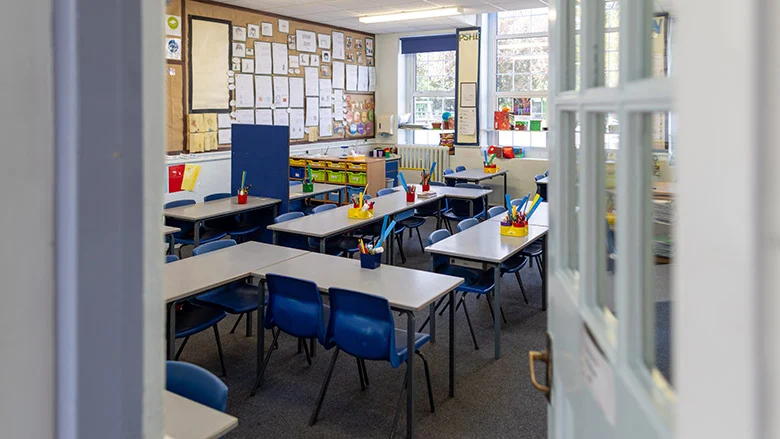
The American K-12 educational landscape is currently grappling with a persistent and evolving crisis. For school administrators, teachers, and parents, the sanctity of the classroom is increasingly being measured not just by academic performance, but by the efficacy of emergency response protocols. As acts of violence and disruptive behavior continue to challenge the safety of U.S. public schools, a paradigm shift is underway—moving from reactive, localized alarms toward highly integrated, wireless-first security ecosystems.
The Reality of Risk: A Statistical Overview
The necessity for advanced security measures is underscored by stark data. During the 2021–2022 academic year, the scope of the problem became impossible to ignore: 67% of U.S. public schools recorded at least one violent incident. In total, approximately 857,500 violent incidents were documented nationwide. These figures do not merely represent administrative data points; they represent thousands of moments where students and staff were placed in potential peril.
While many of these incidents involve interpersonal conflicts or behavioral issues, the threat of external, catastrophic violence remains a primary driver for school safety investments. The current security climate has forced a transition from traditional "lockdown" drills to sophisticated, technology-driven defense strategies designed to shave critical seconds off emergency response times.
Chronology of Change: The Legacy of Alyssa’s Law
The legislative turning point for school security in the United States occurred in 2019, following the tragic shooting at Marjory Stoneman Douglas High School in Parkland, Florida. In response, New Jersey became the first state to enact "Alyssa’s Law," named in honor of Alyssa Alhadeff, one of the victims of the Parkland tragedy.
The Legislative Catalyst
Alyssa’s Law mandated that all public elementary and secondary school buildings in New Jersey be equipped with silent panic alarms linked directly to local law enforcement. The legislation was groundbreaking because it moved beyond general safety guidelines and established a specific, enforceable standard for technological compliance.
The Ripple Effect
The success and logical necessity of the New Jersey mandate sparked a national movement. In the years following its passage, other states—including Florida, New York, and Texas—have either enacted similar versions of the law or introduced legislation to mandate panic notification systems. This legislative wave launched a new era of "compliance-driven security," where school districts are no longer left to determine their own safety standards but are instead held to a unified, rigorous benchmark of readiness.
The First Wave: Reactive Panic Notification
The initial deployment of technology under the umbrella of Alyssa’s Law focused primarily on fixed and wearable panic buttons. These early iterations were fundamentally reactionary; they were designed to alert school administrators, School Resource Officers (SROs), and local law enforcement that an active incident was occurring.
Despite their simplicity, these tools proved remarkably effective. Data indicates that 88% of school panic button alerts are triggered by student behavior issues, highlighting that these devices serve as a versatile safety net for a wide range of emergencies—from medical crises to unauthorized campus intruders. By providing an instant, silent line of communication to first responders, these buttons significantly reduced the "time-to-dispatch" gap, a metric that is often the difference between a controlled situation and a tragedy.
However, the industry soon recognized that notification alone was insufficient. While dispatchers knew an alert had been sent, they often lacked precise information regarding the location or the nature of the emergency, leading to "response blind spots."
The Evolution: Precision and Performance in Duress Technology
As the security sector matured, the focus shifted from simple alerts to "intelligent response." Modern duress notification systems have evolved to provide high-fidelity data that assists first responders before they even arrive on the scene.
Pinpointing Events with Performance and Accuracy
For a device to be effective in a sprawling school campus—which may include multiple buildings, athletic fields, parking lots, and common areas—it must offer granular location accuracy. If a teacher in a science lab triggers an alert, the system must inform law enforcement of the exact room number, floor, and building, rather than just the campus address.
The next generation of duress technology is now integrating with broader building management systems, including:
- Video Surveillance: Automated "trigger-to-view" features that pull up live camera feeds in the command center the moment an alert is activated.
- Access Control: The ability to automatically lock or unlock specific doors to guide law enforcement or isolate a threat.
- Intrusion Detection: Seamless hand-offs between perimeter sensors and wearable duress triggers.
The Ergonomics of Safety: The "Comfort Factor"
One of the most significant barriers to the adoption of wearable tech has been the "bulky factor." Early panic buttons were cumbersome, often heavy, and prone to accidental activation or being left in a desk drawer. To ensure consistent use, manufacturers have moved toward "duress cards."
These devices are designed to mimic the form factor of standard employee identification or access cards. By making the technology unobtrusive, school staff are more likely to wear them consistently. Furthermore, modern advancements include waterproof casings and high-durability materials, ensuring that the technology remains functional in the diverse, high-traffic environments of a K-12 campus.
Why Advanced Duress Notification Matters: Strategic Implications
The integration of advanced technology into the school environment serves several critical functions that extend far beyond simple alarm sounding.
1. Comprehensive Campus Coverage
Schools are often constructed with materials—such as reinforced concrete, brick, or steel—that can interfere with standard wireless signals. Modern systems utilize 900 MHz "wireless-first" infrastructure to ensure that signals penetrate through thick walls and across wide outdoor distances. This ensures that a teacher on the soccer field is just as protected as a teacher in a basement classroom.
2. Rapid Lockdown and Automation
External threats often require a school-wide lockdown in a matter of seconds. Modern systems now include automated protocols where a single activation can simultaneously lock all electronic entry points, broadcast pre-recorded messages over the PA system, and notify local police, effectively securing the school perimeter without manual intervention from an administrator who may be occupied with the threat itself.
3. Discreet Communication
One of the key tenets of modern security is the ability to maintain a "nurturing learning environment." Loud sirens or aggressive alert systems can cause panic among students. Discreet, silent alerts allow staff to signal for help without escalating the tension of a situation, providing first responders the advantage of surprise and preventing the potential perpetrator from knowing an alert has been issued.
4. Flexible and Temporary Security
Schools frequently host public events, elections, or extracurricular activities in temporary settings like tents or modular classrooms. Wireless-first security systems are inherently scalable. They can be relocated quickly, allowing schools to extend their security perimeter for a Friday night football game or a community town hall without the need for complex, permanent wiring installations.
The Human Element: Addressing the "Intangible Stress Factor"
Beyond the hardware and software lies a critical psychological component: the "intangible stress factor." Educators are increasingly burdened by the reality of school violence. Knowing that a robust, reliable security system is functioning in the background allows teachers to focus on their primary mission—instruction—with a greater sense of personal agency.
When teachers feel equipped with the tools to summon help instantly, the pervasive sense of helplessness that often accompanies modern school security concerns is mitigated. This sense of safety is not merely a "nice to have"; it is a foundational requirement for a healthy educational environment.
Conclusion: Balancing Form and Function
The path forward for K-12 security is defined by the integration of advanced technology and human-centric design. While the necessity for these systems is a sobering reflection of the modern world, the evolution of Alyssa’s Law and the subsequent technological advancements provide a necessary layer of protection.
By combining the precision of location-aware duress cards, the reliability of wireless-first infrastructure, and the agility of integrated response platforms, schools are moving from a state of vulnerability to one of resilience. As this technology continues to evolve, the goal remains singular and vital: to ensure that when a crisis occurs, the response is as immediate, accurate, and effective as humanly possible, ultimately securing the safety of the next generation.