In an era defined by geopolitical fragmentation, the siren call of short-term fiscal austerity is growing louder. As wars in the Middle East and Ukraine strain national budgets and disrupt global supply chains, governments are increasingly pivoting toward defense spending and immediate economic stabilization. Yet, there is a mounting consensus among economists and environmental scientists that treating nature conservation as a luxury to be deferred is a strategic error of historic proportions.
The natural world is not a peripheral concern; it is the fundamental infrastructure upon which the global economy rests. As world leaders prepare for pivotal United Nations biodiversity and climate-change summits, the argument for "nature-positive" policies is shifting from an ethical imperative to a hard-nosed economic necessity.
The Economic Backbone: Nature as Infrastructure
To understand the urgency, one must look at the dependency ratio of the global economy. More than half of the world’s GDP—over $44 trillion—is moderately or highly dependent on nature and the services it provides. When we speak of "nature," we are effectively describing the global supply chain’s primary inputs: healthy soils that sustain a $9.5 trillion food industry, forests that support the livelihoods of 1.5 billion people, and river systems that mitigate flood damage and facilitate trade.
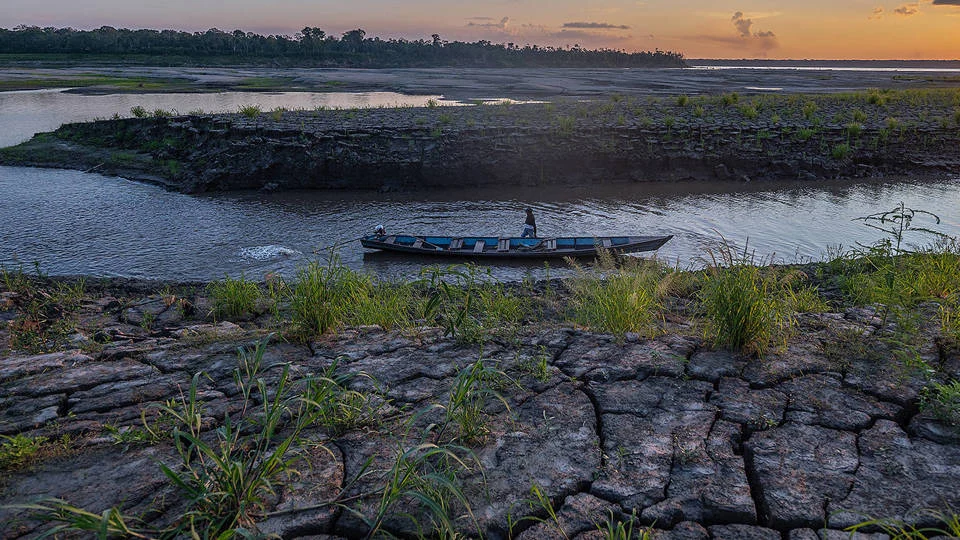
When these systems degrade, the economic blow is immediate and compounding. The recent European drought serves as a chilling case study: agricultural losses reached $2–3 billion in a single summer. This climate-induced disruption occurred in a market already reeling from the war-induced closure of the Strait of Hormuz, which triggered a 71% spike in fertilizer prices. The nexus of conflict and ecological instability has pushed global food prices to their highest levels since 2022, demonstrating that environmental health is the silent regulator of global inflation and social stability.
Chronology of a Crisis: The Path to 30×30
The modern effort to reconcile economic growth with environmental survival reached a watershed moment in 2022 with the adoption of the Kunming-Montreal Global Biodiversity Framework. The centerpiece of this agreement is the "30×30" goal: a commitment to protect and conserve at least 30% of the world’s land and ocean by 2030.
- 2022: The Kunming-Montreal Framework is adopted, setting the 30×30 target as a global benchmark for biodiversity.
- 2024: Global food prices remain volatile due to the lingering effects of conflict and climate-driven crop failures, highlighting the fragility of current systems.
- May 2026: A status check reveals that 116 countries have submitted preliminary commitments to protect approximately 27% of their land and inland waters.
- September 2026: New reports indicate that while terrestrial progress is gaining momentum, marine conservation is lagging significantly, with only 3.5% of the ocean effectively protected.
Despite this framework, the gap between ambition and implementation remains wide. The world has made strides in terrestrial protection, with 20% of land now under some form of conservation status. However, the oceans—which serve as the planet’s primary carbon sink—remain dangerously neglected.
Supporting Data: The Cost of Inaction
The economic rationale for investing in nature is supported by robust data that refutes the notion that environmental protection is a drag on growth. Scientists warn that a partial collapse of essential ecosystems could cost the global economy $2.7 trillion annually. This is not a hypothetical future; it is a calculated risk based on the loss of pollination, water filtration, and carbon sequestration services.
Financial Requirements vs. Economic Gains
- Current Spending: Approximately $24 billion annually.
- Required Investment: $100–$180 billion annually to meet the 30×30 target.
- Projected Returns: Up to $450 billion in added global GDP by 2050.
- Job Creation: An estimated 4–7 million new jobs in restoration, sustainable forestry, and green infrastructure.
The $100–$180 billion price tag is often cited by fiscal hawks as a burden. However, when framed as an investment, the return is clear. Every dollar invested in nature-based solutions acts as a hedge against the massive costs of climate-driven disaster relief, public health crises, and food price volatility.
Official Responses and the Implementation Gap
While governments are quick to sign pledges, the transition from paper commitments to physical results is sluggish. As of mid-2026, the primary hurdle is no longer a lack of awareness but a lack of mapped, costed, and transparent implementation plans.
International bodies, including the World Bank and various UN agencies, have emphasized that 30×30 is not merely about drawing lines on a map. It is about "effective management." The Ocean Protection Gap Report underscores that while some areas are legally designated as protected, they remain vulnerable to illegal fishing and industrial extraction. Without enforcement and long-term funding cycles that transcend political election cycles, these designations remain "paper parks"—protected in name but not in function.
Implications for Global Security
The geopolitical turmoil in the Middle East and Eastern Europe has created a "security-first" mindset. However, the definition of security must be expanded to include resource security.
1. Food and Water Security
Healthy soils retain water and nutrients, which are essential for weathering the climate shocks that trigger migration and civil unrest. Protecting wetlands and forests is a direct investment in the stability of agricultural yields, effectively acting as a form of national insurance against volatile global markets.
2. Economic Resilience
The transition to a nature-positive economy is fundamentally an exercise in risk management. By protecting mangroves and coral reefs, coastal nations save billions in infrastructure costs that would otherwise be lost to storm surges and sea-level rise. These natural buffers are far more cost-effective than concrete sea walls.
3. Long-term Stability
Political and economic cycles are short, but ecological cycles are long. The current trend of "postponing" nature-related investments to prioritize defense is a miscalculation. A nation that secures its borders but neglects the land that feeds its people is ultimately insecure.
Conclusion: The Final Four Years
We are now entering the final four-year sprint toward the 2030 deadline. The window to achieve the 30×30 goal is closing, but it remains open for those willing to act.
Governments must pivot from the current model—where nature is a line item to be trimmed—to one where it is recognized as the bedrock of national interest. This requires a dramatic increase in conservation financing, the integration of biodiversity metrics into central bank assessments, and a move toward enforcement-heavy marine policies.
As the world gathers for upcoming biodiversity summits, the message must be clear: The protection of nature is not a concession to environmentalists, nor is it a distraction from the wars of today. It is the single most effective strategy for preventing the wars of tomorrow. If we fail to protect the natural systems that sustain us, we will find that no amount of defense spending can shield us from the consequences of a degraded planet. The investment is steep, but the cost of missing the target is a price the global economy cannot afford to pay.