In an era where digital finance is synonymous with social connectivity, Venmo has long occupied a unique space. It is a tool that functions as both a utility for settling debts and a social ledger that documents the mundane details of daily life—the cost of a pizza, the split of a bar tab, or the price of a morning latte. However, as the platform transitions from a niche peer-to-peer (P2P) service into a comprehensive "money movement" ecosystem, its relationship with user privacy has come under intense scrutiny.
Venmo has officially announced a sweeping redesign of its application, a strategic pivot aimed at positioning the platform as the premier financial hub for the next generation. Central to this transformation is a fundamental shift in how the app handles user data, with the company finally moving away from its controversial default-public transaction policy.
Main Facts: A New Default for Privacy
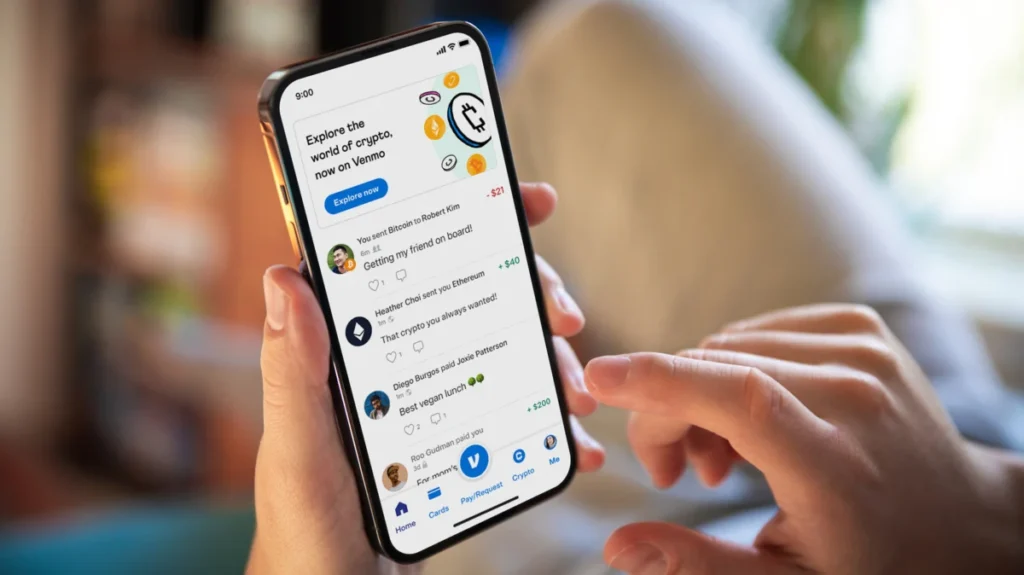
The most significant change in the latest Venmo update, as first reported by The Verge, involves the platform’s default privacy settings for new users. Historically, Venmo operated on an "open by default" model. When a user signed up, their transaction history—excluding the specific dollar amount—was broadcast to a public social feed. This design choice often resulted in unintended disclosures, turning private financial interactions into public data points.
Under the new redesign, the onboarding process has been reconfigured. New users will now find that their transaction visibility is defaulted to "Friends Only." This adjustment acts as a necessary buffer, ensuring that financial activities are shared only with individuals within the user’s trusted network rather than the entire Venmo user base.
Furthermore, the app is introducing an even more restrictive privacy tier: "Just Me." This setting allows users to completely silo their transactions, effectively turning off the social component of the platform for those who view Venmo primarily as a payment utility rather than a social network.
Chronology: A History of Privacy Friction
To understand the significance of this shift, one must look at the historical trajectory of Venmo’s privacy challenges. The platform’s "social-first" ethos was originally designed to foster transparency and trust among friends. However, as the user base exploded into the millions, the cracks in this model became glaringly apparent.
- 2010–2018: The Era of Radical Transparency: During its formative years, Venmo leaned into its social feed. It became a cultural phenomenon, with third-party sites like Venmo Public scraping and displaying millions of public transactions to highlight the peculiar and often humorous nature of how people spend money.
- 2021: The Biden Disclosure: The turning point for many observers came in 2021, when BuzzFeed News demonstrated how easily one could map the social connections of high-profile individuals—including then-President Joe Biden—simply by analyzing their Venmo friend lists. Because friend lists were public by default and linked to transactions, the app inadvertently became a tool for surveillance and OSINT (Open Source Intelligence) gathering.
- 2021: Initial Remediation: In response to the public outcry following the Biden incident, Venmo implemented a feature allowing users to hide their friend lists. While this was a major step forward, it was an "opt-in" feature, leaving many users unaware that their data was potentially exposed.
- 2026: The Strategic Redesign: Five years later, the current redesign represents the most comprehensive attempt to address these structural privacy issues, signaling that the company finally prioritizes user data protection over the "social feed" engagement metrics that defined its early growth.
Supporting Data and User Behavior
The pressure for these changes was not merely anecdotal; it was driven by a fundamental change in user expectations. According to recent market analysis from TechCrunch, the demographic shift toward "Generation Z" and "Generation Alpha" has introduced a cohort of users who are significantly more protective of their digital footprints than their predecessors.
While the social feed was once considered a "sticky" feature—keeping users returning to the app to see what their friends were doing—it is now increasingly viewed as a liability. Data suggests that a growing percentage of the user base manually adjusted their settings to private in the years preceding this update. By making "Friends Only" the default, Venmo is effectively automating a behavior that its most privacy-conscious users were already performing manually.
Moreover, the redesign is not stripping away social features entirely; it is merely tempering them. The introduction of "React to Payments" and "Say Thanks" suggests that Venmo wants to maintain its status as a social-adjacent app without forcing users to disclose their financial habits to the general public.
Official Responses and Corporate Strategy
Venmo’s leadership team has framed this update not as a retreat from social connectivity, but as an evolution of the "money movement" concept. In recent corporate communications, the company stated its goal to become a "next-generation financial ecosystem."
This transition involves expanding the app’s utility. The new "Give a Shoutout" button is a prime example of this strategy. By allowing users to tag and promote local businesses, Venmo is attempting to bridge the gap between individual P2P payments and small-business commerce. This creates a new revenue stream and ecosystem value that is far more sustainable than the company’s original reliance on peer-to-peer social data.
The official stance from PayPal, Venmo’s parent company, is that these updates reflect a commitment to "financial health and user agency." By providing granular control over visibility—ranging from public, to friends, to private—the company is attempting to satisfy the needs of the casual user, the small business owner, and the security-conscious consumer simultaneously.
Implications: The Future of the "Social" App
The implications of this redesign are far-reaching, both for the fintech industry and for the future of social-media-integrated financial services.
1. The Death of the "Public Ledger"
For years, the "Venmo feed" was the closest thing we had to a public record of micro-transactions. With this shift, that public ledger is effectively closing. This will likely decrease the amount of "cringe" or "stalker" behavior on the app, but it also signals a broader industry trend where financial apps are moving away from social gamification toward professionalized, secure banking experiences.
2. Trust as a Competitive Advantage
In a crowded market filled with competitors like Cash App, Zelle, and Apple Pay, privacy is no longer just a feature; it is a primary competitive advantage. By proactively addressing these concerns, Venmo is positioning itself as a "safer" choice for users who are increasingly wary of how their financial data is utilized.
3. A New UX Paradigm
The integration of "Pay Again" and "Quick Actions" shows that Venmo is focusing on speed and efficiency. The modern user wants to move money with as little friction as possible. By decluttering the interface and focusing on high-intent actions, Venmo is signaling that it wants to be the app you open when you need to conduct a transaction, rather than the app you scroll through when you are bored.
4. The Road Ahead
While the current rollout is limited, the full scope of the redesign is expected to be finalized by the fall of 2026. This period will be crucial for the company. As they roll out these changes, they must ensure that the transition remains seamless for users who have grown accustomed to the old interface. Furthermore, the industry will be watching to see if the "private by default" move impacts user engagement. If engagement remains high, it will prove that users are willing to trade the "fun" of a social feed for the security of a robust financial platform.
Conclusion
Venmo’s latest redesign is a tacit admission that the "social experiment" phase of peer-to-peer payments has reached its logical conclusion. By pivoting toward privacy and utility, the platform is maturing. Whether this will successfully transform Venmo into the ultimate "money movement" app remains to be seen, but the shift is a necessary one. In an era where privacy is a fundamental human right in the digital space, the days of broadcasted coffee purchases are coming to an end, replaced by a more mature, guarded, and efficient vision of personal finance.