
Introduction: The Invisible War on Maritime Crime
The global maritime trade network is the lifeblood of the modern economy, with over 80% of global trade by volume transported by sea. Yet, beneath the surface of this colossal logistical achievement lies a persistent, dangerous shadow: maritime piracy and armed robbery. For over thirty years, the International Chamber of Commerce’s (ICC) International Maritime Bureau (IMB) Piracy Reporting Centre (PRC) has stood as the global industry’s primary bulwark against these threats. Operating as a 24-hour nerve center, the PRC serves as both an emergency lifeline for mariners in peril and the world’s most comprehensive repository for data on maritime security.
As the maritime landscape evolves, so too does the nature of piracy. From the sophisticated hijackings off the coast of Somalia to the persistent, opportunistic armed robberies in the Singapore Strait and the Gulf of Guinea, the PRC remains the definitive source of truth in an environment where information is the most valuable defensive asset.
The Genesis and Evolution of the PRC (1991–Present)
A Response to a Growing Crisis
In the early 1990s, the international shipping community faced a surge in violent piracy that caught many regional authorities off guard. Recognizing that fragmented reporting was hindering the global response, the ICC established the IMB Piracy Reporting Centre in 1991. The mission was clear: to create a centralized, independent platform where shipmasters could report incidents without the bureaucratic red tape often associated with regional jurisdictions.
Chronology of Operational Impact
- 1991: The IMB launches the PRC, establishing a dedicated 24/7 hotline to bridge the gap between shipmasters and local law enforcement.
- Late 1990s–Early 2000s: The PRC pivots to focus on the rise of piracy in Southeast Asia, pioneering the use of digital alerts to warn vessels of high-risk zones in real-time.
- 2008–2012: The peak of the Somali piracy crisis. The PRC becomes an essential partner for the international naval coalitions (such as EUNAVFOR), providing the ground-level data required to define the "High Risk Area" (HRA).
- 2015–2020: As Somali piracy waned, the PRC shifted its focus to the Gulf of Guinea, documenting the rise of crew kidnappings and demanding stronger regional intervention.
- 2024: The PRC continues to refine its digital infrastructure, incorporating automated warning broadcasts and satellite-linked alerts to ensure that even the most remote vessels are kept informed.
The Mechanism of Protection: How the PRC Functions
The PRC does not function as a private navy; rather, it acts as a force multiplier for existing maritime security resources. Its operational model is built on three core pillars: Rapid Response, Intelligence Dissemination, and Data Advocacy.
The 24-Hour Nerve Center
When a shipmaster encounters a suspected pirate vessel or experiences an armed boarding, every second counts. By contacting the PRC, the shipmaster gains access to an experienced team that understands the nuances of international maritime law and the local political realities of the waters in question. The PRC’s immediate action is to relay this information to the nearest Coastal State authorities and, where appropriate, to international naval assets operating in the vicinity.
Intelligence Dissemination
The PRC is more than an emergency hotline; it is an early-warning system. By utilizing satellite broadcasts and email alert systems, the Centre ensures that vessels transiting near reported incidents are notified immediately. This allows captains to adjust their course, increase speed, or reinforce security measures—such as implementing the Best Management Practices (BMP)—well before a potential attack occurs.
Supporting Data: Why Reporting Matters
There is a common misconception in the shipping industry that reporting an incident to the IMB is an administrative burden that offers little return. The IMB vehemently disagrees, citing data as the primary weapon against maritime crime.
The Power of "Actual, Attempted, and Suspected" Reports
The PRC encourages the reporting of all incidents, regardless of whether they resulted in a loss of cargo or crew injury. This data-gathering approach allows the IMB to:
- Identify Patterns: Determine if pirates are shifting from night-time attacks to dawn raids.
- Highlight High-Risk Zones: Provide empirical evidence to insurers and government bodies about which regions require increased naval patrols.
- Influence Policy: Use the annual Piracy and Armed Robbery Against Ships report to lobby the International Maritime Organization (IMO) and regional governments for increased security resources.
Without these reports, piracy incidents remain "dark data"—unrecorded and unaddressed—which allows criminal syndicates to operate with impunity in areas that appear statistically "safe" simply because crimes were never officially logged.
Official Responses and Industry Implications
The Voice of Authority
Michael Howlett, Director of the ICC International Maritime Bureau, has consistently emphasized that maritime security is a collective responsibility. "The data gathered by the Centre provides key insights on the nature and state of modern piracy," Howlett notes. "However, the efficacy of our work depends entirely on the willingness of shipmasters and owners to step forward."
By providing transparency into the state of the oceans, the PRC forces governments to take ownership of their territorial waters. When the PRC publishes reports showing a spike in crime within a specific nation’s Exclusive Economic Zone (EEZ), that nation faces international pressure to deploy coast guard assets and prosecute perpetrators.
Implications for Global Trade and Insurance
The ripple effects of the PRC’s work are felt in the boardrooms of the world’s largest logistics and insurance firms. Piracy risk directly impacts "war risk" insurance premiums. When the PRC reports a reduction in incidents, it provides the evidence required for underwriters to lower premiums, directly reducing the cost of shipping for the global economy. Conversely, when the PRC highlights an emerging threat, the industry is warned in time to prevent catastrophic losses.
The Future of Maritime Security: Challenges Ahead
While the PRC has been successful, the nature of the threat is becoming increasingly complex.
Cybersecurity and Maritime Crime
We are entering an era where physical piracy is increasingly complemented by digital threats. Cyber-piracy—the hijacking of navigation systems or the targeting of cargo manifests—represents a new frontier. The PRC is currently navigating how to incorporate these digital vectors into its traditional framework of maritime safety.
The Human Element
Despite the rise of autonomous vessel technology, the human element remains the most vulnerable point in the maritime supply chain. The PRC’s focus on the safety of crews—ensuring that sailors are not kidnapped for ransom or subjected to physical violence—remains the central moral imperative of the Centre. As Howlett emphasizes, the statistics in the annual report are not just numbers; they represent human lives at risk.
Conclusion: An Unwavering Commitment
The IMB Piracy Reporting Centre stands as a testament to what international cooperation and data-driven intelligence can achieve. For over three decades, it has served as the eyes and ears of the global merchant fleet, turning isolated incidents into actionable intelligence.
As we look toward the future, the mandate for shipowners and operators is clear: Report, document, and inform. By utilizing the resources provided by the PRC, the maritime community can continue to deter those who seek to profit from chaos on the high seas. To stay informed and contribute to this vital global effort, stakeholders are encouraged to engage with the PRC’s latest findings and maintain rigorous reporting standards.
Contact Information:
For shipmasters, security officers, and industry stakeholders seeking guidance or looking to report an incident, the IMB Piracy Reporting Centre remains available 24/7.
- Director: Michael Howlett
- Organization: ICC International Maritime Bureau
- Phone: +44 207 423 6960
- Email: [email protected]
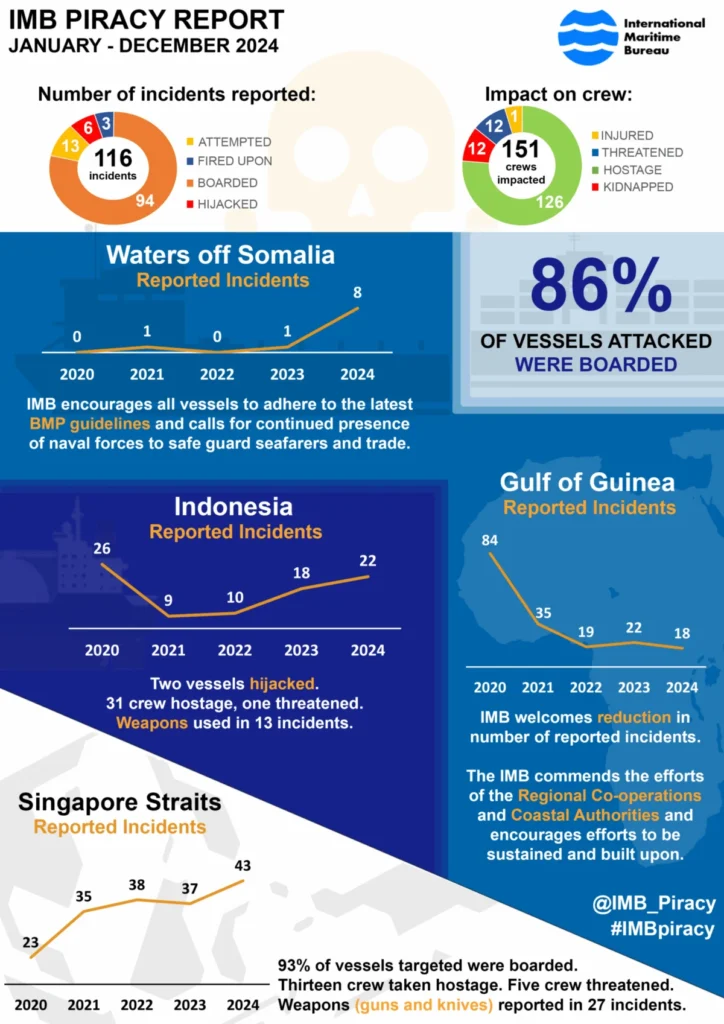
- Resources: To access the latest 2024 Piracy and Armed Robbery Against Ships report, visit the official ICC-CCS website.
In an increasingly volatile world, the IMB Piracy Reporting Centre remains a beacon of stability, ensuring that the global maritime trade routes remain open, safe, and secure for all who traverse them.