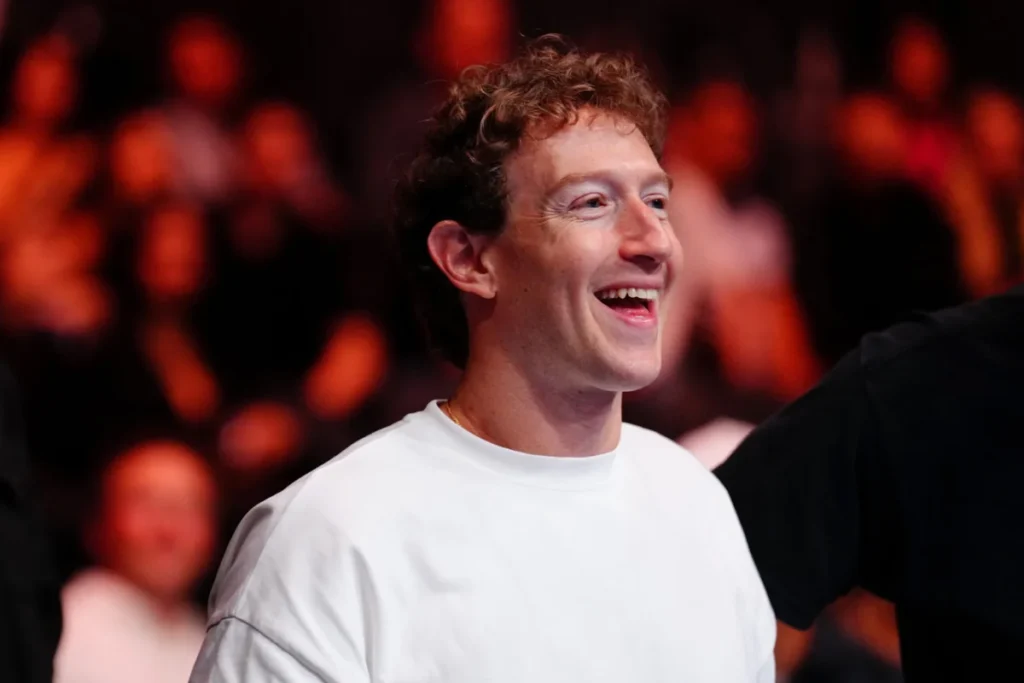
Meta CEO Mark Zuckerberg recently unveiled a sprawling, 6,500-word manifesto titled "The Future is for Everyone," a document that serves as both a roadmap for the company’s technological trajectory and a philosophical defense of aggressive AI development. In it, Zuckerberg paints an optimistic, almost utopian picture of a world where every individual is supported by a highly capable, personalized AI agent that understands their unique goals, preferences, and personal histories.
However, the response to this vision has been deeply polarized. On the latest episode of TechCrunch’s Equity podcast, hosts Kirsten Korosec, Rebecca Bellan, and Anthony Ha dissected why this manifesto—intended to inspire—has instead become a lightning rod for the growing public distrust surrounding artificial intelligence.
The Core Vision: Personal Empowerment or Corporate Pivot?
At the heart of Zuckerberg’s argument is the concept of "personal intelligence." He posits that AI should not merely be a tool for corporate efficiency but a democratic force that empowers the individual. He envisions a world where users interact with sophisticated, always-on AI models capable of managing schedules, drafting communication, and navigating complex digital tasks, whether the user is online or offline.
Meta is pushing this vision through its latest developments, such as the Glimmer AI model. The goal is to move beyond the current landscape of AI chatbots—which many users view as gimmicky or intrusive—toward a model of seamless, ubiquitous integration.
Yet, observers are questioning the timing and the underlying motive. As TechCrunch’s Rebecca Bellan noted during the podcast, "Cynically, I think that this is an attempt for Meta to win in a different way. They’re not winning in the frontier, closed-model space. They’re not necessarily even winning in the open space. But when it comes to personal empowerment… that’s where he’s trying to win."
Chronology: From Social Connectivity to AI Ubiquity
To understand the skepticism toward Zuckerberg’s manifesto, one must look at the historical arc of Meta’s relationship with its user base.
- The Early Era: Mark Zuckerberg’s initial mission was to connect the world, promising a digital landscape that would foster genuine social bonds.
- The Shift: Over the last decade, critics argue that the promise of "connection" devolved into a business model driven by rage-baiting, algorithmic polarization, and aggressive data-harvesting for advertisement revenue.
- The Pivot to AI: Following significant investments in AI infrastructure and talent acquisition, Meta has sought to reposition itself as a leader in the generative AI space.
- The Manifesto: With the publication of The Future is for Everyone, Zuckerberg is attempting to reframe Meta not just as a social media giant, but as the primary architect of the personal AI age.
This history creates a "trust deficit." When the person who built the current social media ecosystem tells the public that their new AI tools will "empower" them, the memory of previous promises—and their perceived failures—looms large.
Supporting Data and Technical Reality
While the vision is grand, the technical implementation remains murky. Zuckerberg has positioned his approach as the antithesis to the "doomerism" prevalent in other AI labs. While companies like Anthropic and OpenAI publicly grapple with the ethics of "pacing" development and safety protocols, Zuckerberg has taken a hard-line stance against slowing down. He argues that caution is not only unnecessary but detrimental, particularly in the context of global technological competition, specifically naming China as a benchmark.
However, there is a disconnect between the "for everyone" rhetoric and the practical accessibility of these tools. As Bellan pointed out during the podcast, "I was like, ‘Oh, maybe I’ll try to download Muse Glimmer and see what I can do with it.’ Can I download it to my MacBook? No. You need specific hardware."
The reliance on specialized hardware for these "personal agents" suggests that the future Zuckerberg describes is, at least for now, gated behind hardware requirements that aren’t yet accessible to the average consumer. This creates a cognitive dissonance: the manifesto claims the future is universal, while the product roadmap remains exclusive.
Official Responses and the "Anti-Dario" Stance
The contrast between Zuckerberg and industry peers like Anthropic CEO Dario Amodei has become a central theme in the AI narrative. Amodei has spent considerable time addressing the "crisis of trust" within the industry, positioning his company as one that takes the risks of frontier AI seriously.
Zuckerberg, by contrast, has positioned himself as the "anti-Dario." He rejects the narrative that AI progress should be stalled due to existential risks. Instead, he characterizes such concerns as a distraction that prevents the realization of a more productive, creative human experience.
Critics, including TechCrunch’s AI editor Russell Brandom, have labeled this manifesto as "exactly why people don’t like AI." The contention is that the manifesto is fundamentally "Pollyannish"—it ignores the significant, concrete costs of AI, such as labor displacement, privacy erosion, and the psychological impact of replacing human interaction with machine-generated content.
Implications: The "Who Wants This?" Problem
The broader implication of this debate is the widening gap between the Silicon Valley vision of the future and the actual desires of the general public.
The Problem of the Messenger
The public remains deeply suspicious of Meta. With a new film about the origins of Facebook arriving soon and lingering resentment over how social media changed modern discourse, Zuckerberg is perhaps the most scrutinized messenger in technology. The skepticism isn’t just about the technology—it is about the steward of that technology.
The Problem of Utility
As Anthony Ha noted, recent pitches from AI leaders often miss the mark by failing to address the "human" aspect of life. Whether it is Sam Altman suggesting that parents use ChatGPT to generate bedtime stories instead of talking to their own children, or Zuckerberg’s vision of a "personal agent" managing every aspect of our lives, the public reaction is frequently a resounding, "Who wants this?"
These AI-driven solutions are often seen as "solutions in search of a problem," providing efficiency where people actually value the friction of human experience.
Conclusion: A Future Still in Question
Mark Zuckerberg’s 6,500-word essay is undoubtedly a masterpiece of corporate vision-setting. It provides a clear, aggressive, and optimistic framework for the next decade of Meta’s existence. However, the widespread pushback suggests that the battle for AI isn’t just about technical superiority or the quality of the model—it is a battle for cultural legitimacy.
If the "Future is for Everyone," the tech industry must bridge the divide between its abstract, utopian promises and the concrete, often messy, reality of its users. Until then, Zuckerberg’s manifesto will likely remain a polarizing document: a sign of progress to some, and a warning to others about the unintended consequences of unbridled technological acceleration.
The question remains: will the public accept an AI-integrated life as the next evolution of human empowerment, or will they continue to view it as the latest iteration of a corporate agenda that prioritizes platform growth over human well-being? As it stands, the skepticism is high, and the path to convincing the average user is steeper than any 6,500-word essay can bridge.