The automotive industry is currently witnessing a paradigm shift that extends far beyond the transition from internal combustion engines to battery-electric powertrains. As software-defined vehicles (SDVs) become the new standard, the battleground for consumer loyalty has shifted from horsepower and torque to user experience, personalization, and artificial intelligence.
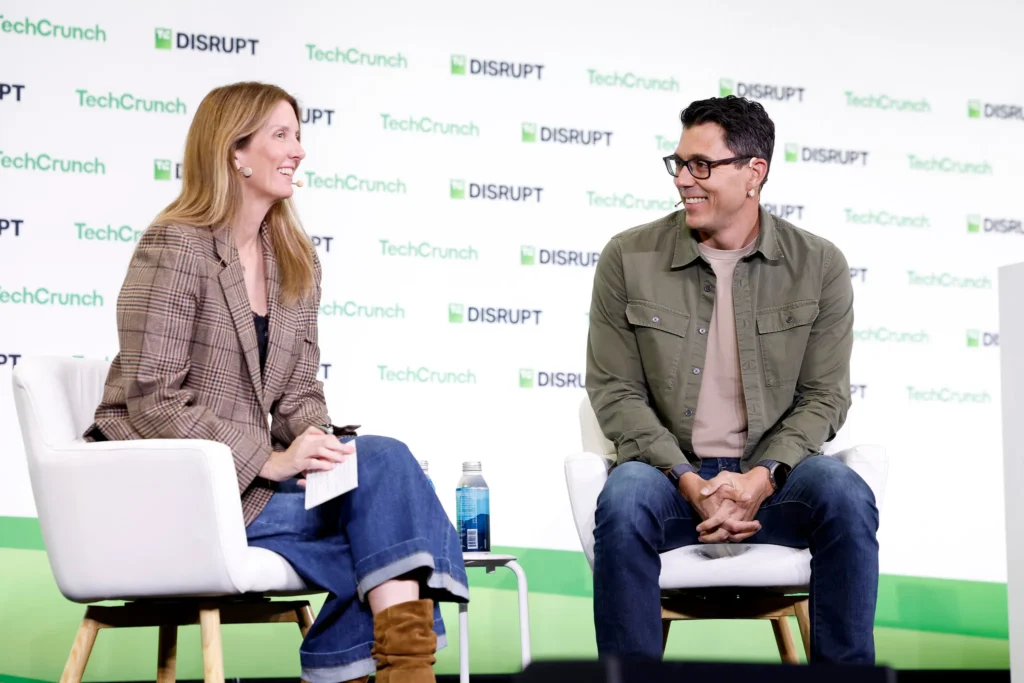
Rivian, the Irvine-based electric vehicle manufacturer, is positioning itself at the vanguard of this transition. While the company recently introduced its own proprietary AI assistant—allowing drivers to manage vehicle functions via natural language—CEO RJ Scaringe has unveiled a much bolder, more expansive strategy. At the recent TechCrunch Disrupt conference, Scaringe outlined a future where Rivian vehicles serve as a hardware platform for third-party "frontier" AI agents, effectively turning the car into a mobile, intelligent companion.
The Architecture of Intelligence: A Multilayered Approach
Rivian’s current AI implementation is not merely a voice-command system; it is a sophisticated, agentic framework designed to mediate between user intent and vehicle capability. By building its software stack from the ground up—eschewing reliance on the "walled gardens" of Apple CarPlay or Android Auto—Rivian has retained granular control over the vehicle’s digital ecosystem.
The "Traffic Light" Logic
According to Scaringe, the vehicle operates on a tiered intelligence architecture. When a user issues a command, the system functions like a high-speed traffic light. It evaluates the complexity of the request and routes it to the most efficient processing environment:
- Edge Computing (Local): For immediate, safety-sensitive, or privacy-critical tasks, the vehicle leverages local models running directly on the car’s onboard hardware. This ensures low-latency execution for functions like climate control, seat adjustments, or window operations.
- Cloud-Based Processing: For more complex, information-heavy queries that require vast datasets—such as summarizing news, drafting emails, or providing detailed travel research—the system offloads the request to more robust, cloud-hosted models.
This "hybrid" model allows Rivian to maintain a seamless experience while mitigating the latency risks associated with pure cloud dependence.
Strategic Integration: Welcoming Frontier AI
The most significant revelation from Scaringe’s Disrupt keynote was the company’s intent to allow third-party AI agents, such as Anthropic’s Claude, OpenAI’s models, or Meta’s Muse, to operate within the Rivian ecosystem.
"That’s where it becomes magical," Scaringe noted. The vision is to move beyond simple "car commands" toward a fluid, cross-platform intelligence. For example, a driver could theoretically ask their vehicle to adjust the cabin temperature while simultaneously consulting a third-party agent about a complex task, such as meal planning for a dinner party. Because the agent would have access to the user’s cross-device context, it would understand that the "meal planning" request is a continuation of a conversation held earlier that day on a smartphone or laptop.
Chronology of Development
- Foundational Development: Since its inception, Rivian prioritized an in-house software stack, allowing for deep integration of navigation and media applications.
- May 2024: Rivian significantly upgraded its internal assistant to interface with external productivity tools, most notably Google Calendar. This marked the shift from a "vehicle-only" assistant to a "personal assistant" integrated into the vehicle.
- September 2024: During TechCrunch Disrupt, CEO RJ Scaringe publicly articulated the roadmap for integrating frontier AI models from external developers.
- December 2024 (Upcoming): Rivian is scheduled to host its "AI & Autonomy Day," where the company is expected to provide deeper technical insights into its agentic frameworks and future software roadmap.
The "Plumbing" Challenge: Safety and Integration
Despite the excitement surrounding this vision, Scaringe was quick to temper expectations regarding the timeline. Integrating third-party AI into a multi-ton vehicle is fundamentally different from installing an app on a smartphone.
The Safety-Critical Boundary
Scaringe emphasized that there is a strict "hard wall" regarding what an AI agent can control. "You wouldn’t want an agent to determine, ‘hey, it’s time to apply the brakes, or time to steer the vehicle,’" Scaringe stated. By bifurcating vehicle-level control systems from the agentic software, Rivian aims to ensure that the "fun" or "convenience" features never interfere with the primary safety-critical systems.
The Complexity of Coordination
The "plumbing" involved in this integration is, according to Scaringe, a significant hurdle. Rivian is not just building software; they are building a bridge between the car’s proprietary hardware and the APIs of external AI labs. This requires high levels of coordination to ensure that the third-party models respect the privacy, security, and safety constraints of the vehicle environment.
Implications for the Industry
Rivian’s move is a direct challenge to the traditional automotive software model. By choosing not to rely on standard mobile mirroring services, Rivian is betting that the premium car buyer of the future will value a cohesive, AI-native experience over the familiarity of a phone-based interface.
Competition and Market Dynamics
Rivian is not alone in this pursuit. Tesla has already moved to integrate its own Grok chatbot into its fleet, creating a closed-loop system that reflects the company’s vertically integrated philosophy. However, Rivian’s potential openness to "frontier" models like Anthropic suggests a more modular, "best-of-breed" strategy.
If successful, this could create a new marketplace where car owners can choose which AI "personality" or "intelligence" powers their vehicle, much like choosing a trim level or a paint color.
Privacy and Personalization
The efficacy of these AI agents hinges on context. For an AI to be helpful in the way Scaringe describes—pulling up notes from a conversation held yesterday—the vehicle must have access to a user’s digital footprint. This raises significant questions regarding data sovereignty. How will Rivian handle the data bridge between a third-party AI lab and the driver’s private vehicle data? The company has yet to release a detailed policy on how this data exchange will be secured, though it remains a central point of scrutiny for regulators and privacy advocates.
Conclusion: The "Magical" Horizon
As we look toward the December "AI & Autonomy Day," the industry will be watching to see if Rivian can successfully navigate the "plumbing" of its ambitious plan. The shift toward agentic AI in the automotive space represents the final step in the evolution of the car from a machine that transports us to an environment that supports us.
By refusing to settle for simple voice-activated climate control and instead aiming for a, cross-platform, intelligent ecosystem, Rivian is betting that the car of the future will be defined by its ability to "think" with its driver. While the implementation will require rigorous safety testing and complex technical partnerships, the potential to turn a daily commute into a productive, personalized experience is a value proposition that could define the next decade of automotive innovation.
The "magic," as Scaringe puts it, lies in the invisibility of the tech. When the car stops feeling like a machine and starts feeling like an extension of one’s own digital life, Rivian will have achieved what many legacy manufacturers are still struggling to define. For now, the automotive world waits for December—to see if the road ahead is truly as intelligent as the company claims.