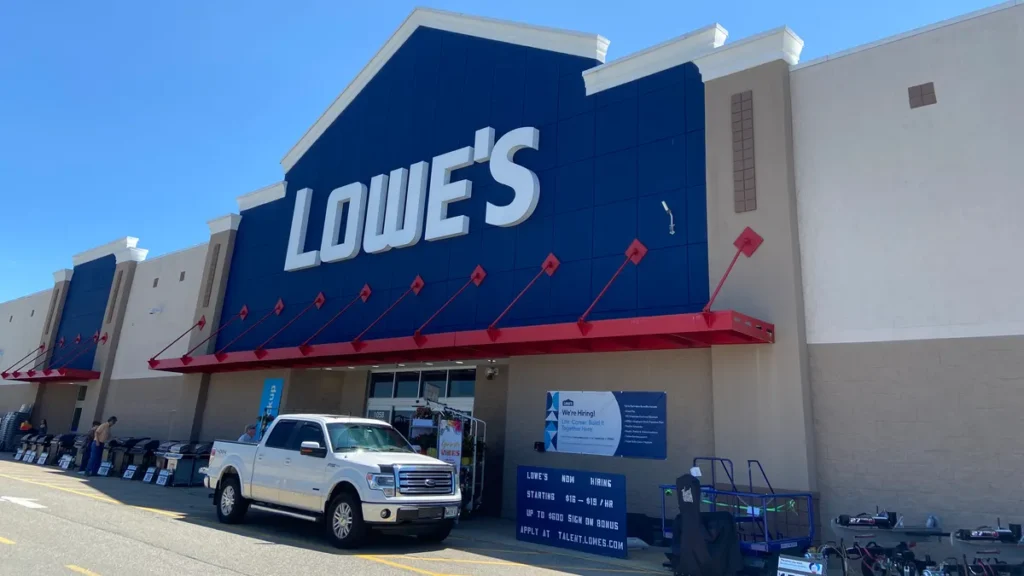
In an increasingly complex retail landscape, Lowe’s Companies, Inc. has demonstrated remarkable resilience. On August 19, 2026, the home improvement giant reported its second-quarter financial results, revealing a modest yet significant 0.2% increase in comparable sales. While the figure may appear slight, it marks the retailer’s fifth consecutive quarter of positive comp growth, a noteworthy achievement against the backdrop of a cooling housing market and persistent consumer caution.
As the industry grapples with shifting macroeconomic tides, Lowe’s has strategically pivoted toward its Pro segment and digital infrastructure to offset the persistent weakness in discretionary DIY spending. This balancing act—maintaining core consumer loyalty while aggressively pursuing high-value professional contractors—serves as the cornerstone of the company’s current fiscal philosophy.
The Core Financial Snapshot
Lowe’s reported total quarterly sales of nearly $26 billion, an 8.3% increase year-over-year. This top-line growth reflects the company’s scale, though profitability remained largely steady. Operating income saw a modest lift of 2.3% to $3.5 billion, while net income remained effectively flat at $2.4 billion.
The primary narrative of the quarter is the bifurcation of the customer base. While the average consumer remains hesitant to commit to major home renovations due to high interest rates and broader economic uncertainty, the "Pro" segment—contractors, builders, and tradespeople—has provided a critical floor for the company’s performance.

Chronology of Strategy: A Shift in Focus
The current fiscal trajectory did not happen in a vacuum. Over the past several years, Lowe’s has systematically dismantled its reliance on seasonal DIY surges, replacing them with a more robust, multi-channel strategy.
- 2023-2024 (Foundational Investments): Lowe’s began integrating advanced digital tools specifically designed for professional users, allowing for bulk ordering, streamlined invoicing, and project management capabilities.
- Late 2024 (Strategic Acquisitions): The company moved beyond organic growth by acquiring firms such as Artisan Design Group and the professional division of Foundation Building Materials. These moves were calculated to embed Lowe’s deeper into the supply chain of residential construction.
- Early 2025 (Loyalty Overhaul): The launch of an updated Pro loyalty program incentivized repeat business, creating a stickier relationship with contractors who were previously fragmented in their procurement habits.
- Q2 2026 (The Current Test): Faced with a stagnant DIY market, these long-term investments were stress-tested, resulting in the positive comp growth reported this week.
Supporting Data: The DIY vs. Pro Divide
Data from GlobalData offers a granular look at why the company’s results were mixed. While the total number of small-scale home projects rose by 1.5% year-over-year—suggesting that consumers are still maintaining their homes—the number of big-ticket projects (kitchen remodels, extensive landscaping, etc.) plummeted by over 2%.
- Digital Growth: One of the brightest spots in the report was a 16% year-over-year increase in online sales. This underscores the efficacy of the company’s "omnichannel" strategy, which allows customers to research and purchase materials seamlessly, whether they are on a job site or at home.
- Comp Growth: The 0.2% comp increase serves as a testament to the diversification of revenue. By capturing more of the home services market, Lowe’s has successfully mitigated the decline in large discretionary purchases.
- Market Pressure: Industry analysts note that the home improvement sector is currently navigating its "toughest cycle in years." High borrowing costs are keeping potential homebuyers on the sidelines, which in turn reduces the volume of pre-sale renovations—a traditional revenue driver for retailers like Lowe’s.
Official Responses and Executive Outlook
During the earnings call on Wednesday, CEO Marvin Ellison provided a candid assessment of the current environment. He categorized the current sluggishness in the DIY market as a "moment in time" rather than a permanent structural shift.
"We think it’s cyclical," Ellison stated. "The good news is we delivered consecutive quarters of positive comps with a DIY penetration north of 60%. We feel great about how we are managing our business in arguably one of the most difficult DIY environments. And we know the moment we get any type of macro tailwind, that our business is going to perform."

Ellison’s confidence stems from the belief that home improvement is a deferred need rather than a lost one. As the housing stock in the United States continues to age, the eventual necessity for maintenance and upgrades will force a return to spending, regardless of the interest rate environment.
Strategic Implications: The Path Forward
The implications of Lowe’s Q2 performance extend beyond the quarterly balance sheet. The company is effectively attempting to "future-proof" its model.
1. The Pro Segment as the Growth Engine
The emphasis on the Pro segment is not just a defensive maneuver; it is a long-term play for market share. Professional contractors provide more predictable, high-volume revenue than individual homeowners. By acquiring specialized firms and optimizing the supply chain for these professionals, Lowe’s is positioning itself as an essential partner in the construction ecosystem.
2. The Danger of Neglect
Neil Saunders, Managing Director at GlobalData, offered a cautionary note regarding this pivot. "This push into Pro has the potential to produce a lot of upside for Lowe’s over the medium and longer term, though it must not lose sight of its core consumer business," Saunders remarked. The challenge for Lowe’s lies in maintaining the "retail theater" and product accessibility that keeps DIY shoppers returning to their aisles, even when their budgets are constrained.

3. Digital Maturity
The 16% jump in online sales is a validation of the company’s multi-year investment in its digital infrastructure. In the modern retail environment, the "store" is no longer just the physical location; it is the app, the website, and the logistics network that ensures a pallet of lumber arrives at a job site on time. Lowe’s is proving that its logistics capabilities are maturing at the same pace as its retail footprint.
Conclusion: A Measured Optimism
As we look toward the remainder of 2026, Lowe’s remains a bellwether for the health of the American household. While the macroeconomic environment remains fraught with uncertainty, the company’s ability to eke out growth in a down cycle is a sign of operational discipline.
The strategy is clear: double down on the professional contractor, continue to digitize the customer experience, and remain prepared for the inevitable return of the DIY consumer. For investors and industry observers alike, the question is no longer whether Lowe’s can survive the current economic drought, but how much market share it can consolidate before the next period of growth begins. By maintaining its focus on operational efficiency and customer segmentation, Lowe’s appears well-equipped to weather the storm until the housing market, and the consumer, find their footing once again.