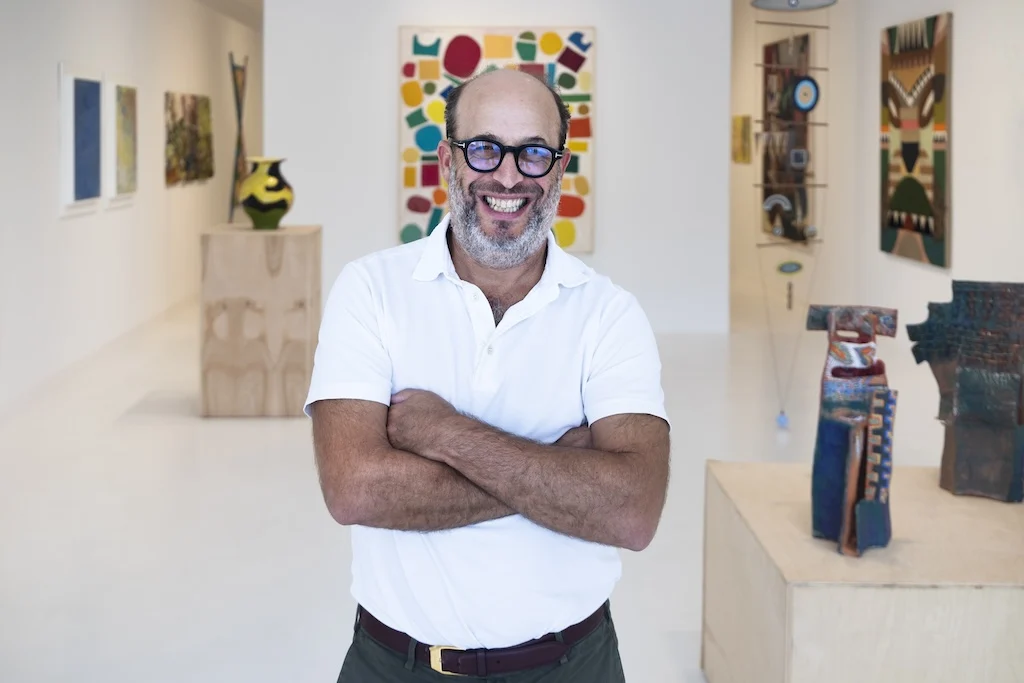
WEST PALM BEACH — In a move that signals both a personal homecoming and a strategic pivot within the high-end art market, veteran dealer Eric Firestone has announced the opening of his fifth gallery space. Located in the burgeoning cultural corridor of West Palm Beach, the new outpost marks Firestone’s first permanent foray into the South Florida market, adding to his established presence in New York City and East Hampton.
The expansion comes at a precarious time for the global art trade, as many mid-tier galleries retrench in the face of economic cooling. However, Firestone’s approach—prioritizing permanent, year-round regional hubs over the transient "pop-up" culture of the pandemic era—offers a distinct blueprint for sustainable growth.
Main Facts: A Fifth Pillar in the Firestone Empire
The new Eric Firestone Gallery is slated to open in mid-November at 2412 Florida Avenue. The location is strategically significant, situated in a converted warehouse space within walking distance of the Norton Museum of Art. This proximity to a major institutional anchor underscores Firestone’s commitment to a program that bridges the gap between commercial viability and museum-grade scholarship.
The West Palm Beach location joins a portfolio that currently includes two galleries in Manhattan (on Great Jones Street and Newtown Lane) and two in East Hampton. While many New York dealers have experimented with seasonal storefronts in Palm Beach to capture the winter "snowbird" demographic, Firestone is opting for a more rooted presence.
Key Details of the Expansion:
- Location: 2412 Florida Avenue, West Palm Beach.
- Format: A "salon-style" showroom rather than a traditional white-cube rotating exhibition space.
- Focus: A curated dialogue between established postwar American masters and emerging contemporary voices.
- Operational Philosophy: A permanent, year-round commitment to the local community, closing only during the peak heat of the summer months.
Chronology: From Miami Roots to East Coast Expansion
To understand Firestone’s move to West Palm Beach, one must look at the trajectory of a career defined by a "shoot-from-the-hip" intuition and a deep-seated connection to the Atlantic coast.
1989: The Departure
Firestone grew up in Miami, immersed in the vibrant, if then-nascent, South Florida culture. He left the region in 1989, a period when the Miami art scene was largely defined by a few local stalwarts and had not yet become the global juggernaut sparked by the arrival of Art Basel in 2002.
2008–2024: The East Hampton Foundation
Over the past 16 years, Firestone cultivated a unique business model in East Hampton. While other galleries treated the Hamptons as a three-month marketing exercise, Firestone built a year-round identity. He became a "go-to" figure in the community, proving that high-level secondary market sales and primary representation could thrive outside of the traditional Chelsea or Upper East Side circuits if the dealer remained accessible.
2020–2023: The Pandemic Shift and Market Observation
During the COVID-19 pandemic, Firestone observed a "gold rush" of New York galleries descending on Palm Beach and West Palm Beach. As wealth migrated south, galleries like Pace, Acquavella, and Sotheby’s opened outposts. However, as the world reopened, many of these spaces were shuttered or reduced to seasonal "by appointment" offices. Firestone waited for the dust to settle, analyzing the regional data before committing to a permanent lease.
November 2024: The Homecoming
The opening of the Florida Avenue space represents the culmination of a decade of increasing business activity in the region. Firestone noted that a significant portion of his existing client base had already relocated to or established secondary residences in the West Palm Beach area, making a local brick-and-mortar presence a logical next step.

Supporting Data: The Economics of the Regional "Salon"
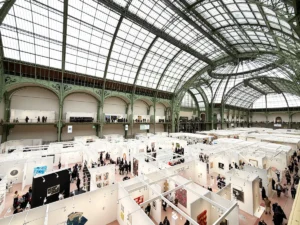
The decision to expand during a period of market contraction is backed by a pragmatic financial calculus. Firestone’s strategy challenges the traditional reliance on the international art fair circuit, which has become increasingly cost-prohibitive for independent dealers.
The Art Fair vs. Permanent Space Equation
Firestone revealed that the overhead required to maintain the West Palm Beach gallery for an entire year is roughly equivalent to the cost of participating in just two major international art fairs.
"This isn’t a loss leader for me," Firestone told ARTnews. "If I’m doing this, I have to produce. My business has to produce."
By redirecting funds from the logistical nightmare of art fairs—shipping, insurance, booth fees, and travel—into a permanent regional asset, Firestone gains:
- Inventory Control: The ability to move works up and down the East Coast internally.
- Client Longevity: A space to host collectors in a relaxed, "salon" environment rather than the frenetic pace of a four-day fair.
- Market Testing: A venue to showcase younger artists alongside blue-chip postwar works to see how they resonate with Florida’s specific collector demographic.
The "Salon" Model
Unlike his New York galleries, which follow a rigorous schedule of solo exhibitions, the West Palm Beach space will function as a "continuously changing salon or showroom." This allows Firestone to pivot quickly, mixing historical material—such as the works of Joe Overstreet or Pat Passlof—with newer acquisitions. This hybrid model is particularly effective for estate-based galleries, as it allows for the constant re-contextualization of historical narratives.
Official Responses and Curatorial Philosophy
Firestone’s expansion is inextricably linked to his reputation as a "resurrector" of postwar American artists. His gallery has become synonymous with finding "the other voices"—artists who were radical and influential in their time but were sidelined by the mainstream art historical canon, often due to race, gender, or a refusal to adhere to specific movements.
The Case of Pat Passlof
The success of the Firestone model is perhaps best exemplified by his representation of the Pat Passlof estate. Passlof, a student of Willem de Kooning at Black Mountain College, was a central figure in the Abstract Expressionist movement but remained overshadowed by her male peers for decades.
Firestone’s strategic promotion of Passlof included:
- 2020: Assuming representation of the estate.
- 2022: A sold-out presentation at Frieze Masters.
- Institutional Placement: Successfully placing her works in the permanent collections of the Whitney Museum, MoMA, Crystal Bridges, and the North Carolina Museum of Art.
On September 9, Firestone will further this mission with the exhibition "After Magic: Early Works by Pat Passlof: 1948–1962" at his Great Jones Street gallery. This exhibition serves as a precursor to the type of historical scholarship he intends to bring to the West Palm Beach audience.

Firestone on the "Freshness" of the Trade
Firestone remains vocal about his disdain for the "boring" corporate nature of the modern art world. "You do this long enough, you got to keep it fresh for yourself," he remarked. "There’s so many dealers that look like they’re just going through the motions."
His "shoot-from-the-hip" mentality suggests that the West Palm Beach gallery will be an experimental space, driven by the dealer’s personal interests rather than purely by data-driven market trends.
Implications: A New Cultural Anchor for West Palm Beach
The arrival of Eric Firestone Gallery at 2412 Florida Avenue has broader implications for the South Florida art ecosystem. It signals the continued transformation of West Palm Beach from a quiet residential enclave into a sophisticated cultural hub that rivals Miami.
1. The Institutional Halo Effect
By situating himself near the Norton Museum of Art, Firestone is tapping into an existing infrastructure of curators and serious collectors. This creates a "cluster effect" that benefits the local economy, drawing art tourism away from the coastal "island" of Palm Beach and into the more industrial-chic neighborhoods of West Palm Beach.
2. The Rediscovery of the Postwar Narrative
Florida collectors have traditionally favored blue-chip Pop Art or Latin American masters. Firestone’s focus on "neglected" postwar abstraction and African American pioneers (like Joe Overstreet) introduces a more academic and diverse layer to the local market. This could influence the acquisition strategies of local private museums and foundations.
3. A Challenge to the "Bicoastal" Norm
While most major New York galleries look toward Los Angeles for their second or third locations, Firestone’s rejection of the bicoastal model in favor of a "Vertical East Coast" strategy (NYC – Hamptons – West Palm Beach) suggests a more efficient logistical path. By dominating a single time zone and a specific corridor of wealth, he maintains a tighter grip on his inventory and a more personal connection with his clientele.
Conclusion
Eric Firestone’s move to West Palm Beach is more than a simple expansion; it is a testament to the power of regional presence in a globalized market. By eschewing the transience of the pop-up and the exorbitant costs of the art fair circuit, Firestone is betting that the future of the art trade lies in deep, year-round community engagement and the constant, salon-style re-evaluation of art history. As he returns to his South Florida roots, Firestone isn’t just opening a gallery—il is bringing a refined, scholarly, and "fresh" perspective to a region that is finally ready to move beyond the seasonal rush.