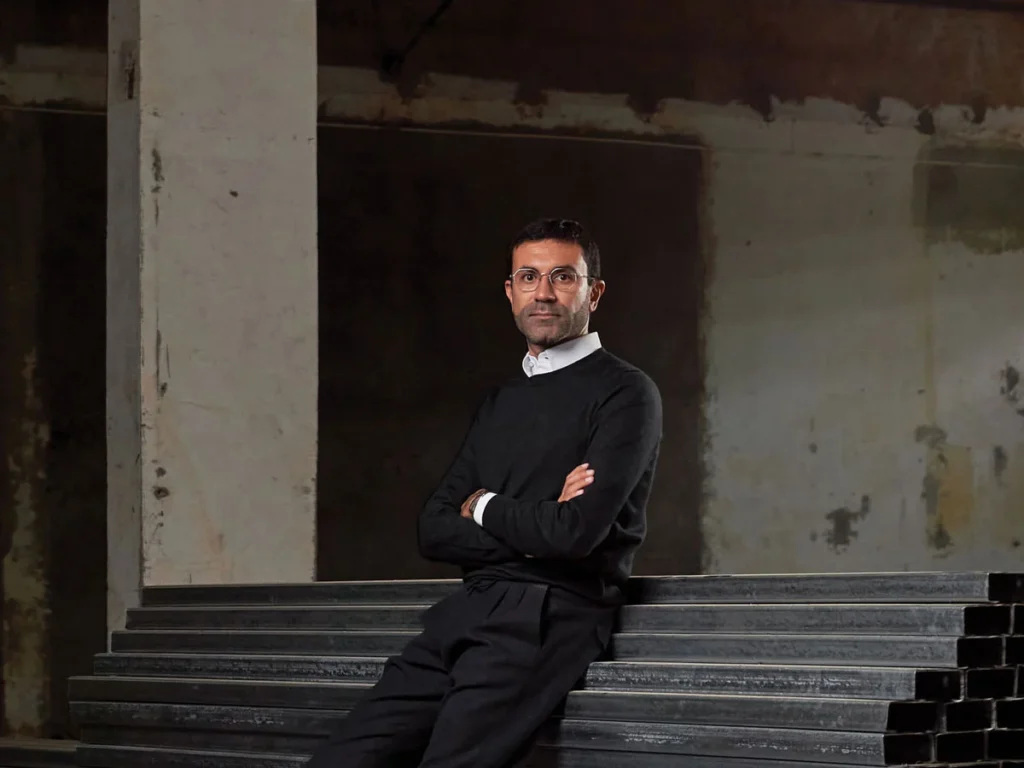
In the high-stakes, often Eurocentric world of international contemporary art, the emergence of a new national voice is a rare and transformative event. In 2019, the Venice Biennale—the "Olympics of the art world"—witnessed a historic milestone when Madagascar mounted its first-ever national pavilion. While the artistic vision was spearheaded by the renowned Joël Andrianomearisoa, the structural and financial scaffolding that made this debut possible was largely the work of one man: Hasnaine Yavarhoussen.
A businessman by trade and a patron by conviction, Yavarhoussen has, in less than a decade, shifted from a casual collector of international works to the primary architect of Madagascar’s cultural soft power. Through his foundation, his contemporary art space, and a strategic mission of "relocalization," Yavarhoussen is not merely collecting art; he is repatriating a national identity and ensuring that Malagasy creativity is afforded a permanent seat at the global table.
Main Facts: The Pillars of a Cultural Revolution
Hasnaine Yavarhoussen’s influence on the Malagasy art scene is multifaceted, operating through several key entities and initiatives that have bridged the gap between the island nation and the international art market.
At the core of his efforts is Fonds Yavarhoussen, established in 2019. The fund was created with a mandate to promote Malagasy culture both within the country and abroad. Its first major undertaking was the sponsorship of the Madagascar Pavilion at the 58th Venice Biennale, an event that signaled the country’s formal entry into the global contemporary art dialogue.
Following the success in Venice, Yavarhoussen co-founded Hakanto Contemporary in Antananarivo in February 2020. Serving as a non-profit independent space, Hakanto (which means "beauty" or "aesthetic" in Malagasy) has evolved from a modest project into a nearly 2,000-square-foot powerhouse located in a renovated warehouse. Under the artistic direction of Joël Andrianomearisoa, it provides a platform for exhibitions, residencies, and educational workshops, effectively nurturing a grassroots art scene that previously lacked institutional support.
Beyond the borders of Madagascar, Yavarhoussen’s influence extends to some of the world’s most prestigious museums. He is a member of the Tate’s Africa Acquisitions Committee and a former trustee of the Zeitz MOCAA in Cape Town. His recent donation of a major work by Andrianomearisoa to the Metropolitan Museum of Art in New York further cements his role as a bridge-builder between African artists and the Western canon.

Chronology: From Corporate Leadership to Cultural Patronage
The trajectory of Yavarhoussen’s patronage is inextricably linked to his role as the CEO of Groupe Filatex, a family-owned Malagasy conglomerate. Understanding his rise requires looking at the intersection of his business acumen and his evolving aesthetic sensibilities.
2011–2017: The Formative Years
After studying economics and management in France and Spain, Yavarhoussen joined Groupe Filatex in 2011. The company is a titan of the Malagasy economy, responsible for providing approximately one-third of the country’s power needs through its energy sector, alongside significant holdings in real estate and hospitality. During this period, Yavarhoussen began his collecting journey, though his initial interests were global. Encouraged by his father and a visit to a friend’s gallery in Paris, his first major acquisition was a work by American artist David Ratcliff. At this stage, his collection lacked a specific Malagasy focus.
2018: The Pivotal Meeting
The turning point occurred in 2018 during a meeting with artist Joël Andrianomearisoa. Andrianomearisoa, who divided his time between Paris and Antananarivo, challenged Yavarhoussen to consider the impact he could have on his own nation’s heritage. At the time, Yavarhoussen admitted to having limited knowledge of the Malagasy contemporary scene. The conversation was so persuasive that it sparked a dual mission: to fund Madagascar’s debut at the Venice Biennale and to pivot his personal collection toward the artists of his homeland.
2019–2020: Institutional Building
In 2019, Fonds Yavarhoussen was launched, and the Madagascar Pavilion became a reality in Venice. This was followed immediately by the opening of Hakanto Contemporary in early 2020. Despite the global pandemic, Hakanto became a sanctuary for local artists, providing the infrastructure necessary for a professionalized art scene to take root in the capital.
2024–2026: Global Integration and Recognition
By 2024, the fruits of this patronage became visible on a global scale. Yavarhoussen donated Andrianomearisoa’s Les Herbes Folles du Vieux Logis (2022) to the Met, where it was displayed in the newly revamped Michael C. Rockefeller Wing. Looking toward 2026, the ecosystem Yavarhoussen helped build continues to gain prestige, with Andrianomearisoa recently nominated for the Prix Marcel Duchamp, France’s highest artistic honor.
Supporting Data: A Collection with a Mission
The Yavarhoussen collection has grown to over 500 works, but its importance lies more in its thematic rigor than its sheer volume. The collection is defined by two primary pillars: personal sensibility and "relocalization."
The "Relocalization" Strategy
A significant portion of Yavarhoussen’s efforts involves tracking down modern Malagasy artworks that left the country following its independence from France in 1960. By acquiring these pieces from international auctions and private estates and bringing them back to Antananarivo, Yavarhoussen is performing a private-sector version of cultural restitution.

Key Artists and Figures
The collection and the foundation’s programming highlight several generations of Malagasy talent:
- Pierrot Men: Regarded as the most significant living Malagasy photographer, Men was recently the subject of a massive 400-work survey at Hakanto Contemporary.
- Joël Andrianomearisoa: The cornerstone of the collection, whose work explores the nuances of blackness, emotion, and textile.
- Malala Andrialavidrazana: Known for her photographic explorations of hierarchies and colonial histories.
- Historical Archive: The collection includes rare photographs dating back to 1860, providing a visual record of the island’s pre-colonial and colonial history.
The foundation’s reach is also academic. Through the Yavarhoussen Scholarship, in collaboration with the Institut National d’Histoire de l’Art (INHA) in Paris, the fund supports the research and publication of books on Malagasy art history, ensuring that the visual culture is backed by rigorous scholarship.
Official Responses: A Philosophy of Visibility
In various interviews and public statements, Yavarhoussen has articulated a philosophy of patronage that rejects the "private vault" mentality often associated with high-level collecting.
"I don’t want to keep these pieces solely in storage, at home, or in my corporate offices," Yavarhoussen has stated. "I want these pieces to be shared and seen." This commitment to public access is the driving force behind his frequent loans to international institutions such as the Ludwig Museum in Germany and Wiels in Belgium.
Regarding his business-to-arts transition, Yavarhoussen views cultural investment as a necessary component of national development. He often recalls the initial question that drove his support for the Venice Biennale: "What would be the impact on Madagascar?" For him, the answer lies in the dignity of representation. By showcasing Malagasy excellence on the world stage, he aims to shift the narrative of the country from one of economic struggle to one of cultural abundance.
Joël Andrianomearisoa, speaking on their collaboration, has noted that Yavarhoussen’s support is unique because it is not merely financial; it is a long-term commitment to the entire "ecosystem" of art—from the education of the artist to the archiving of their work.
Implications: The Future of the Malagasy Scene
The impact of Hasnaine Yavarhoussen’s patronage extends far beyond the walls of his gallery. His work has several long-term implications for the African and global art markets.

1. Decentralization of the African Art Hub:
Historically, the African art market has been centered in Lagos, Cape Town, and Marrakech. Yavarhoussen’s aggressive promotion of Antananarivo is positioning Madagascar as a new, essential node in this network. Hakanto Contemporary serves as a model for how private wealth can be used to build public-facing cultural infrastructure in regions where government funding for the arts is scarce.
2. Cultural Diplomacy and Economic Brand:
As the head of Groupe Filatex, Yavarhoussen is practicing a form of cultural diplomacy. By linking Madagascar’s name to prestigious institutions like the Met and the Tate, he is elevating the country’s global "brand," which can have indirect positive effects on international relations and tourism.
3. The Professionalization of Local Artists:
Through residencies and workshops, Hakanto Contemporary is training a new generation of Malagasy artists in the "language" of the international art world—teaching them how to navigate exhibitions, portfolios, and global discourse. This ensures that the momentum started in 2019 will not fade but will be sustained by a continuous pipeline of talent.
In conclusion, Hasnaine Yavarhoussen has successfully transitioned from a spectator of the art world to one of its most influential participants. By focusing on "relocalization" and visibility, he has ensured that Malagasy art is no longer a footnote in the history of the African continent, but a vibrant, recognized, and essential chapter of the global contemporary narrative. As he recently remarked on his five-year journey since the Venice debut: "I think we’ve fulfilled our mission." Yet, given the expanding reach of his foundation, it appears the mission is only entering its next, more ambitious phase.