

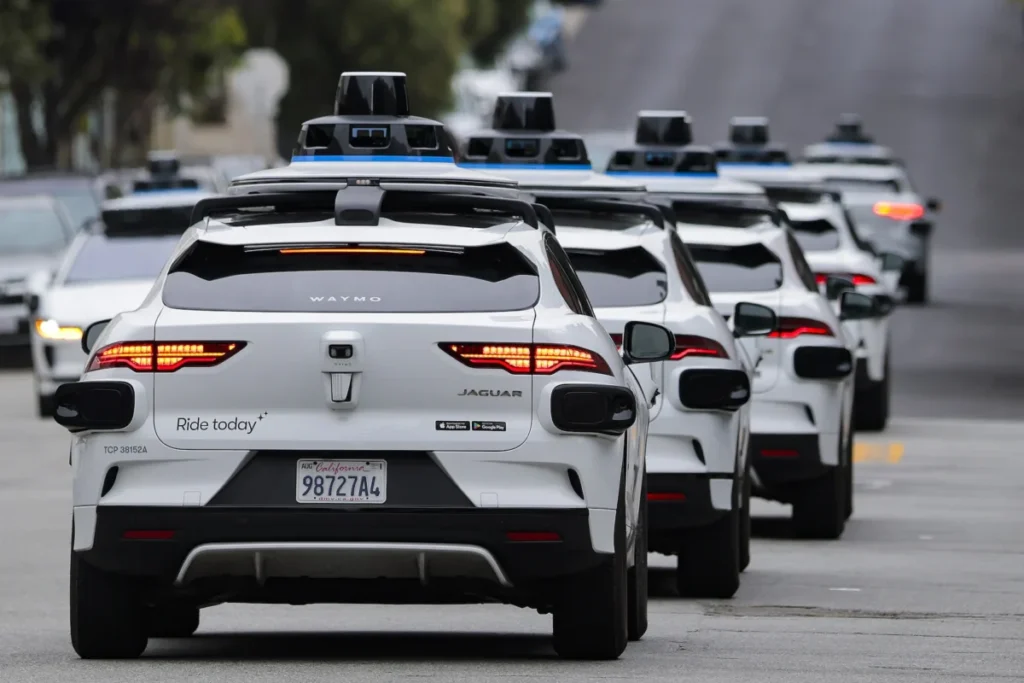
In a landmark legislative move, California has codified a new set of safety requirements for autonomous vehicle (AV) operators, aiming to bridge the growing divide between rapid technological innovation and the practical realities of urban emergency response. Senate Bill 1246, recently signed into law by Governor Gavin Newsom, marks a significant shift in how the state regulates the burgeoning robotaxi industry, effectively ending the era of “hands-off” oversight for companies like Waymo, Zoox, and Tesla.
The law mandates that AV companies provide localized, on-the-ground support to assist first responders when their vehicles malfunction or obstruct critical emergency operations. Failure to clear a path for police or fire services within a 30-minute window will now expose these tech giants to significant financial penalties. As California prepares to implement these rules by July 2028, the legislation serves as a stark reminder that while the future of transportation may be autonomous, it must remain subordinate to public safety.
The Genesis of Accountability: A Pattern of Disruption
The legislative push for SB 1246 did not occur in a vacuum. It was the culmination of years of friction between the state’s high-tech ambitions and the on-the-ground experiences of first responders. For several years, California cities—most notably San Francisco—have served as a massive, real-world testing ground for autonomous fleets. However, this experimentation has been punctuated by a series of high-profile, often chaotic incidents.
From robotaxis stalling in the middle of busy intersections and causing gridlock to vehicles inadvertently entering active crime scenes or obstructing the path of fire trucks responding to emergencies, the public’s patience has worn thin. In several documented instances, the very vehicles designed to improve road safety became obstacles, forcing first responders to manually intervene or move the vehicles themselves to restore traffic flow or access emergency zones.
The scale of the industry is immense. Waymo, the most prominent player in the U.S. autonomous space, currently operates a fleet of roughly 4,000 vehicles nationwide, with approximately 1,200 operating within the San Francisco Bay Area alone. An investigation by TechCrunch earlier this year highlighted a recurring vulnerability: when these sophisticated machines encountered scenarios their software couldn’t navigate, they often defaulted to a “dead-stop” state, becoming literal roadblocks that required human assistance—sometimes provided by the very emergency personnel they were obstructing.
Chronology: From Innovation to Intervention
The trajectory of this issue follows a clear path: early adoption, increasing public concern, federal involvement, and finally, state-level legislative action.
- 2022–2023: The rapid expansion of commercial robotaxi fleets in California leads to a spike in reports of "stalled" vehicles, traffic interference, and confusion among municipal authorities.
- Early 2026: Investigative reporting reveals that Waymo and other companies frequently rely on first responders to move or troubleshoot their vehicles during malfunctions, highlighting a lack of dedicated "incident response" infrastructure.
- Mid-2026: The National Highway Traffic Safety Administration (NHTSA) issues a formal demand to AV developers, insisting that they proactively engineer solutions to prevent their vehicles from impeding emergency responders.
- Late 2026: State Senator Dave Cortese introduces Senate Bill 1246, arguing that California cannot prioritize "innovation at the expense of public safety."
- 2027: The bill gains momentum as public and municipal support grows, culminating in the governor’s signature.
- July 2028: The law is set to go into effect, with the California DMV tasked with establishing specific operational guidelines, including maximum response times for incident technicians.
The "Remote Operator" Debate: U.S.-Based Standards
One of the most contentious aspects of the new law concerns the use of remote assistance. For years, the term "remote operations" has been a catch-all in the industry, masking significant differences in how companies actually manage their fleets from afar.
SB 1246 introduces much-needed clarity by defining a "remote driver" as a human who is directly and actively controlling the vehicle from a remote location. Under the new law, these remote drivers must hold a U.S. driver’s license and be based within the United States. This provision is designed to ensure that in the event of an emergency, the human in the loop has a clear understanding of American traffic laws, local road infrastructure, and the capability to communicate effectively with local dispatchers.
This requirement has sparked a notable divergence in operational models. Tesla has been the most vocal proponent of having remote operators who can take direct, granular control of a vehicle’s steering and braking. In contrast, companies like Waymo have historically relied on a model of "remote assistance," where the vehicle remains in charge of its own navigation, but a human provides high-level guidance or sends software commands to help the vehicle "see" its way out of a complex situation. Waymo’s global network, which includes command centers in Arizona, Michigan, and even the Philippines, will now face a regulatory mandate to ensure that any "direct driver" intervention involving California streets adheres to the new U.S.-based, licensed personnel requirement.
Supporting Data: The Cost of Congestion
The necessity for this legislation is backed by data indicating that AVs are not just "glitching"—they are impacting urban efficiency. In the dense urban grid of San Francisco, a single stalled robotaxi can create a ripple effect of congestion that lasts for hours.
The TechCrunch data analysis suggests that while autonomous systems are statistically safer in terms of avoiding collisions than distracted human drivers, their failure modes are uniquely disruptive. When a human driver breaks down, they typically have the presence of mind to pull onto a shoulder or signal for help. When an AV experiences a system-wide failure, it often simply stops in the middle of the lane.
The new law addresses this by requiring companies to:
- Notify local jurisdictions: Provide real-time data on the location and status of vehicles during system-wide outages.
- Deploy local incident technicians: Establish a workforce of human staff who can physically respond to accidents or obstructions within a time limit to be determined by the DMV.
- Financial accountability: Pay fines if a vehicle remains an obstruction for more than 30 minutes during an emergency.
These requirements force companies to internalize the cost of their "failures," turning what was previously a municipal headache into a direct operational expense for the AV operators.
Official Responses and Industry Outlook
The industry’s reaction has been one of cautious compliance. While initial lobbying efforts may have attempted to soften the language of the bill, the major players appear to have pivoted to an acceptance of the new regulatory reality.
A spokesperson for Waymo stated, "We are grateful for the amendments made to the bill, which ensure autonomous vehicle operators can still feasibly serve Californians. Waymo is committed to making roads safer in California and continually improving our service."
Zoox, another major player, has expressed similar sentiments, noting that its remote operations teams are already based within the United States, positioning them to comply with the new rules with minimal disruption to their current business model.
However, the burden now shifts to the California Department of Motor Vehicles. As the regulatory body responsible for oversight, the DMV must define what constitutes a "reasonable" response time for an incident technician. If the DMV sets these times too aggressively, it could hamper the economic viability of smaller AV startups; if they are too lenient, the public may feel the law lacks teeth.
Implications: A New Era for Urban Mobility
The passage of SB 1246 signifies that the "wild west" phase of autonomous vehicle testing in California is officially over. As the state moves toward the 2028 implementation date, several long-term implications emerge:
1. The Normalization of Human-Robot Hybrid Operations
The law effectively admits that full autonomy is not yet a reality. By requiring "local incident technicians" and "remote drivers," the state is acknowledging that even the most advanced AI needs a human safety net. This will likely lead to an increase in operational costs for AV companies, as they shift from a pure software-scaling model to one that requires a significant, geographically distributed human workforce.
2. Standardizing the "Robotaxi" Regulatory Framework
California’s move will likely serve as a blueprint for other states and even international markets. As other jurisdictions grapple with similar issues, they will look to the California model of mandatory incident reporting, local technician requirements, and strict remote operator standards.
3. A Shift in Public Perception
For the average citizen, the law provides a crucial sense of security. Knowing that there is a legal mechanism to hold companies accountable for blocking fire trucks or ambulances is vital for public trust. Without this, the social license to operate—the permission granted by the public to test these vehicles on shared roads—could have been revoked through local bans and increased hostility toward AVs.
Conclusion
Senate Bill 1246 is not an indictment of autonomous technology; rather, it is a maturation of the regulatory environment surrounding it. By forcing companies to integrate their high-tech fleets into the existing, human-centric fabric of emergency response, California is ensuring that the transition to an automated future is safe, accountable, and transparent. The road ahead for robotaxis is now clearer, but the companies operating them must prove that they can navigate not just the streets of San Francisco, but the demands of a public that expects, above all else, to be kept safe.



