Executive Summary: A Strategic Pivot to Value
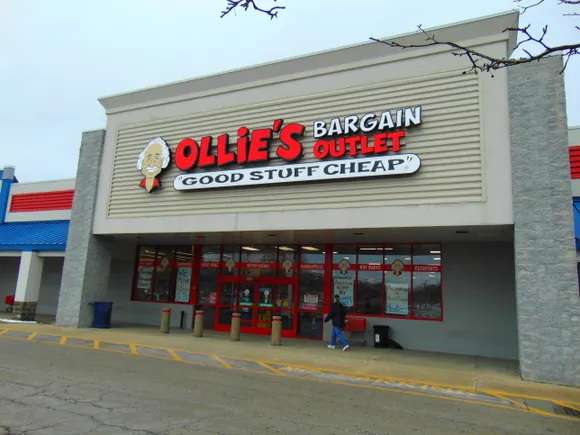
In a retail landscape characterized by extreme price sensitivity and a cooling consumer spending environment, Ollie’s Bargain Outlet is doubling down on its foundational identity: the low-price leader. Following a second-quarter performance that fell short of Wall Street expectations, the discount retailer announced a strategic $15 million investment aimed at further lowering price points for its customers.
As of September 2026, the company is recalibrating its operational focus. While macroeconomic pressures and a highly competitive promotional environment hampered comparable sales, leadership remains steadfast in the belief that abandoning their "everyday low price" philosophy in favor of short-term, coupon-driven "high-low" pricing would be a fundamental error. Instead, Ollie’s is opting for a long-term play, betting that sustained price competitiveness will preserve customer loyalty and cement its position as a primary destination for budget-conscious shoppers.
The Chronology: Navigating a Turbulent Second Quarter
The trajectory of Ollie’s Bargain Outlet in 2026 has been marked by a dichotomy: robust physical expansion versus sluggish per-store performance.
Early 2026: The Expansion Phase
Entering the fiscal year, Ollie’s maintained an aggressive growth posture. Building on its successful acquisitions of former 99 Cents Only store leases in 2024 and Big Lots locations in 2025, the company continued its rapid footprint expansion. By the end of Q2 2026, the retailer operated 686 stores across 36 states—a year-over-year increase of nearly 12%.
Q2 2026: The "Perfect Storm"
As the summer months progressed, three primary factors converged to suppress comparable sales:
- Unfavorable Weather: Anomalous weather patterns impacted foot traffic in key regions, disrupting the typical seasonal cadence of the business.
- Consumer Sentiment: A tightening economic environment led to widespread consumer caution, with shoppers becoming increasingly selective regarding discretionary spending.
- The Promotional War: Competitors, desperate to move inventory, engaged in aggressive deep-discounting campaigns. This created a distorted market environment that made it difficult for Ollie’s to stand out, even with its inherent value proposition.
Late Summer 2026: The Course Correction
By the end of the quarter, the financial results were in: while total net sales climbed 9% to $741.3 million—fueled primarily by the contribution of 14 net new store openings—comparable store sales dipped by approximately 2%. In response, management announced the $15 million price-investment initiative, with $10 million allocated for the remainder of the 2026 fiscal year.
Supporting Data: Dissecting the Financials
Despite the miss in comparable sales, Ollie’s balance sheet displays notable pockets of resilience and efficiency.
Margin Expansion and Supply Chain Efficiency
Perhaps the most striking figure in the Q2 report was the gross margin expansion. The company reported a 360-basis point increase, bringing its gross margin to 43.5%. This growth was aided significantly by a 380-basis point boost derived from tariff refunds, alongside improvements in supply chain management that reduced logistics and overhead costs.
The Loyalty Engine
The company’s loyalty program continues to be a vital asset in its data-driven strategy. With an increase of nearly 13% compared to the previous year, the membership base has swelled to over 18 million active participants. This provides Ollie’s with a powerful tool for customer retention, allowing the company to engage directly with its core demographic despite external market pressures.
Revised Guidance for 2026
Acknowledging the "weird year," as CFO Robert Helm described it, the company has taken a conservative stance on its outlook for the remainder of 2026:
- Comparable Sales: Previous guidance of 2% growth has been retracted. The company now expects comps to remain flat or show only marginal growth.
- Net Sales: Guidance has been scaled back, though the company remains committed to its goal of opening 75 new stores by the end of the year.
Official Responses: The Philosophy of Trust
During the Q2 earnings call, CEO Eric van der Valk provided a candid assessment of the retail climate and the company’s strategic rationale.
On the Danger of "High-Low" Pricing
"We build trust with customers by being the lowest price in the market on items every day," van der Valk stated. He was explicit in his rejection of the retail industry’s common tactic of high-low pricing—where prices are artificially inflated only to be slashed by coupons or temporary sales.

"Promotional pricing—like high-low pricing, excessive coupons—we believe for us erodes customer trust and damages our value proposition, which we take very seriously," he added. This sentiment reflects a deeper commitment to brand equity; management is willing to absorb a temporary hit to sales volume rather than risk alienating customers with complex or manipulative pricing schemes.
The CFO’s Perspective on Market Volatility
CFO Robert Helm admitted that isolating the root cause of the sales decline is a complex task. "It’s hard to parse out the difference between weather, the consumer, and the elevated promotional environment," Helm explained. However, he emphasized that this quarter should be viewed as an aberration rather than a structural shift. The company’s historical data, excluding the extreme volatility of the pandemic era, suggests a long-term trend of stability that management fully expects to see return in 2027 and beyond.
Implications: The Road Ahead for the Discount Sector
The decision by Ollie’s Bargain Outlet to invest $15 million into price leadership is more than just a financial maneuver; it is a signal of the company’s long-term survival strategy.
The Battle for the Value-Conscious Consumer
As inflation continues to impact household budgets, the competition for the discount shopper is intensifying. By intentionally lowering prices, Ollie’s is attempting to create a "moat" around its business. If they can consistently prove to the customer that their everyday price is lower than the "sale" price of competitors, they effectively render the promotional noise of other retailers irrelevant.
Operational Resilience vs. Economic Reality
The company’s ability to open 75 stores in a challenging year demonstrates a high degree of confidence in its real estate strategy. By acquiring leases from struggling competitors, Ollie’s is essentially harvesting the wreckage of failed retail models to build a more robust, distributed network.
Long-Term Outlook
Looking toward 2027, the success of this strategy will depend on two variables: the macro-level stabilization of consumer spending and the efficiency of the newly opened stores. If the retail environment remains as volatile as it has been in 2026, the $15 million investment may prove insufficient, and executives have already hinted that they are prepared to go higher.

Ultimately, Ollie’s is betting on a "flight to value." They are positioning themselves not just as a store, but as a sanctuary for the inflation-weary consumer. By prioritizing simplicity, consistency, and depth of discount, they are banking on the idea that when the dust settles on the "weird year" of 2026, the shoppers will remember who stayed true to their price promise.
Conclusion: A Calculated Gamble
Ollie’s Bargain Outlet stands at a crossroads. The transition from a period of rapid, relatively easy growth to a period of macroeconomic friction has tested the company’s resolve. By choosing to invest in lower prices rather than succumb to the industry-standard promotional cycle, they are doubling down on their brand identity.
Investors, customers, and industry analysts will be watching closely in the coming quarters to see if this "trust-based" pricing model can weather the current storm. If successful, Ollie’s will emerge from 2026 with an even stronger hold on the discount market. If the consumer continues to pull back, however, the retailer may face the difficult task of balancing its commitment to value with the harsh reality of tightening margins. For now, the strategy remains clear: stay the course, hold the line on price, and wait for the market to stabilize.