By Dani James | September 10, 2026
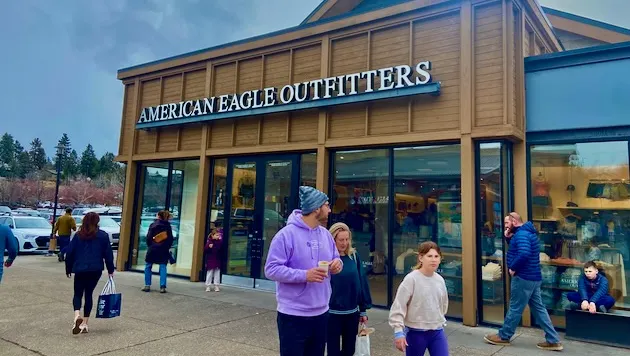
American Eagle Outfitters (AEO) released its second-quarter earnings report on Thursday, revealing a complex landscape for the retail giant. As the company navigates a volatile fashion market, the results paint a vivid picture of a business divided: while its Aerie brand continues to perform as an industry powerhouse, the namesake American Eagle brand is struggling to find its footing among female consumers.
The financial performance serves as a testament to the divergent trajectories of the company’s portfolio. While Aerie carries the weight of overall growth, the flagship American Eagle brand—despite high-profile celebrity marketing investments—continues to experience uneven results.
Main Facts: The Q2 Financial Snapshot
For the second quarter of 2026, AEO reported results that largely underscored the "tale of two brands" narrative that has defined the company’s recent trajectory. Aerie, the intimate apparel and loungewear brand, remained the primary engine for the company’s expansion, posting robust numbers that offset the stagnation in the namesake label.
In contrast, the American Eagle brand saw a significant disparity between its gender-based performance metrics. While the brand’s men’s offerings demonstrated consistent strength and positive momentum, sales within the women’s segment remained soft. This dichotomy poses a significant challenge for executive leadership, as the women’s apparel market represents a critical component of the company’s total addressable market.
The company’s outlook for the third quarter remains cautiously optimistic. AEO leadership projects comparable sales growth in the mid-to-high single digits. Breaking this down, Aerie is expected to continue its double-digit growth streak, while the American Eagle brand is projected to remain approximately flat.
Chronology: The Evolution of the AE Pivot
The challenges facing the American Eagle brand did not appear overnight. Throughout 2025 and into the first half of 2026, the company engaged in an aggressive attempt to reclaim market share among young women.
- Early 2025: AEO recognized a decline in interest for its core denim silhouettes. In response, leadership initiated a strategic shift in inventory management.
- Late 2025 – Early 2026: The company launched a high-profile marketing campaign featuring actress Sydney Sweeney. The goal was to revitalize interest in the brand’s denim pants and shorts, aiming to re-establish American Eagle as a trend-leader in the youth market.
- Q1 2026: In the previous earnings call, executives acknowledged that the transition was slower than anticipated. They cited a need to clear out legacy inventory before the new, trend-aligned fits could gain meaningful traction.
- Q2 2026 (Current): The company reported that while it has successfully pivoted into "fits that were working 100%," the process of liquidating older stock and rebalancing the floor set is still an ongoing endeavor.
Supporting Data: Analysts Weigh In
The market’s reaction to the earnings report has been mixed, with financial analysts expressing varying degrees of concern regarding the flagship brand’s long-term sustainability.
BMO Capital Markets analyst Kelly Crago provided a blunt assessment in a note released Thursday. "AE remains a laggard despite big marketing investments and favorable category trends, leaving us cautious," Crago wrote. The skepticism stems from the fact that the brand is operating within a category—denim—that is currently seeing broad consumer demand, yet American Eagle has struggled to capture its historical share of that wallet.
Needham analyst Tom Nikic echoed these sentiments, labeling the company a "tale of two brands." Nikic pointed out that while Aerie’s momentum is undeniable, the second half of the fiscal year will bring tougher year-over-year comparisons. As Aerie enters a period where it must lap its own high-performance benchmarks from 2025, the burden of growth will become even more heavily reliant on the namesake American Eagle brand—a brand that, by the company’s own admission, remains a "mixed bag."

Official Responses: Navigating the Denim Shift
Jennifer Foyle, President and Executive Creative Director of American Eagle and Aerie, addressed the performance issues during the earnings call with a mix of transparency and strategic confidence.
When questioned about the women’s denim category, Foyle was quick to defend the internal pivot. "Look, we’re seeing sequential improvement in denim," she stated. "As I mentioned in my last earnings call, we definitely need to pivot. We needed to pivot, and we pivoted quite nicely into the fits that were working 100%."
Foyle noted that the shift was specifically centered on the resurgence of low-rise styles—a trend that has dominated Gen Z fashion conversations recently. However, the operational reality of retail means that shifting a design philosophy is not an instant process. According to Foyle, the company is still actively "working through older fits" and continues to rebalance its inventory to better reflect the current tastes of its customer base.
The strategy, while sound in principle, highlights the friction inherent in large-scale retail. The lag time between identifying a trend and executing the necessary inventory turnover can lead to periods of prolonged weakness, even when the marketing message is aligned with celebrity trends.
Implications: The Road Ahead for AEO
The implications of the Q2 report are significant for AEO’s strategic roadmap. If the namesake brand cannot regain its footing with female shoppers, the company risks becoming overly reliant on Aerie. While Aerie is currently "red-hot," a diversified portfolio is essential for navigating the inevitable cyclicality of the retail fashion industry.

1. The Marketing Dilemma
The Sydney Sweeney campaign serves as a case study in modern retail marketing. Despite high engagement and brand visibility, the conversion to sales in the women’s denim segment was not as robust as the company had hoped. This suggests that marketing reach is not a substitute for product-market fit. For AEO, the lesson may be that even the most effective brand ambassadors cannot move product if the underlying inventory does not align with consumer demand.
2. Operational Discipline
The focus on "rebalancing inventory" indicates that AEO is prioritizing operational discipline over aggressive expansion for the remainder of the fiscal year. By slowing down the introduction of new products to focus on clearing legacy stock, the company is attempting to protect its margins. This is a defensive but necessary posture, particularly as the retail environment becomes more competitive.
3. The Aerie Factor
Aerie remains the crown jewel of the AEO portfolio. Its ability to maintain double-digit growth while the core brand struggles provides the company with the breathing room to fix the American Eagle brand. However, as noted by analysts, the "easy" growth period for Aerie may be coming to an end. The brand will soon face the mathematical difficulty of exceeding its own record-breaking performances, which will place immense pressure on the management team to innovate and find new growth vectors.
4. Consumer Sentiment
The shift toward low-rise denim and other trend-driven fits in the women’s category reflects the volatility of the youth consumer. If American Eagle can successfully complete its transition and clear its remaining legacy inventory, it may find itself well-positioned for the holiday season. Conversely, if the brand continues to struggle, the company may need to consider more drastic measures, such as further store footprint optimization or a more fundamental restructuring of its design organization.
In summary, American Eagle Outfitters is at a critical juncture. The second quarter of 2026 has confirmed that while the company possesses the brand power to remain a leader in the apparel space, the execution of its fashion-forward strategy remains a work in progress. Investors and consumers alike will be watching closely as the company moves into the second half of the year, waiting to see if the "pivot" can finally translate into a cohesive and profitable growth strategy across both of its primary brands.