By Editorial Staff
September 10, 2026
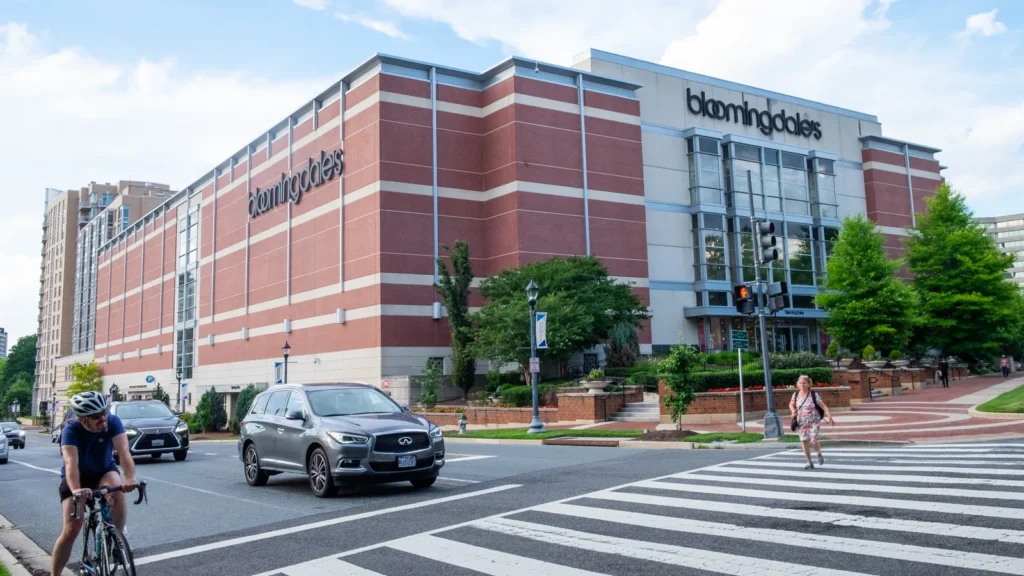
In an era defined by the volatility of the luxury department store sector, Bloomingdale’s has emerged as a beacon of stability and growth. While its primary competitors navigate the treacherous waters of post-bankruptcy restructuring and corporate reorganization, the Macy’s Inc.-owned retailer is currently enjoying a period of historic success. According to second-quarter financial results released this past Thursday, Bloomingdale’s has achieved the highest sales volume for a second quarter in its storied history, signaling a fundamental shift in the luxury retail landscape.
The Core Facts: A Record-Breaking Quarter
The numbers released by Macy’s Inc. paint a picture of a retailer firing on all cylinders. Bloomingdale’s reported double-digit comparable sales growth compared to the same period in 2025. This surge in revenue is not merely a marginal improvement; it represents a "significant step change," according to Macy’s Inc. CEO Tony Spring.
During the second quarter, sales of owned and licensed goods reached an impressive $922 million. The growth was comprehensive, spanning all sales channels, geographic markets, and product categories. Most notably, the retailer saw significant outperformance in ready-to-wear apparel, men’s fashion, fine jewelry, fragrance, and the tabletop/home category. This broad-based strength suggests that Bloomingdale’s has successfully insulated itself from the localized slowdowns that have plagued other high-end retailers over the past eighteen months.

A Chronology of the Luxury Shift
To understand the current momentum of Bloomingdale’s, one must look at the broader industry narrative that has unfolded over the last two years.
- 2024 (The Disruption Phase): As luxury spending patterns began to tighten, the industry saw the beginning of a major shakeup. Saks Fifth Avenue and Neiman Marcus, long-time titans of the luxury space, became embroiled in financial difficulties that ultimately led to restructuring efforts.
- Summer 2026 (The Turning Point): Following months of instability, the entity formerly known as Saks Global emerged from Chapter 11 bankruptcy as "Exemplar Luxury Group." This transition period provided a window of vulnerability that savvy competitors were quick to exploit.
- Q2 2026 (The Current Victory): Bloomingdale’s solidified its gains, reporting an 11% increase in comparable sales growth—a trajectory that has seen an increase of approximately 1,700 basis points over the last twenty-four months.
Strategic Pillars: Why Bloomingdale’s is Winning
Industry analysts, including Neil Saunders, Managing Director at GlobalData, have noted that while the struggles of competitors have undeniably provided a "tailgate effect," the success of Bloomingdale’s is primarily a testament to its internal operational discipline.
1. Curated Assortment and "Discovery"
Under the leadership of Tony Spring, Bloomingdale’s has undergone a aggressive revamp of its merchandise mix. By bringing in high-demand, prestige brands such as Ulla Johnson, Proenza Schouler, and Dries Van Noten, the retailer has successfully repositioned itself as a destination for both "premium contemporary" and "traditional luxury" shoppers. The expansion of high-end watch and fine jewelry offerings—specifically Chanel—has further cemented its status as a destination for big-ticket purchases.
2. The Power of In-Store Experiences
Despite the digital-first push in modern retail, Bloomingdale’s has leaned into the "brick-and-mortar" advantage. The company has increased the frequency of its in-store events, which serve to foster community and drive foot traffic. These events are not merely sales gimmicks; they are experiential anchors that align with the modern consumer’s desire for "discovery and newness."

3. Technological Integration
The retailer has also embraced the digital frontier by launching an AI-powered conversational e-commerce assistant. This tool is designed to mimic the high-touch service of a personal stylist, bridging the gap between digital convenience and the personalized, concierge-style service that luxury clients expect.
4. The "Very Important Client" (VIC) Program
Central to the company’s success is the expansion of its clienteling program. By focusing on the "highest spending customers," Bloomingdale’s has managed to increase its customer base even as the overall luxury market faces headwinds. This focus on long-term relationships ensures that the retailer remains top-of-mind for the demographic least affected by economic fluctuations.
Official Responses and Expert Analysis
During the earnings conference call, Tony Spring was emphatic about the retailer’s positioning. "These results reflect Bloomingdale’s differentiated and unique positioning," Spring stated. "We continue to raise the bar on our curation with a clear emphasis on discovery, newness, and experiences."
External observers have echoed these sentiments. David Silverman, a senior director at Fitch Ratings, noted that the retailer’s gains are a two-pronged success: "Bloomingdale’s has benefited from its own initiatives as well as share loss at Saks and Neiman Marcus."

However, experts caution against attributing too much of the victory to the failures of others. Neil Saunders provided a critical perspective: "It is certainly true that the disruption at Saks and elsewhere has provided some benefit—but this is nowhere near sufficient to produce the stellar numbers that Bloomingdale’s is churning out. These results are an endorsement of everything the team has been doing to strengthen the customer experience."
The Implications for the Luxury Retail Landscape
The success of Bloomingdale’s serves as a case study for how legacy department stores can survive—and thrive—in the digital age. The implications for the sector are significant:
- The Consolidation of Market Share: As Exemplar Luxury Group focuses on internal restructuring, the "void" left by their operational instability is being permanently filled by competitors like Bloomingdale’s. Winning back those customers will be a monumental challenge for the post-bankruptcy firms.
- The "Premium" vs. "Luxury" Hybrid: Bloomingdale’s success suggests that shoppers are increasingly looking for a "hybrid" experience—one that offers the high-end cachet of luxury brands alongside the accessibility of premium contemporary labels.
- The Death of the "One-Size-Fits-All" Model: The retailer’s move toward highly localized, experience-based retail highlights that the future of the department store is not in mass-market inventory, but in carefully curated, event-driven environments.
Conclusion: Looking Ahead
As we move into the second half of 2026, the question for Bloomingdale’s is whether it can maintain this velocity. The retail landscape remains volatile, and inflationary pressures continue to influence consumer sentiment. However, the data suggests that Bloomingdale’s has successfully built a moat around its business. By balancing the cold efficiency of AI-powered shopping with the warm, human element of in-store events and elite clienteling, they have effectively insulated themselves from the systemic decline of their peers.
For Macy’s Inc., the performance of Bloomingdale’s is the crown jewel in their portfolio, proving that with the right mix of agility, curation, and customer-centricity, the traditional department store is not just surviving—it is evolving. The market will be watching closely to see if this "step change" in performance becomes the new baseline for the brand as it heads into the critical holiday shopping season.