Everything old is new again—and in the case of Tommy Hilfiger’s latest spring collection, it is also bolder, baggier, and more relevant than ever. In a season where the fashion industry is grappling with how to balance heritage with the relentless pace of Gen Z trends, Hilfiger has provided a masterclass in archival revitalization. By mining his own rich history from the 1990s and filtering it through a contemporary, "cool prep" lens, the designer has proven that longevity in fashion isn’t about standing still; it’s about constant, intentional evolution.
The Core Concept: Heritage with a Modern Pulse
During an intimate preview at his New York headquarters, Tommy Hilfiger articulated the philosophy driving his latest creative pivot. "We’re making the classics more modern and more relevant for today," he noted, gesturing toward a rack of reimagined staples. "We’ve taken our heritage pieces from the archive, and we’ve decided to give them a new beginning, a new life. Proportion-wise, it’s different; fabric-wise, it’s different, but the concept is the same."
This collection does not merely reissue the hits of the past. Instead, it turns the familiar on its head. While the brand’s signature red, white, and blue palette remains as a comforting anchor, the structural execution is a departure from the fitted, polished look of the 90s. The new "cool prep" aesthetic emphasizes unexpected, relaxed proportions—a response to the shifting demands of a younger customer base that prioritizes comfort without sacrificing the traditional, aspirational "American Dream" vibe that has defined the brand since its inception.
Chronology of a Collection: From Archive to Runway
The development of this collection was a meticulous process of selective excavation. Hilfiger’s team spent months reviewing decades of runway footage, editorial campaigns, and street-style archives to identify which pieces resonated most with current cultural shifts.
The resulting lineup is a study in contrasts. Denim and varsity jackets were intentionally shrunken to highlight a retro silhouette, while shorts were transformed into micro-versions of the originals—cut extra baggy for both genders to create a sense of effortless, gender-fluid style. Polos, once the hallmark of the buttoned-up prep, were rendered in oversized, slouchy fits, and classic rugby shirts were elevated through the use of washed, luxurious silk.
One of the standout elements of the collection was the reintroduction of the signature sailing jacket. Previously a staple of 90s nautical fashion, these pieces were updated in vibrant yellow and red hues. The construction, however, is purely modern, utilizing a sophisticated mix of suede, leather, and breathable, technical waterproof materials that align with the high-performance demands of today’s urban lifestyle.
Accessories, too, received a high-fashion overhaul. Totes were scaled to enormous, "carry-everything" proportions, while bucket hats were introduced in a dizzying array of patterns, including patchwork and heritage tartans. The pièce de résistance was the reissued skater sneaker from the 90s, a nod to the era’s burgeoning subcultures that now feels perfectly at home in the current Y2K revival.
Supporting Data: The "FAMES" Strategy
Beyond the garments themselves, the event held at the iconic Plaza Hotel in New York City was a deliberate exercise in "Fashiontainment." For Hilfiger, the runway show is no longer just a platform for display; it is a multifaceted experience designed to bridge the gap between fashion, art, music, entertainment, and sports—a framework he calls "FAMES."
The choice of venue was deeply personal. Having lived at the Plaza for a decade, Hilfiger viewed the location as a homecoming. "I wanted to invite people into an iconic New York experience," he explained. "My memories of my time there are about looking out at Central Park in the fall—the changing seasons, the energy of the city, and even the whimsy of Eloise. It’s the perfect backdrop for this collection."
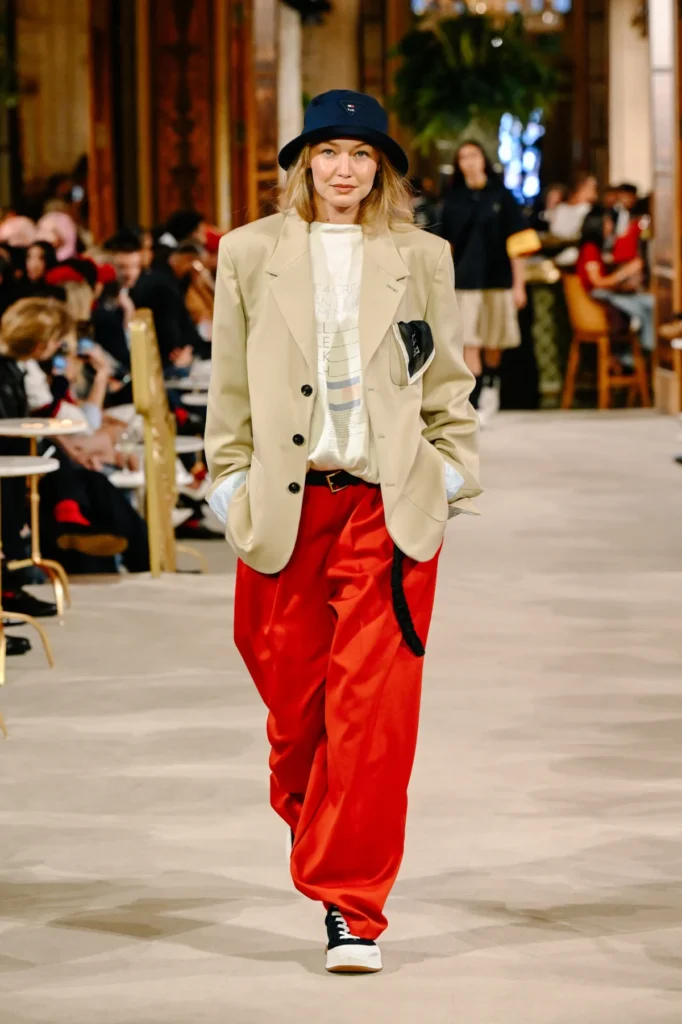
The show’s star power reflected this FAMES strategy. Gigi Hadid, a long-time collaborator and muse, opened the show wearing a classic beige blazer paired with a silk striped shirt and strikingly oversized red trousers. Romeo Beckham closed the show, signaling the brand’s focus on the next generation of style icons. The performance aspect was handled by Slayyyter, who delivered a high-energy set backed by a live band, keeping a crowd that included Kate Moss, Camila Cabello, and newlyweds Karl-Anthony Towns and Jordyn Woods thoroughly engaged.
Official Responses and Creative Direction
Hilfiger’s commentary during the event underscored a keen awareness of the modern consumer’s psychology. "We still have a very youthful customer, and we want to show them that we understand their needs," he said. "Their needs are changing because they love oversized, they love relaxed, but they still want that traditional vibe. They want to wear the brand that represents American heritage, but they want it to look like it belongs in 2027."
Perhaps the most meta moment of the collection was the inclusion of a long silk dress featuring the iconic 1985 "Hangman" campaign print. That original Times Square billboard famously touted the four great American designers of the era: Ralph Lauren, Calvin Klein, Perry Ellis, and the then-newcomer, Tommy Hilfiger. By placing this historical milestone on a modern garment, Hilfiger effectively folded his own history into the future, inviting the audience to acknowledge his longevity while celebrating his current relevance.
Implications: The Future of Heritage Branding
The implications of this collection for the broader fashion industry are significant. First, it demonstrates that "Heritage" is a dynamic asset, not a static one. Brands that successfully navigate the future are those that treat their archives as a laboratory rather than a museum. By updating proportions and materials while maintaining the core brand DNA, Hilfiger is effectively insulating his label against the volatility of trend cycles.
Second, the success of the Plaza show reinforces the necessity of "experience-led" marketing. In an age of digital saturation, the physical runway show—when executed with the theatricality of a concert or a film premiere—becomes a vital touchpoint for brand identity. Hilfiger’s commitment to "Fashiontainment" suggests that the future of luxury and high-street fashion lies in the blurring of lines between product and performance.
Finally, the collection highlights the ongoing shift toward gender-neutral, comfort-centric design. The popularity of "micro" shorts and "oversized" polos for all genders proves that the traditional binary in clothing is rapidly dissolving, even within brands rooted in classic Americana.
As the industry looks toward the next season, the Tommy Hilfiger approach stands as a blueprint for sustainability in style. By creating clothes that evoke nostalgia while serving the functional and aesthetic needs of the modern, globally connected individual, Hilfiger has ensured that his brand remains a permanent fixture in the American fashion lexicon. Whether through the lens of sports, music, or high-concept design, the message is clear: when you have a story as rich as the one Tommy Hilfiger has written over the last four decades, the best way to move forward is to look back—and then give it a new life.