The hushed galleries of the Metropolitan Museum of Art in New York recently became the backdrop for a significant, albeit understated, shift in the landscape of public art display. Hanging within the intimate confines of Gallery 609 is The Madonna of the Yarnwinder, a painting attributed to Leonardo da Vinci and his studio. The work, which arrived on a long-term loan from the billionaire financier and prolific collector Ken Griffin, represents more than just a rare opportunity for the public to view a Renaissance masterpiece; it serves as a lightning rod for broader discussions regarding the concentration of cultural wealth and the looming "Great Wealth Transfer" that threatens to reshape the art world entirely.
As the global elite continue to consolidate masterpieces into private hands, the art market faces a paradoxical crisis. While the "trophy" tier—works by Leonardo, Basquiat, or Picasso—continues to command astronomical prices, a secondary crisis is brewing beneath the surface. Experts are beginning to question what will happen to the billions of dollars worth of art that lacks the "investment-grade" status of a Leonardo as the current generation of collectors prepares to pass their holdings to heirs who may not want them.
The Masterpiece in Gallery 609: A Leonardo Returns to New York
The arrival of The Madonna of the Yarnwinder at the Met is a moment of profound art-historical importance. Currently, it stands as the only work by Leonardo da Vinci on view at the museum. The painting depicts the Virgin Mary with the Christ Child, who gazes longingly at a cross-shaped yarnwinder, a poignant symbol of his future crucifixion.
While the Met has labeled the work as "Leonardo da Vinci and studio," the distinction does little to dampen its allure or its market value. The "Yarnwinder" composition exists in several versions, most notably the Buccleuch Madonna and the Lansdowne Madonna. The version loaned by Griffin has long been a subject of scholarly debate regarding the extent of the master’s own hand in its execution. Nevertheless, in the world of Old Masters, a Leonardo—even one with studio involvement—is a rarity that transcends standard valuation.
The loan highlights Ken Griffin’s growing role as a de facto custodian of Western art history. Griffin, the founder and CEO of Citadel, has spent decades amassing a collection that rivals many mid-sized museums. By placing this work in the Met, Griffin ensures the painting remains part of the public discourse, even as it remains his private property.
Chronology of a Masterpiece and the Market
To understand the weight of Griffin’s loan, one must look at the historical trajectory of Leonardo sales and the provenance of the Madonna compositions:
- 1967: The National Gallery of Art in Washington, D.C., acquires Leonardo’s Ginevra de’ Benci for a record-breaking $5 million. Adjusted for inflation, this represents approximately $50.8 million today—a figure that now seems modest in the context of modern billionaire acquisitions.
- 2003: A version of The Madonna of the Yarnwinder (the Buccleuch version) is stolen from Drumlanrig Castle in Scotland. At the time, it was valued at approximately £40 million. It was eventually recovered in 2007.
- 2017: The art world is forever changed when Salvator Mundi, a rediscovered Leonardo, sells at Christie’s for $450.3 million. This remains the highest price ever paid for a work of art at auction, setting a new, stratospheric benchmark for "trophy" works.
- Recent Years: Ken Griffin acquires his version of The Madonna of the Yarnwinder in a private transaction. While the exact price remains undisclosed, market analysts suggest it likely falls between the £40 million estimate of 2003 and the high-nine-figure territory of the Salvator Mundi.
- Current Week: The painting is officially installed in the Met’s Gallery 609, beginning a long-term loan that fills a significant gap in the museum’s permanent display.
Supporting Data: The Concentration of Art Wealth
The loan of the Madonna occurs against a backdrop of unprecedented spending by a small circle of ultra-high-net-worth individuals (UHNWIs). Griffin himself is no stranger to record-breaking deals; he famously purchased Jean-Michel Basquiat’s Boy and Dog in a Johnnypump (1982) for over $100 million and spent $500 million on works by Willem de Kooning and Jackson Pollock in a single private deal.
This concentration of masterpieces in private hands has created a "super-class" of art that is largely insulated from broader economic downturns. However, this peak-level activity masks a growing instability in the wider market. According to recent market reports, while the "top 1%" of the art market remains robust, the middle market—works valued between $50,000 and $1 million—has seen increased volatility as buyer tastes shift and the cost of maintaining large collections rises.
The "Great Wealth Transfer" and the $1 Trillion Risk
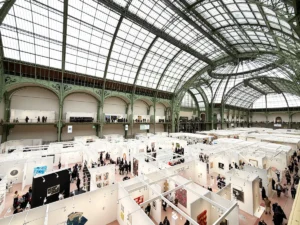
While the Met celebrates its new Leonardo, industry analysts are sounding the alarm over a phenomenon known as the "Great Wealth Transfer." Over the next decade, an estimated $1 trillion worth of art is expected to change hands as the "Baby Boomer" generation of collectors ages.
Financial journalist Felix Salmon, writing for Bloomberg, recently highlighted a grim reality: the market may be unable to absorb this influx of art. Salmon argues that the current infrastructure of the art world—comprising a limited number of top-tier collectors and museums with finite gallery space—is ill-equipped for the sheer volume of work that will soon hit the market.
The Three Pillars of the Crisis:
- Indifferent Heirs: Unlike previous generations, many heirs of major collectors do not share their parents’ passion for specific movements, such as 19th-century landscapes or "brown furniture" (antique English and French furniture). For these heirs, the art is often viewed as a tax liability or a logistical burden rather than a cultural heirloom.
- Museum Saturation: Museums are already struggling with a "storage crisis." Most major institutions can only display about 2% to 5% of their permanent collections at any given time. With deaccessioning (the selling of works from a museum collection) remaining a controversial and highly regulated practice, museums are increasingly selective about accepting new donations, often rejecting all but the most significant masterpieces.
- The "Canon" Filter: As Salmon puts it, "The art we keep will stay in the canon; the art we discard will be lost to history." Works that fail to find a home in a museum or a prestigious private collection face a precarious future in long-term storage, where they may deteriorate or eventually be sold off at a fraction of their original value.
Official Responses and Institutional Stance
While the Metropolitan Museum of Art has not officially commented on the specific financial details of the Griffin loan, the institution’s reliance on private collectors is a well-documented necessity. In a statement regarding its general loan policies, the museum emphasized that "long-term loans allow the Met to present a more comprehensive narrative of art history, bringing works to the public that might otherwise remain behind closed doors."
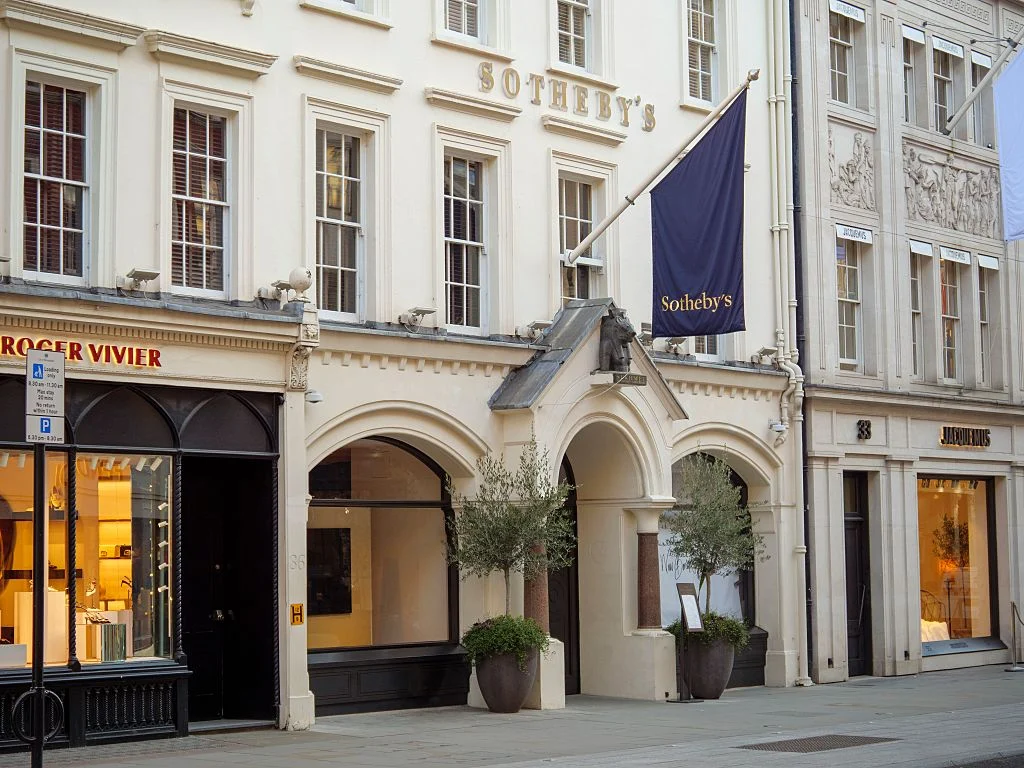
Auction houses like Sotheby’s and Christie’s have also responded to the "Wealth Transfer" narrative by diversifying their services. Both houses have expanded their "Private Sales" and "Art Advisory" wings to help families navigate the liquidation of massive estates. A spokesperson for a major auction house, speaking on the condition of anonymity, noted: "We are seeing a shift from ‘passionate collecting’ to ‘estate management.’ Our role is increasingly about helping families decide what is a ‘trophy’ to be auctioned and what is ‘inventory’ to be managed."
Implications: A Bifurcated Future
The juxtaposition of Ken Griffin’s Leonardo loan and the looming $1 trillion art dump suggests a future of extreme bifurcation in the art world.
On one hand, the "Griffin Tier" will continue to thrive. Masterpieces with impeccable provenance and "brand name" recognition (like Leonardo) will be treated as sovereign assets—portable, high-value stores of wealth that gain prestige when loaned to institutions like the Met. These works will remain in the public eye, protected by the resources of the world’s wealthiest men and women.
On the other hand, the vast majority of the art world faces a "reckoning of relevance." As thousands of collections come to market simultaneously, the value of "good but not great" art may plummet. This could lead to a loss of cultural diversity, as niche movements that lack billionaire backing fall out of the historical record.
The "Great Wealth Transfer" is not just a financial event; it is a Darwinian moment for art history. As the flood of art begins, the works that survive will be those that can capture the attention of a new, more distracted generation of collectors, or those—like the Madonna of the Yarnwinder—that are simply too famous to be forgotten. For now, the public can enjoy the Leonardo in Gallery 609, but the question remains: what happens to the masterpieces that don’t have a billionaire to save them?