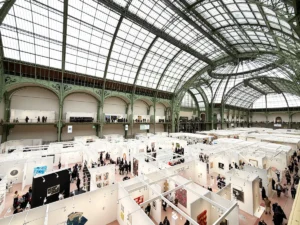
SEOUL — As the humidity of the Korean summer begins to yield to the crisp air of autumn, the international art world has once again converged upon Seoul. The South Korean capital, now firmly established as a primary pillar of the global art market, kicked off its most significant week of the year with the simultaneous opening of Frieze Seoul and Kiaf Seoul.
While the global art market continues to navigate a period of strategic retrenchment and price correction, the atmosphere at the COEX convention center in the Gangnam district remains one of cautious optimism. This year’s iteration of the fairs, complemented by the prestigious Gwangju and Busan Biennials, represents more than just a commercial gathering; it is a testament to the "holistic, long-term approach" that industry veterans are now adopting toward the Asian cultural powerhouse.
Main Facts: A Convergence of Commercial and Curatorial Might
The 2024 art season in Seoul is characterized by a unique synergy between commercial interests and institutional prestige. Frieze Seoul, now in its fifth year of partnership with the homegrown flagship fair Kiaf (Korea International Art Fair), has transformed the city into a magnet for the world’s most influential patrons, curators, and dealers.
Key Highlights:
- The Fairs: Frieze Seoul features 125 galleries from 30 countries, while Kiaf Seoul, celebrating its 25th anniversary, hosts 175 galleries from 18 countries.
- Regional Dominance: Over 70% of the galleries at Frieze Seoul now operate spaces within the Asia-Pacific region, a significant increase from 50% in 2022.
- Market Sentiment: Sales during the initial VIP days were described as "measured" and "cautious," reflecting a broader global trend toward price sensitivity and due diligence.
- Cultural Infrastructure: The fair coincides with the openings of the Gwangju Biennale and the Busan Biennale, creating a nationwide "Art Week" that draws museum groups from North America, Europe, and across Asia.
The emergence of a "next-generation" art connoisseur is perhaps the most notable shift this year. The market is moving away from the frantic speculation of 2021–2022 toward a more educated, inquisitive, and loyal collector base.
Chronology: From Summer Lull to Fall Frenzy
The road to the current "Seoul Art Week" began months ago as galleries prepared for what is now considered the most important date on the Asian art calendar outside of Hong Kong.
The Lead-up (August): While European and American markets were largely in a summer hiatus, Seoul’s local ecosystem was in high gear. Major private museums, such as the Sehwa Museum of Art, prepared retrospectives for masters like Georg Baselitz, while the Galleries Association of Korea finalized logistics for the 25th anniversary of Kiaf.
The Opening Eve (Tuesday): The energy shifted from preparation to social engagement. International galleries like Paula Cooper opted for alternative engagement strategies, hosting "pop-up" exhibitions in neighborhoods like Samcheong-dong. The "Woods Lands Meadows" exhibition at Frieze House Seoul saw a "jam-packed" opening, signaling a desire for more intimate, long-term connections beyond the fair booth.
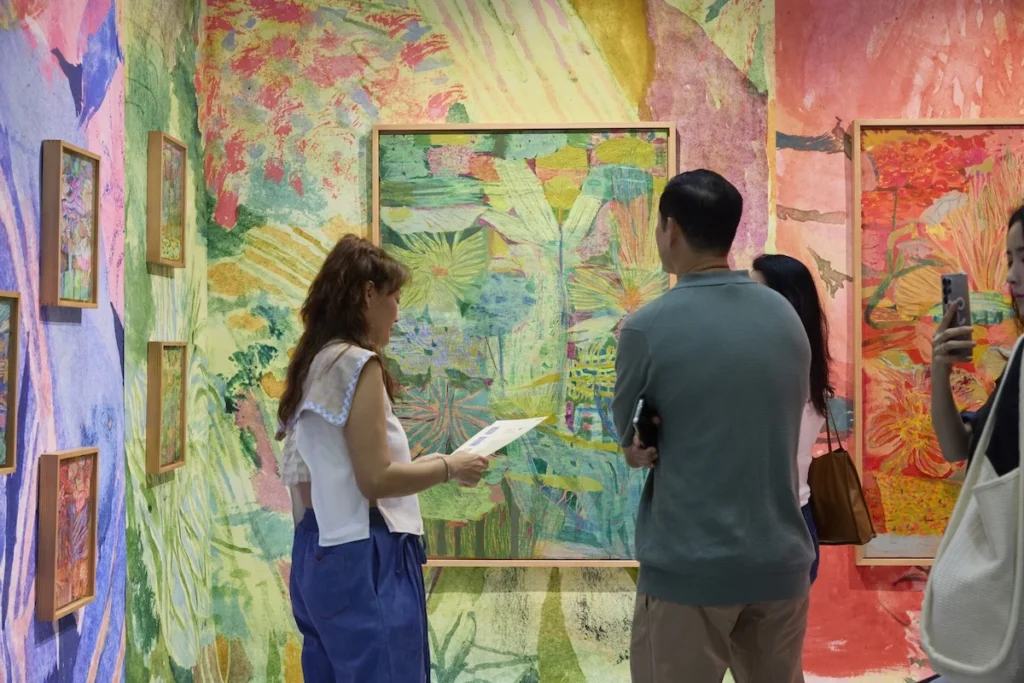
The VIP Kickoff (Wednesday): Frieze and Kiaf opened their doors at the COEX center. The initial hours were marked by a high volume of foot traffic. Unlike previous years, where "trophy hunting" led to instant sell-outs, the first day of 2024 saw a more contemplative pace. Collectors engaged in longer dialogues with dealers, and many works were placed "on hold" as buyers exercised caution.
The Weekend Outlook: As the fairs continue through September 5 and 6, the focus shifts to the biennials in Gwangju and Busan, where the critical and curatorial discourse of the region is being shaped.
Supporting Data: Analyzing the Sales Ledger
Despite the "measured" pace, the sales data from the first 24 hours reveals a healthy appetite for both established blue-chip names and emerging contemporary voices. The transactions suggest a "validation economy" is still in place, but with a widening scope.
Blue-Chip and Secondary Market Success
The high end of the market saw several seven-figure transactions, proving that for the right "trophy" work, capital is still available:
- Thaddaeus Ropac: Sold Adrian Ghenie’s Figure with Funerary Stele (2026) for €1.1 million ($1.28 million). They also placed an Antony Gormley sculpture for £750,000 ($1 million).
- Gallery Hyundai: A cornerstone of the Korean scene, the gallery sold a work by the late "water drop" painter Kim Tschang-yeul for $1.1 million.
- Kukje Gallery: Sold works by Dansaekhwa masters Ha Chong-Hyun and Park Seo-bo in the $250,000 to $300,000 range.
The Mid-Market and Contemporary Surge
The $50,000 to $300,000 range proved to be the most active "sweet spot" for international galleries:
- Hauser & Wirth: Reported sales for Louise Bourgeois, Jenny Holzer, and Jeffrey Gibson, ranging from $185,000 to $600,000.
- White Cube: Placed two major Park Seo-bo paintings for $300,000 and $190,000.
- David Kordansky: Achieved a "sell-out" or near sell-out for American artist Chase Hall, with nine paintings sold between $25,000 and $125,000. Hall’s presence at the fair sparked significant "fan" engagement, a hallmark of the new Korean collector culture.
Institutional Acquisitions
A positive indicator for the market was the number of works placed with museums. David Zwirner, Gagosian, and Sprüth Magers all reported selling works by artists like Lucas Arruda, Damien Hirst, and Cyprien Gaillard to Asian institutional collections.
Official Responses: Insights from the Front Lines
The shift in market dynamics has prompted leaders to redefine what "success" looks like in the current climate.
Thaddaeus Ropac, Gallerist:
"The more established you are, the more you are within a grid, and the more you build up an audience. To me, the Korean audiences are among the most sophisticated within Asia… People here demand culture." Ropac emphasized that while buying volume may have dipped from the 2021 peak, the depth of engagement has actually improved.
Patrick Lee, Director of Frieze Seoul:
Lee has spent the last year "pushing" local audiences to be more inquisitive. "It’s a process," he noted, expressing satisfaction with the diverse crowd of curators from Singapore, Malaysia, and North America. He views the fair’s role as a bridge-builder rather than just a sales floor.
Sunghoon Lee, President of the Galleries Association of Korea:
Addressing the 25% market dip from the 2022 peak (now valued at roughly $433 million), Lee remained bullish on the "genuine art enthusiasts" of the younger generation. "The sales volume may be smaller, but the loyalty among collectors is stronger," he observed via a translator.
Gladys Lin, Art Adviser:
Lin noted the visible change in the fair’s demographic. "I’m seeing more younger audiences showing up at exhibitions… in a way that wasn’t visible a few years ago." She suggested that this new layer of engagement is the most critical factor to watch for future growth.
Implications: The Future of the "Seoul Model"
The 2024 edition of Frieze and Kiaf Seoul suggests several long-term implications for the global art trade.
1. The Regionalization of Fairs
The increase to 70% regional gallery representation at Frieze Seoul signals a pivot toward a more sustainable "hub" model. Rather than being a "flying-in" fair for Western galleries, it is becoming a platform for the Asia-Pacific ecosystem to consolidate its power. While some collectors worry this makes the fair "less international," others, like collector Jay Park, argue it allows for the discovery of "hidden gems" that are more relevant to the local context.
2. The Rise of the Diaspora Narrative
The success of artists like Chase Hall and Minjae Kim (exhibited by Los Angeles gallery Marta) highlights a growing interest in the Korean diaspora and Asian-American identities. This suggests that the Korean market is becoming a place where global identity politics and art intersect, moving beyond purely aesthetic or "investment-grade" traditional Korean art.
3. Alternative Engagement Strategies
The decision by Paula Cooper Gallery to forgo a booth in favor of a three-week pop-up suggests that the "fair fatigue" felt in the West is also influencing strategies in the East. Galleries are looking for ways to foster "slow art" experiences—museum placements and long-term foundation partnerships—rather than relying solely on the four-day fair frenzy.
4. A Maturing Market Structure
The "validation economy," where value was traditionally conferred top-down by Western institutions, is being challenged. As Seoul continues to build its own private and public museum infrastructure, it is creating its own validation loops. The fact that younger collectors are preferring "smaller, affordable pieces" suggests a market that is becoming more democratic and less reliant on high-stakes speculation.
Conclusion:
Seoul has successfully navigated the transition from a "trend" to a "tenet" of the global art world. While the "measured" sales reflect a global cooling, the underlying cultural infrastructure and the passion of a new generation of collectors ensure that Korea’s place in the art world is not a temporary bubble, but a permanent fixture of the 21st-century cultural landscape.