SAVANNAH, Georgia — The Telfair Museums, an institution that stands as a cornerstone of the American South’s cultural heritage, has announced a significant leadership transition. Caitlín Doherty, currently the director of the Museum of Contemporary Art (MOCA) Jacksonville, has been appointed as the new executive director. She is slated to assume the helm this October, stepping into a role that carries the weight of 140 years of history and the complexities of a modern, evolving art institution.
Doherty’s appointment marks the end of a turbulent period for the Savannah-based museum, which has navigated a series of administrative shifts and internal restructuring efforts over the past two years. As she prepares to transition from her successful tenure in Florida to the Georgia coast, the art world is watching closely to see how her reputation for institutional growth and community building will translate to the Telfair’s unique, multi-site landscape.
The Path to Savannah: A Proven Track Record
Doherty brings with her a reputation as a transformative leader. During her nine-year tenure at MOCA Jacksonville, she was widely credited with stabilizing the institution and elevating its profile both regionally and nationally. Upon her initial appointment in 2017, the museum’s board of directors famously described her as possessing an "X factor"—a rare, intangible quality that blends strategic vision with the ability to inspire staff and stakeholders alike.
Her impact on MOCA Jacksonville was quantifiable. Under her guidance, the museum saw its endowment double, attendance figures climb steadily, and its permanent collection expand significantly. Perhaps her most notable achievement occurred in 2024, when the museum celebrated its centenary by securing prestigious accreditation from the American Alliance of Museums—a milestone that signaled the institution’s arrival as a professionally rigorous, world-class entity.
Prior to her leadership in Jacksonville, Doherty served as the chief curator at the Eli and Edythe Broad Art Museum at Michigan State University. Her tenure there was marked by a series of critically acclaimed exhibitions that explored the intersection of contemporary art and social issues. Notable projects included The Artist as Activist: Mahbubur Rahman and Tayeba Begum Lipi (2016), 2116: Forecast of the Next Century (2016), and Moving Time: Video Art at 50, 1965–2015, the latter of which garnered international attention, traveling to China to highlight the evolution of the medium.
Her background is deeply rooted in both the academic and the practical. Doherty has held teaching positions in art history, design history, and museum studies at Ireland’s Waterford Institute of Technology and has served as a frequent guest lecturer at prestigious institutions such as University College London. Earlier in her career, she directed the interdisciplinary arts initiative Artswave and acted as the visual arts coordinator at the Garter Lane Arts Centre in Ireland, providing her with a holistic perspective on the arts—from grassroots curation to high-level administrative management.
The Telfair Landscape: A Multi-Faceted Institution
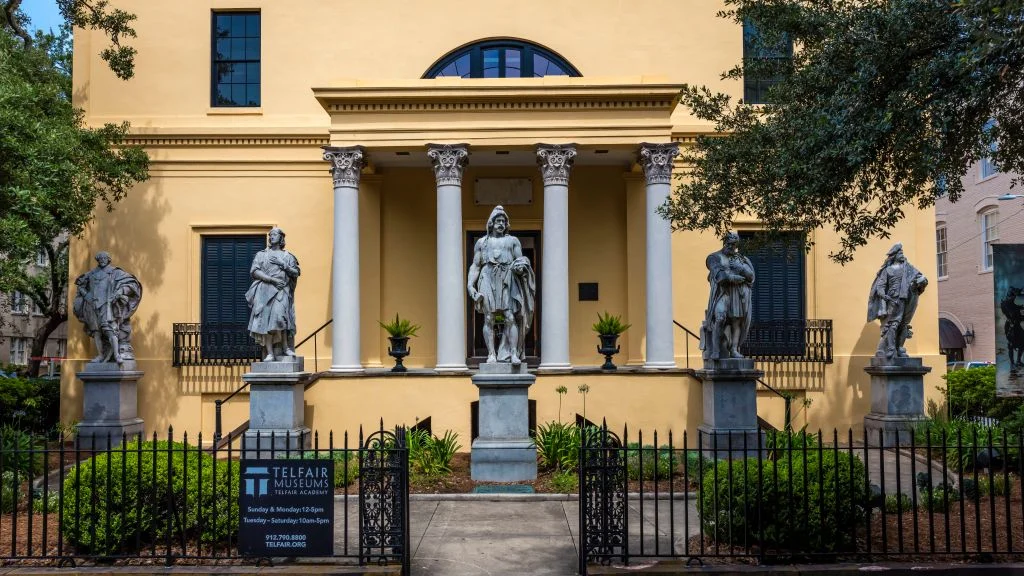
To understand the magnitude of Doherty’s new role, one must consider the complexity of the Telfair Museums. Founded in 1886, it is the oldest public art museum in the Southern United States. Rather than a singular building, the Telfair is an interconnected ecosystem of four distinct sites, each with a different focus and historical weight:
- The Telfair Academy: Housed in an 1819 Regency-style mansion, this site serves as the museum’s historic core, showcasing 19th- and 20th-century art.
- The Owens-Thomas House and Slave Quarters: A critical site for the interpretation of urban slavery, this location offers a profound and challenging look at the history of Savannah’s enslaved population.
- The Jepson Center: The contemporary wing of the museum, known for its striking modern architecture and rotating exhibitions of living artists.
- The Telfair Children’s Art Museum: A dedicated space for education and youth engagement, integral to the institution’s community outreach mission.
Managing this portfolio requires a delicate balance between historic preservation, academic rigor, and contemporary relevance. As the museum enters the 140th anniversary of the Telfair Academy and the 20th anniversary of the Jepson Center, Doherty is tasked with honoring the past while ensuring the institution remains a vibrant, forward-thinking presence in the digital age.
Official Responses and Strategic Vision
The board of the Telfair Museums has expressed profound optimism regarding the transition. Susan Willetts, who has served as both board chair and interim executive director during the search process, underscored the board’s confidence in Doherty’s balanced skillset.
"Caitlín clearly knows what it takes to build and run a great art museum, whether it be exhibitions, collections, finance, or operations," Willetts stated. "Importantly, she recognizes that, at the end of the day, it all comes down to people. Caitlín is all about building relationships. We are very excited to welcome her to the community."
For her part, Doherty has adopted a collaborative tone. "It is exciting to be joining it at this important time in its history," she said in an official statement. "I am looking forward to listening, learning and working alongside the museum’s staff, board, supporters, artists, and community leaders as we collectively build on the Telfair’s remarkable history and together shape its equally remarkable future."
Chronology of Institutional Instability
Doherty’s arrival comes at a time when the Telfair is seeking stability. The institution has undergone a tumultuous period marked by rapid executive turnover and economic pressures.
- March 2022: Benjamin T. Simmons resigns after three years as executive director. His departure was sudden, and the lack of a public explanation contributed to a sense of uncertainty within the local art community.
- September 2024: David Brenneman is appointed as the new executive director, aiming to steer the museum toward a new era of growth.
- January 2025: The museum makes national headlines for the wrong reasons, announcing a 15% reduction in staff. The process, conducted via a remote Zoom call, drew criticism for its abruptness and lack of transparency, leading to significant public outcry.
- January 20, 2025: Shortly after the layoffs, David Brenneman steps down, citing a serious medical condition. Susan Willetts steps in as interim leader.
- August 2026: The appointment of Caitlín Doherty is announced, ending the interim period and setting the stage for a new administrative chapter.
The layoffs, in particular, left a scar on the organization. When the cuts were announced, the museum cited decreased funding and a need to align operations with current financial realities. Reports from local media, including WJCL, highlighted the distress of employees who were given no notice of the staff reductions. For the incoming director, rebuilding trust with the remaining staff and the local Savannah community will be as critical as the museum’s financial recovery.
Implications for the Future: Challenges and Opportunities
As Caitlín Doherty prepares to relocate to Savannah, she faces a multi-dimensional challenge. The "Telfair brand" is one of the most respected in the South, but it requires a leader who can navigate the tension between its historic role as a keeper of tradition and its responsibility to reflect the contemporary, diverse voices of the region.
Financial Sustainability
The 2025 layoffs highlighted a fragile financial structure. Doherty’s success at MOCA Jacksonville in growing the endowment will be a primary focus for the Telfair board. She will need to demonstrate that she can attract new donors while simultaneously managing the operational costs of four disparate sites.
Community Relations
The optics of the January 2025 layoffs damaged the museum’s relationship with its workforce and some segments of the public. Doherty’s emphasis on "relationship building" will be tested immediately. Transparency, internal communication, and a commitment to employee welfare will be essential if she is to foster a culture of loyalty and morale.
Curatorial Direction
With the Telfair Academy and the Jepson Center representing two very different eras of art history, Doherty must curate a vision that bridges the gap. Her background as a curator suggests she will be highly active in shaping the exhibition calendar. There is an opportunity here to leverage her expertise in video and contemporary art to bring fresh, perhaps more provocative, content to the Jepson Center, which could help drive the attendance numbers the museum desperately needs.
The Institutional "X Factor"
The board’s confidence in her "X factor" suggests they are looking for more than just a manager—they are looking for a visionary. In the museum world, the "X factor" often refers to the ability to synthesize the mission of the institution with the cultural zeitgeist. If Doherty can successfully integrate the Telfair’s storied history with a modern, inclusive, and financially sustainable business model, she may well be the leader who secures the institution’s status for the next century.
As October approaches, the staff at the Telfair Museums, the Savannah arts community, and the broader institutional landscape of the American South await the start of her tenure. The challenges are clear, but if her past performance is any indicator, the Telfair is entering a period of deliberate, strategic, and perhaps even transformative growth.