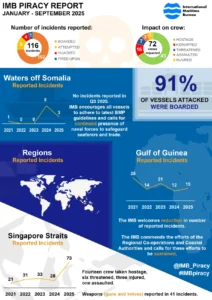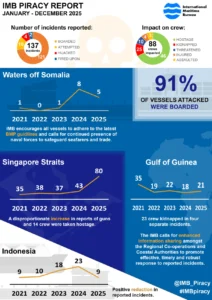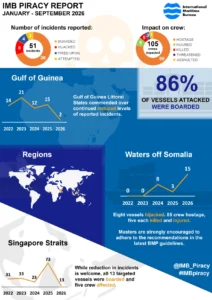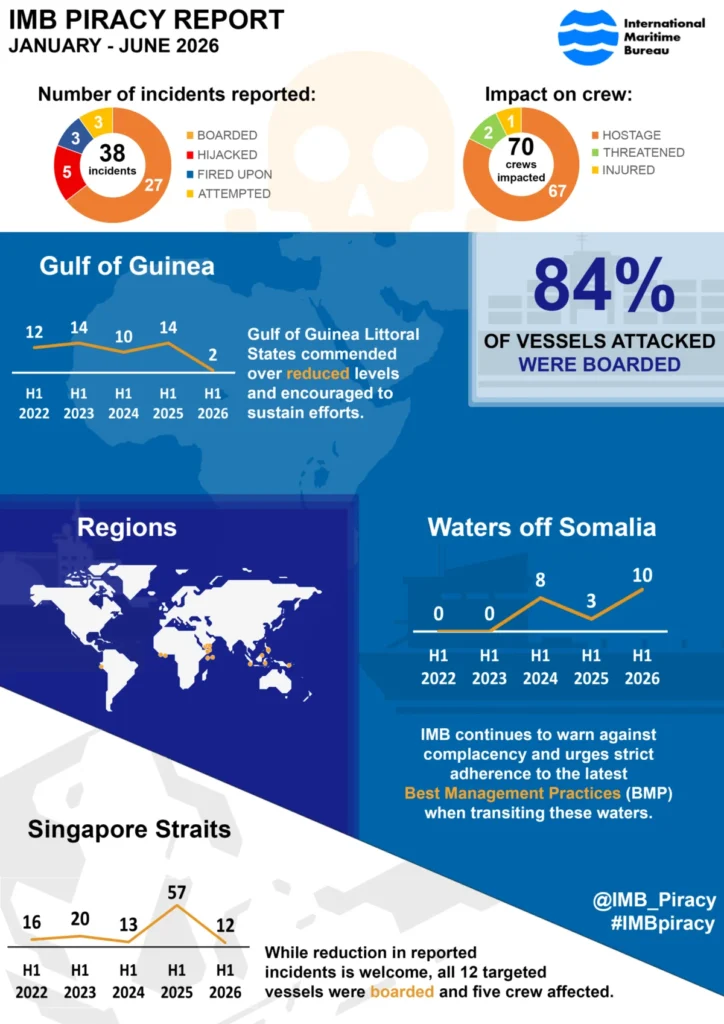
Introduction
The vast, interconnected arteries of the world’s oceans facilitate more than 80% of global trade. Yet, beneath the calm surface of international shipping lanes lies a persistent and evolving threat: maritime piracy and armed robbery. For over three decades, the International Chamber of Commerce (ICC) International Maritime Bureau’s (IMB) Piracy Reporting Centre (PRC) has stood as the world’s sentinel, a 24-hour nerve center dedicated to safeguarding mariners and protecting the integrity of global supply chains. As geopolitical tensions shift and criminal tactics evolve, the PRC remains the definitive bulwark against those who seek to disrupt the freedom of navigation.
The Genesis and Evolution of the IMB Piracy Reporting Centre
A Response to Chaos
Established in 1991, the IMB Piracy Reporting Centre was birthed out of necessity. The late 20th century saw a dramatic rise in piracy, particularly in the waters of Southeast Asia and off the coast of West Africa. At the time, there was no centralized mechanism for ships to report attacks in real-time. Vessels were often left to fend for themselves, and incidents went largely undocumented, leaving authorities without the actionable intelligence required to mount an effective defense.
The founding of the PRC changed the landscape of maritime security. It provided, for the first time, a single, dedicated point of contact that operated 24 hours a day, 365 days a year. By centralizing reporting, the IMB created a unified database that allowed for the identification of trends, hotspots, and the modus operandi of criminal syndicates.
Core Objectives and Operational Mandate
The mission of the PRC is twofold: immediate operational support and long-term intelligence gathering. When a ship reports an incident—whether it is an actual boarding, an attempted attack, or merely a suspicious vessel hovering in the vicinity—the PRC acts as an emergency response coordinator.
By disseminating rapid-response warning broadcasts and email alerts to ships operating in vulnerable areas, the Centre effectively creates a community-driven defense network. This real-time information sharing allows masters and crews to alter courses, increase watchfulness, and harden their vessels against potential boarding, often acting as a deterrent long before a conflict escalates.
Chronology of Impact: Three Decades of Vigilance
To understand the significance of the PRC, one must view its history through the lens of its shifting operational focus.
- 1991–2000: The Establishment Phase. The focus was on setting up the reporting infrastructure and convincing shipowners that reporting incidents would not adversely impact their insurance premiums or reputations.
- 2001–2010: The Rise of Modern Piracy. The early 2000s saw the emergence of sophisticated, organized criminal groups, particularly in the Gulf of Aden and the Horn of Africa. The PRC became an essential partner for naval coalitions, providing the data necessary for the establishment of the Maritime Security Transit Corridor.
- 2011–2020: Diversification of Threats. The focus shifted to the Gulf of Guinea and the increasing use of kidnapping for ransom as a primary revenue stream for criminal gangs. The PRC adapted by providing specialized guidance to crews on citadel procedures and evasion tactics.
- 2021–Present: The Digital and Hybrid Era. Today, the PRC is at the forefront of monitoring not just physical attacks, but the intersection of cyber threats and maritime security. It remains the world’s primary repository for piracy data, serving as the foundation for the ICC’s global advocacy for maritime safety.
Supporting Data: Why Reporting Matters
The efficacy of the PRC is predicated on data integrity. The IMB frequently highlights that piracy reporting is not merely a bureaucratic requirement; it is a tactical necessity.
The Underreporting Dilemma
One of the greatest challenges the IMB faces is the "underreporting gap." When incidents are not reported—due to fear of delays, commercial pressures, or a lack of trust in local authorities—the true scale of the threat remains obscured. Without accurate data, international maritime agencies and regional governments cannot justify the allocation of naval assets, patrols, or legal resources to specific high-risk areas.
The IMB’s annual piracy reports serve as the "gold standard" for the maritime industry. These reports influence the designation of "War Risk Areas" by insurance underwriters, directly impacting the cost of trade. Consequently, the data gathered by the PRC does more than just save lives; it stabilizes the economic cost of global shipping.
Official Perspectives and Advocacy
The Voice of the IMB: Michael Howlett
Michael Howlett, the Director of the ICC International Maritime Bureau, has consistently emphasized the human cost of piracy. In his view, the role of the PRC is to ensure that the "mariner is never alone."
"Every incident, whether it ends in a successful robbery or a foiled attempt, provides a lesson," says Howlett. "When a shipmaster reports an incident to our centre, they are contributing to a global pool of intelligence that protects their peers. Our goal is to ensure that authorities have the evidence they need to prosecute offenders and, ultimately, to create a maritime environment where trade can flourish without the shadow of fear."
The ICC’s Broader Mission
The IMB operates under the umbrella of the International Chamber of Commerce (ICC), the world’s largest business organization, representing over 45 million companies in more than 170 countries. The ICC’s mission—to make business work for everyone, every day, everywhere—is reflected in its support for the PRC. By promoting international trade and advocating for responsible conduct, the ICC views maritime security as a fundamental pillar of economic prosperity. The Bureau acts as the operational arm that ensures the physical safety of the vessels that facilitate this trade.
Implications for the Future of Global Maritime Security
Emerging Trends: The New Face of Piracy
As we look to the future, the IMB PRC is preparing for a shift in the nature of piracy. While traditional boarding remains a threat, the integration of autonomous vessels and digital logistics networks introduces new vulnerabilities. The PRC is evolving to ensure that its reporting systems are compatible with the next generation of maritime technology.
Strengthening International Cooperation
The implications of the PRC’s work extend into the realm of international law. The data provided by the Centre has been instrumental in supporting the UN Convention on the Law of the Sea (UNCLOS). By providing objective, verified records of crimes on the high seas, the IMB aids in the development of regional frameworks for legal cooperation, ensuring that pirates are not only deterred but held accountable in a court of law.
The Call to Action for Shipowners
The IMB maintains a clear, unwavering call to action: Report everything.
The Centre encourages all shipmasters and owners to disclose all actual, attempted, and suspected incidents of piracy and armed robbery. This reporting is the vital first step in the cycle of security. When the industry speaks with one voice through the IMB, it forces governments to listen and act.
Conclusion
The IMB Piracy Reporting Centre is more than just a reporting office; it is the heartbeat of global maritime security. By bridging the gap between isolated vessels on the high seas and the international community of naval, legal, and regulatory agencies, the PRC has proven that coordination and transparency are the most effective weapons against piracy.
In an increasingly volatile world, the mission of the IMB remains as relevant today as it was in 1991. As the maritime industry faces new challenges, the continued collaboration between shipowners, the ICC, and the global security community will be the deciding factor in ensuring that the oceans remain open, safe, and secure for all.
Contact Information for Reporting and Inquiries
For shipmasters requiring immediate assistance or for organizations seeking further information on the current state of maritime security, the IMB Piracy Reporting Centre provides the following contact points:
Michael Howlett
Director, ICC International Maritime Bureau
- Tel: +44 207 423 6960
- Email: [email protected]
- 24-Hour Hotline: (Available to registered vessels for incident reporting via official IMB channels).
By maintaining constant vigilance and fostering a culture of reporting, the international maritime community continues to uphold the rule of law on the world’s most critical frontier. The IMB stands ready to lead this charge, ensuring that the safety of the crew and the security of the cargo remain the top priorities in the global shipping industry.