
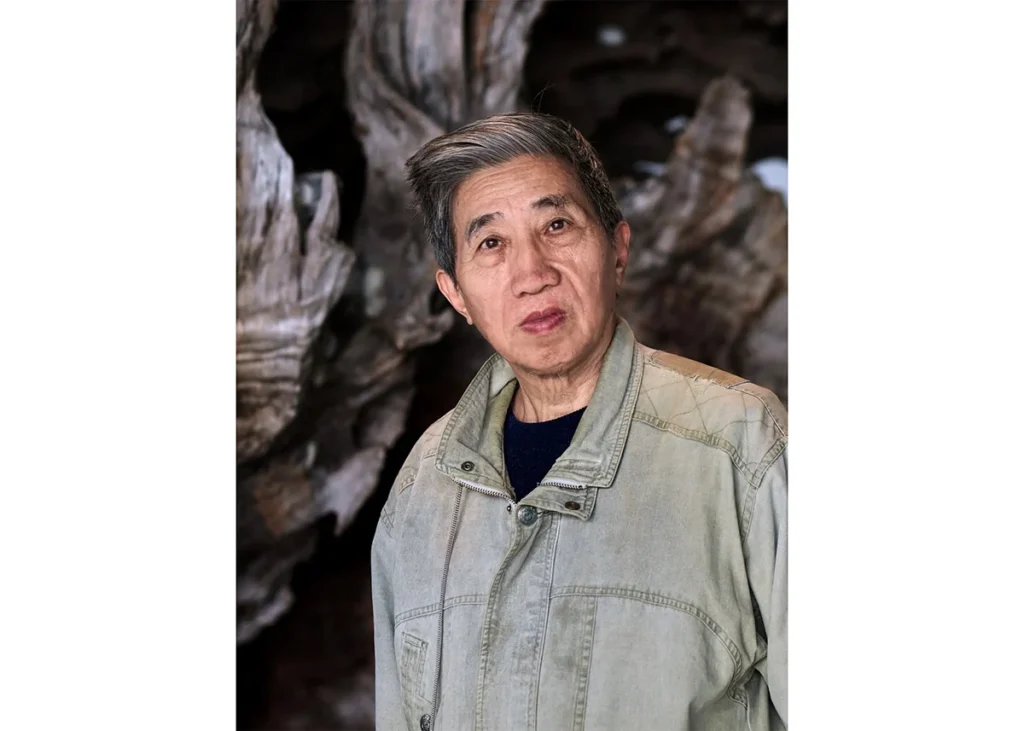
The contemporary art world is mourning the loss of a singular visionary. Liang Shaoji, the acclaimed Chinese artist renowned for his transformative, multidisciplinary installations involving live silkworms, passed away in Shanghai at the age of 81 following an illness. His death was confirmed by his longtime representative, the ShanghART Gallery, which issued a statement expressing "profound sadness" at the passing of a man whose work bridged the chasm between the cold, industrial remnants of humanity and the delicate, persistent vitality of the natural world.
Liang’s legacy is defined by his decades-long dedication to the "Nature Series," a project that fundamentally challenged the traditional boundaries of sculpture, biology, and performance art. By inviting silkworms to serve as his primary collaborators, Liang transformed the act of artistic creation into a meditative, slow-motion dialogue with the rhythm of life itself.
A Life of Resilience: From Factory Floors to Artistic Zen
Born in Shanghai in 1945, Liang’s early life was marked by the seismic shifts of the Cultural Revolution. When the political climate of the era rendered his aspirations for formal art schooling impossible, Liang was redirected to the stark, mechanical environment of a large-scale linen fabric factory. While intended as a detour from his creative path, this period of industrial labor arguably provided the crucible for his future work. It was here that he first engaged with the materiality of fibers, textiles, and the repetitive nature of production—themes that would later anchor his practice.
It was not until the 1980s, a period of renewed cultural opening in China, that Liang was able to pursue formal training. He enrolled at the China Academy of Art in Hangzhou, focusing on the study of tapestry. Under the tutelage of the Bulgarian master Maryn Varbanov, a pioneer of the "soft sculpture" movement, Liang began to conceptualize art that rejected the rigidity of traditional stone or bronze.
For the latter half of his life, Liang became a figure of legend, often referred to as the "holy hermit." Living for extended periods in a temple on Mount Tiantai in Zhejiang Province, he adopted a lifestyle of asceticism and observation. This retreat into the mountains was not a withdrawal from the world, but rather a strategic immersion into the environment that fueled his artistic inquiries. "I am a silkworm," he would often say, a testament to his profound identification with the creatures that defined his career.
The "Nature Series": A Taxonomy of Collaboration
In 1989, Liang embarked on his most ambitious undertaking: the Nature Series. This project represented a radical departure from the anthropocentric view of art. Rather than forcing his will upon raw materials, Liang acted as a facilitator, placing silkworms upon various surfaces and allowing their instinctual, silk-spinning behavior to dictate the final form of the work.
The objects Liang chose for these collaborations were deeply symbolic. He selected items that carried the weight of human history and trauma: shattered bricks from earthquake-stricken regions, rusted iron chains, discarded oil barrels, and broken ceramics. By introducing silkworms to these "foreign objects," he initiated a process where the biological, white, ephemeral silk would gradually shroud the heavy, decaying materials.
The Mechanics of the Metaphor
The result of this process was a stark, poetic contrast. The cold, unyielding nature of industrial iron or broken concrete was enveloped by the soft, organic, and life-affirming shroud of silk. To the viewer, these installations served as a living metaphor for time, transformation, and the resilience of the natural world.
In his 2024 solo exhibition, Sea of the Cloud, hosted at the Sea World Culture and Arts Center in Shenzhen, Liang displayed a massive iron chain suspended in space, draped in the intricate webbings of thousands of silkworms. The piece was set against a film of the ocean, creating an atmosphere that felt both ancient and futuristic. Reflecting on the genesis of this work, Liang recounted a pivotal moment of witnessing a silkworm nearly fall from a roof before catching itself with a single thread. "In that moment, I felt life hanging by a thread," he explained. "It was a profound impact. I felt a greater sense of purpose… the suspense of life itself and the resilient will to survive."
Ethical Dimensions and Artistic Philosophy
Liang’s practice was not without its critics. Over the years, some in the art world questioned the ethics of using living creatures as "collaborators." In response, Liang consistently maintained that his work was rooted in empathy and scientific observation rather than exploitation.
"Based on observation and analysis of the life of the living creature, I find and cultivate its own potential and naturally achieve the transformation," he stated in a 2017 interview. He was careful to emphasize that he avoided "violent intervention," instead using gentle, bio-sensitive methods to encourage the silkworms to thrive in their artificial environments. To Liang, the silkworm was not a tool, but a peer. In Chinese culture, the silkworm carries significant weight as a symbol of rebirth, reincarnation, and self-sacrifice—a creature that consumes its environment to produce something of beauty and utility.
Global Recognition and Institutional Impact
Throughout his career, Liang Shaoji received significant international recognition for his contributions to contemporary art. His work transcended geographical and cultural boundaries, resonating with audiences who were captivated by his quiet, meditative approach to the chaos of modernity.
- 2002: Recipient of the prestigious Chinese Contemporary Art Award (CCAA).
- 2009: Recipient of the Prince Claus Award, an honor celebrating artists whose work has a positive impact on society.
- Exhibitions: His installations have been featured in major galleries and museums worldwide, cementing his status as a pivotal figure in the "soft sculpture" and "eco-art" movements.
Despite these accolades, Liang remained remarkably grounded. He often described his art as "complex" but maintained that the "soul of it is experience and meditation." He was an artist who rejected the "gallery as a showroom" model, preferring to view the exhibition space as a site for spiritual reflection.
Official Responses and The Road Ahead
The announcement of his passing prompted an outpouring of tributes from the global art community. ShanghART Gallery, which nurtured his career for decades, noted: "Through this sustained dialogue with nature, his work explored time, life, transformation, and the process of creation."
For many, the loss of Liang Shaoji represents the loss of a bridge between the rapid industrialization of China and its deep-rooted philosophical traditions. His work serves as a reminder that even in the face of environmental collapse and technological acceleration, there remains a fundamental, biological urgency to survive and create.
As the art world reflects on his passing, the question arises: what becomes of the "Nature Series" now that its primary architect has departed? The beauty of Liang’s work was that it was never truly "finished" by him; it was a process, a cycle of life that he merely initiated. He often remarked, "Nature perpetually renews itself; my creation does not end."
Liang Shaoji leaves behind a body of work that is as fragile as it is enduring. Whether it is the soft white thread covering a rusted chain or the memory of the silkworm climbing a precipice, his art asks us to look closer at the world around us. He taught us that life, like the thread of a silkworm, is teetering on the brink—and that there is profound, quiet strength in that suspension.
In his final years, Liang continued to work with the same intensity he had in his youth, driven by a philosophy that saw no distinction between the artist and the world he inhabited. He was the "silk hermit" who wove the disparate threads of history, biology, and spirit into a tapestry that will continue to offer comfort and insight for generations to come.