
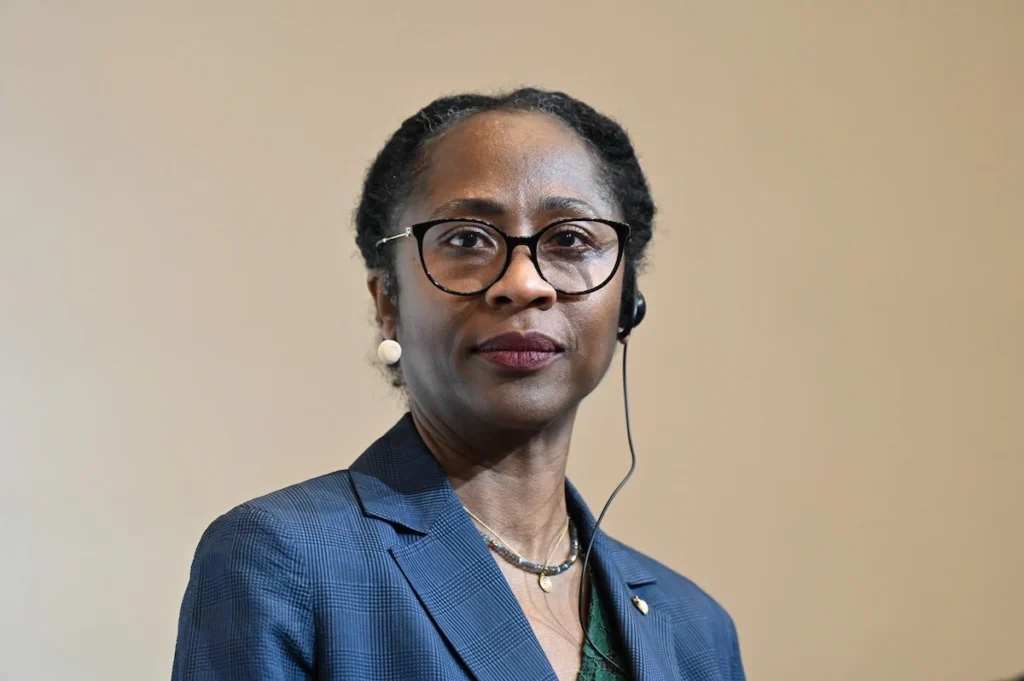
As the international art world turns its eyes toward Kassel, Germany, for the forthcoming edition of Documenta, the exhibition—long considered the “Olympics of the art world”—finds itself navigating a precarious political minefield. Naomi Beckwith, the Guggenheim Museum’s deputy director and chief curator and the newly appointed organizer of Documenta 16, has confirmed that the exhibition’s preparations are being hampered by an emerging trend of artist withdrawals.
In a wide-ranging interview with the German publication Die Zeit, Beckwith revealed that several invited artists have declined to participate, citing concerns over Germany’s political climate and its official stance on the war in Gaza. This revelation marks the latest chapter in a turbulent saga that has threatened the structural integrity and prestige of one of the world’s most significant recurring art events.
The Weight of History: A Chronology of Contention
To understand the current crisis, one must look back at the chaotic legacy of Documenta 15. Staged in 2022 and curated by the Indonesian collective ruangrupa, the exhibition was intended to be a watershed moment for decentralized, collaborative artistic practice. Instead, it became the epicenter of a national debate regarding antisemitism and freedom of expression.
The controversy reached a boiling point when a mural by the collective Taring Padi, titled People’s Justice (2002), was found to contain caricatures widely interpreted as antisemitic, including a figure depicting a Mossad agent with a pig’s face and a Star of David. The fallout was immediate and severe. The mural was covered, then removed, and the subsequent outcry prompted a wave of condemnation from German politicians and Jewish organizations.
This incident served as the catalyst for a systemic overhaul of Documenta’s governance. By 2023, the entire curatorial selection committee for Documenta 16 resigned in protest, citing a lack of support and a stifling political environment. It was into this vacuum of leadership that Naomi Beckwith stepped in 2024, tasked with the near-impossible mission of restoring the exhibition’s reputation while navigating a polarized German cultural landscape.
The Politics of Participation: Why Artists are Walking Away
The withdrawals mentioned by Beckwith are not merely isolated incidents; they represent a growing friction between the global contemporary art community and the German political establishment.
In her interview with Die Zeit, Beckwith was candid about the reasons behind the rejections. “Some have the impression that they are not free in Germany to show what they want to show,” she explained. “Others criticize the stance that Germany has taken on the Gaza war.”
This sentiment reflects a broader anxiety among international artists who view German cultural policy—which has increasingly aligned with a stringent definition of antisemitism—as a mechanism for censorship. Many creators fear that work critiquing Israeli state policy, or even work expressing solidarity with Palestinian liberation, risks being branded as antisemitic, thereby inviting professional and social ostracization.
When pushed on her own perspective regarding the conflict, Beckwith opted for a diplomatic stance, emphasizing the necessity of dialogue over ideological purity. “Far more important than my personal stance is the question of how we can overcome this divisive way of thinking,” she remarked. “I understand the need for solidarity and support, but we won’t get anywhere with entrenched positions.”
Institutional Reforms and the Code of Conduct
In the wake of the Documenta 15 fallout, the institution has scrambled to implement safeguards. These measures include a rigorous, newly codified code of conduct designed to flag “contentious” material before it reaches the public eye.
Central to this new framework is the adoption of the International Holocaust Remembrance Alliance’s (IHRA) definition of antisemitism. While the German government views this as a vital tool for combating prejudice, critics argue that the definition is weaponized to silence legitimate political dissent. By conflating harsh criticism of the Israeli government with antisemitism, many artists and activists argue that the policy creates a chilling effect on creative freedom.
The tension surrounding this code was highlighted during the Die Zeit interview when it was noted that Beckwith herself had not signed the document. Her response—"I wasn’t asked to do it"—underscores the ambiguity of her position. As a curator, Beckwith is attempting to balance the institutional requirements of her hosts with the need to attract a global roster of artists who may be fundamentally opposed to those very requirements.
The Lessons of Taring Padi
Reflecting on the Taring Padi incident, Beckwith offered a nuanced critique of the previous administration. She acknowledged that while ruangrupa’s collaborative ethos was admirable, there was a profound failure in cultural translation.
“I’m sure something like that won’t happen again. We’ve learned a lot since then,” Beckwith stated. She posited that the collective failed to account for the specific historical sensitivities of the German context, particularly regarding the Holocaust and the subsequent protection of the Jewish community. “Taring Padi didn’t understand the importance of protecting the Jewish community in this country. And the curators of ruangrupa, whose openness I greatly admire, may not have been prepared for that either.”
This acknowledgement highlights the central challenge for Documenta 16: how to remain a global platform for diverse, often radical, artistic voices while operating within the specific, non-negotiable legal and historical frameworks of the German state.
Implications for the Future of Documenta
The crisis currently facing Documenta is symptomatic of a larger global struggle within cultural institutions: the tension between institutional safety and intellectual freedom.
1. The Erosion of “The Olympics of Art”
If prominent artists continue to boycott the exhibition, Documenta risks losing its status as a representative barometer of global art. If the participant list becomes skewed by political alignment rather than aesthetic merit, the exhibition’s credibility will inevitably diminish.
2. The German Cultural “Chilling Effect”
The scrutiny placed on Documenta has already spread to other German institutions, such as the Berlinale and various state-funded theaters. There is a growing concern that the German cultural sector is becoming a space where the range of permissible debate is narrowing, leading to a "safe" but intellectually hollow exhibition culture.
3. The Curator as Mediator
Naomi Beckwith is essentially playing the role of a diplomat as much as a curator. Her success will not be measured solely by the quality of the art, but by her ability to foster a space where uncomfortable, difficult, and even inflammatory conversations can occur without descending into the toxicity that defined the 2022 exhibition.
Conclusion: A Path Forward?
As Documenta 16 approaches, the institution stands at a crossroads. The path forward is fraught with the legacy of the past and the volatility of the present. While the administration is betting on its new code of conduct and rigorous vetting processes to prevent future scandals, the artistic community remains deeply skeptical.
The challenge for Beckwith is to prove that Documenta can still be a space for bold, challenging, and even controversial art without alienating the very artists who make the show relevant. Whether she can reconcile the German state’s expectations with the artistic community’s demand for freedom of expression remains the defining question of her tenure.
If Documenta is to remain the world’s most prestigious exhibition, it must find a way to navigate the "entrenched positions" Beckwith laments. For now, the global art world watches, waiting to see if the exhibition can reclaim its status as a lighthouse of discourse, or if it will be permanently dimmed by the shadows of political controversy.