The global luxury landscape is currently witnessing a profound and paradoxical divergence. While high-street luxury retailers and major fashion houses grapple with a significant exodus of aspirational consumers, the world’s premier auction houses—Sotheby’s, Christie’s, and Phillips—are reporting record-breaking revenues. This "Great Divergence" highlights a fundamental shift in how the world’s wealthiest individuals allocate capital, moving away from mass-produced "accessible luxury" and toward the rare, the historical, and the investment-grade.
Main Facts: A Tale of Two Markets
The core of the current market phenomenon lies in a stark contrast between the primary retail market and the secondary auction market. According to recent industry reports, the broader luxury sector has seen a staggering decline in its buyer base. Consulting firm Bain & Company notes that approximately 50 million consumers exited the luxury market between 2022 and 2024. This contraction, representing one-eighth of the industry’s total customer base, has been fueled by aggressive price hikes, a weakening global economy, and a perceived decline in the "value proposition" of entry-level luxury goods.
Conversely, the auction sector is operating in an entirely different reality. At Christie’s, luxury sales surged by 30% year-on-year in the first half of 2025, reaching $468 million, only to climb another 15% to $539 million in the first half of 2026. Sotheby’s has seen even more dramatic growth, with luxury sales hitting a staggering $2.7 billion in 2025—accounting for nearly 40% of the house’s total annual turnover.
This disparity suggests that while the "aspirational" shopper (those who occasionally buy $2,000 sneakers or handbags) is retreating, the "ultra-high-net-worth" (UHNW) individual is doubling down on hard assets. For these collectors, watches, jewelry, and rare wines are no longer just lifestyle choices; they are seen as stable repositories of wealth during periods of inflationary pressure and currency volatility.
Chronology: The Upward Trajectory (2024–2026)
To understand the current boom, one must look at the steady escalation of luxury’s dominance within the auction ecosystem over the last three years.
- 2024: The Foundation of Growth. Following the post-pandemic boom, luxury sales at major houses stabilized at a high plateau. Both Sotheby’s and Christie’s reported luxury turnovers exceeding $2 billion, signaling that the "collectible luxury" category was no longer a niche supplement to fine art but a primary pillar of the business.
- 2025: The Breakout Year. Sotheby’s hit a record $2.7 billion in luxury sales, a 22% increase from the previous year. This period saw a massive influx of new buyers, particularly through digital platforms. Christie’s recorded a 30% jump in the first half of the year, driven by high-profile single-owner collections and a renewed interest in rare gemstones.
- 2026: Consolidation and Record Watch Sales. In the first half of 2026, the momentum showed no signs of flagging. Sotheby’s reported that global watch sales jumped 64% year-on-year, while jewelry sales rose by 13%. Phillips joined the record-breaking streak, with its watch department recording the most successful spring season in its history, totaling over $235 million across its Geneva, New York, and Hong Kong salerooms.
Supporting Data: The Bifurcation of Wealth
The data supporting this "K-shaped" recovery—where the wealthy continue to thrive while the middle class contracts—is evident in the performance of luxury conglomerates versus auction results.
The Retail Contraction
Bain & Company’s data indicates the luxury buyer base shrunk from 400 million to 350 million in just two years. The Financial Times’ Business of Luxury Summit in Puglia echoed these concerns, with CEOs expressing anxiety over "fragile Chinese demand" and the failure to retain "entry-level" clients. Even LVMH, the world’s largest luxury group, reported a 3% drop in overall revenue on a reported basis in the first half of 2026, despite some growth in its specialized watch and jewelry divisions.
The Auction Expansion
In contrast, the sell-through rates at auction remain remarkably high. Sotheby’s maintains a 90% sell-through rate for its watches and jewelry categories, a figure that is virtually unheard of in traditional retail during a downturn.
Furthermore, the demographics of the auction world are shifting. At Christie’s, 38% of all new buyers in 2025 entered the house through a luxury category rather than fine art. At Phillips, millennials and Gen Z bidders now account for nearly one-third of all participants. This suggests that younger, wealthy consumers are bypassing traditional boutiques in favor of the transparency and "curated rarity" offered by the secondary market.
Official Responses: Insights from the Industry Leaders
Industry executives argue that the auction market is insulated because it deals in "absolute rarity" rather than "manufactured exclusivity."
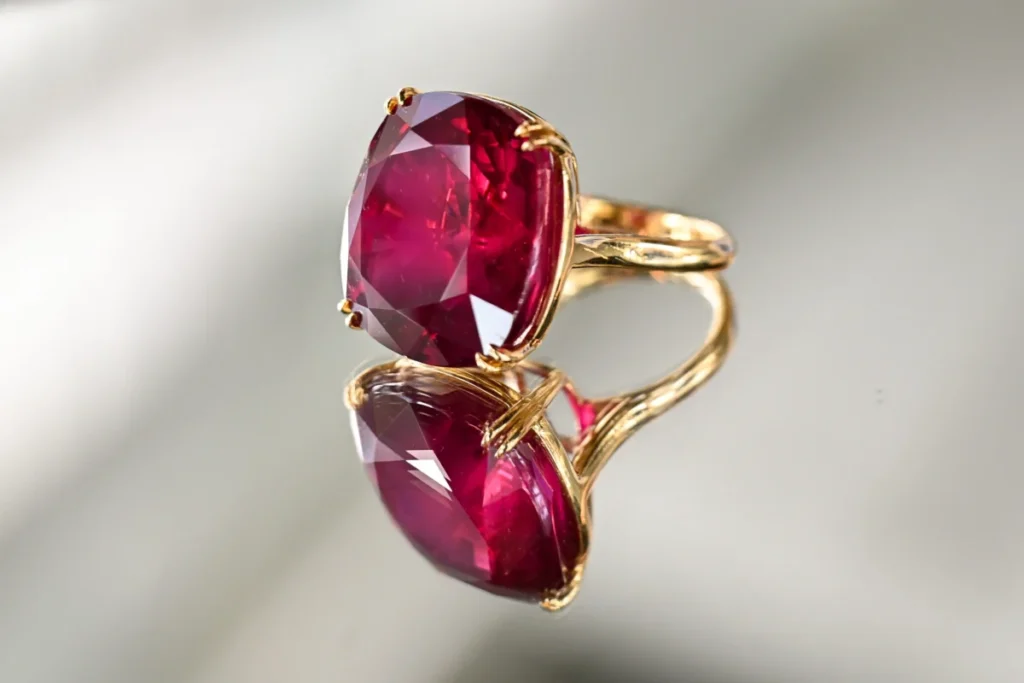
Max Fawcett, Christie’s Global Head of Jewelry, emphasizes that the two markets are fundamentally disconnected. "When we have so many people trying to buy the best things because there are very few of them, it just hasn’t linked through yet from that broader contraction into the auction world," Fawcett noted. He points out that for items like Kashmir sapphires or old-mine emeralds, the secondary market is the only market, as these resources are long exhausted.
Fawcett also highlights a strategic migration: "We are seeing some customers who were traditionally primary-market luxury buyers move into auctions after discovering the rarity and value available on the secondary market."
Josh Pullan, Sotheby’s Global Head of Luxury, attributes the success to a laser focus on "quality, rarity, and provenance." To combat the high-touch service of brands like Cartier or Hermès, Sotheby’s has pivoted toward "experiential luxury." This includes organizing VVIP vineyard tours in France, embedding collectors with Tour de France teams, and partnering with luxury travel agents like Indagare to offer $20,000-per-person cultural trips to Venice.
Guillaume Cerutti, Christie’s former CEO, has previously stated that luxury serves as a "gateway." By bringing in buyers through a Rolex or a Birkin bag, the auction house can eventually migrate those clients into the higher-margin world of contemporary art and Old Masters.
Implications: The Future of the Luxury Ecosystem
The divergence between the primary and secondary markets has several long-term implications for the global economy and the art world.
1. The Professionalization of the Secondary Market
Auction houses are no longer just places to sell estates; they are becoming full-service luxury lifestyle providers. By offering private sales, immediate "Buy Now" digital platforms, and ultra-exclusive travel experiences, houses like Sotheby’s are directly competing with the flagship stores of Place Vendôme and Bond Street.
2. Geographical Shifts in Capital
There is a notable shift in where demand is originating. While European sellers remain active—often parting with multi-generational family collections—the buyers are increasingly located in the United States, the Middle East, and parts of Asia. This represents a global redistribution of "portable wealth" (jewelry and watches) from the Old World to emerging wealth hubs.
3. Luxury as an Asset Class
The continued strength of the auction market reinforces the idea of "investment-grade luxury." In an era of digital saturation, physical objects with historical provenance are seen as more "real" and "stable" than equity markets or cryptocurrencies. This perception is likely to keep the top end of the auction market buoyant even if the broader retail economy continues to struggle.
4. The Vulnerability of the Top Tier
Despite the current optimism, a lingering question remains: Is the auction world truly immune, or just delayed? If the luxury downturn eventually reaches the ultra-wealthy—perhaps through a major correction in the tech or real estate sectors—the auction houses could see a sudden cooling. For now, however, they are benefiting from a "flight to quality," where the world’s most liquid buyers are seeking refuge in the rarest objects money can buy.
Conclusion
The auction houses have successfully decoupled themselves from the struggles of the "aspirational" luxury industry by focusing on the 0.1% of the market. By blending the thrill of the chase with the security of tangible assets and the allure of exclusive experiences, they have turned a period of retail volatility into a golden age for the secondary market. The challenge moving forward will be maintaining this momentum if the macro-economic clouds begin to shadow even the highest echelons of global wealth.