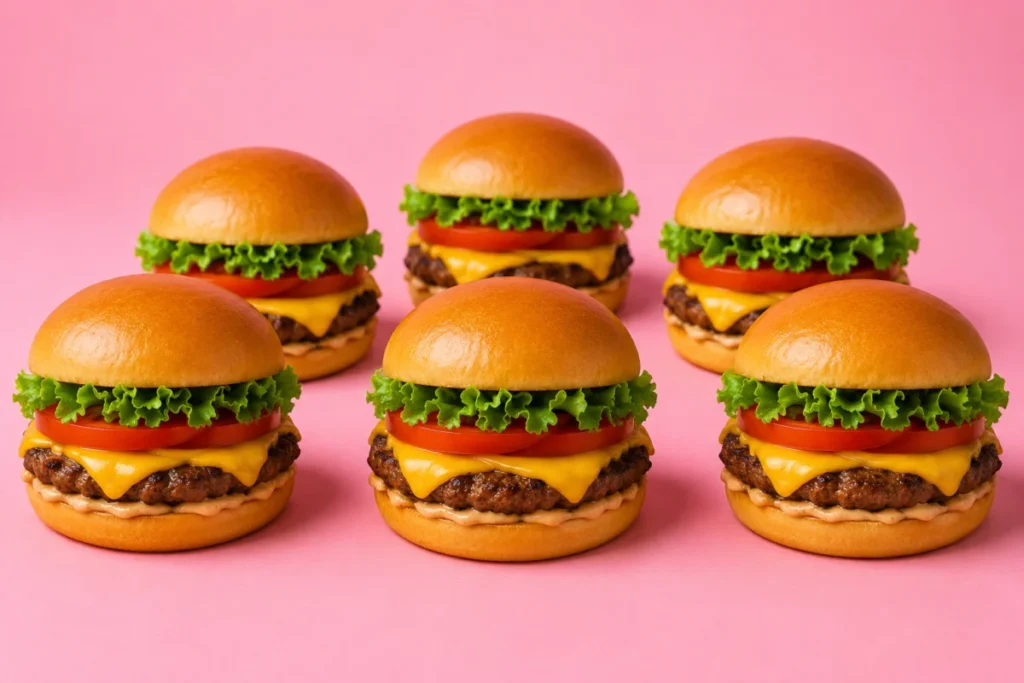
You walk into a neighborhood café, hungry for a simple bagel sandwich. You approach the menu, but as your eyes scan the glossy, high-resolution illustrations, a flicker of hesitation stops you. The bagel is mathematically perfect; the cream cheese smear is impossibly symmetrical; the lettuce looks like it was rendered in a 3D modeling suite rather than grown in soil. It isn’t just a "good" picture—it’s a frictionless, sterilized, and eerily flawless representation of food that triggers a visceral, instinctual feeling that something is fundamentally wrong.
You aren’t suffering from a lapse in sanity. You have encountered the latest frontier of the generative AI boom: the automated, algorithmically generated restaurant menu. As small businesses and massive chains alike turn to AI tools to cut costs and streamline marketing, the "synthetic aesthetic" has begun to colonize our dinner tables, replacing the authentic, messy, and imperfect nature of real food with a digital hallucination that feels increasingly like a "Lovecraftian food horror."
The Mechanics of the "Synthetic Aesthetic"
To understand why a simple burger on a menu can look so unsettling, one must look at how generative models like Midjourney or DALL-E are trained. These systems do not "understand" food; they recognize statistical patterns in vast datasets. When a user prompts an AI to "create an image of a delicious burrito," the model pulls from a massive corpus of existing, commercially available food photography.
"It’s almost like an alien trying to make a pizza without understanding its core principles," says Alex Lisle, CTO of Reality Defender, a firm specializing in deepfake detection and content verification.
The aesthetic we are currently seeing—characterized by round, glowing scoops of ice cream and shrimp that appear to have been genetically modified to consume their own tails—is a direct result of the "corpus of work" these models were fed. Much of the data used to train these systems consists of high-end, heavily edited commercial photography from the mid-2010s. The AI interprets the "shaved edges" of these professional marketing shots as the definition of "food," resulting in images that lack the biological variability of real produce or the chaos of a kitchen-prepared meal.
A Chronology of Digitized Dining
The transition toward AI-generated menu imagery has been rapid, fueled by the widespread accessibility of generative tools starting around 2022.
- 2022–2023: The "Early Adoption Phase." Initial experiments with AI imagery were largely restricted to social media posts and niche marketing campaigns. The novelty of "AI art" masked the underlying issues with the images, as users were more focused on the capabilities of the technology than the accuracy of the content.
- 2024: The "Menu Integration." As generative AI became embedded in platforms like Canva and ChatGPT, small business owners began using these tools to generate promotional material. The speed and zero-cost barrier to entry made AI-generated menus an attractive alternative to professional photography.
- 2025–2026: The "Uncanny Backlash." By mid-2026, the cumulative effect of these images reached a tipping point. Social media platforms like X began documenting "horrific" examples of AI-generated food—melting, impossible textures, and nightmarish geometry. Users began to voice a growing discomfort, noting that these images felt "soulless" and "fake."
- Present Day: The "Verification Crisis." The industry is now grappling with a crisis of trust. As restaurants lean into AI to iterate on their menus—constantly updating prices and items through iterative edits—the images continue to degrade, becoming increasingly "smooth" and less recognizable as food.
The Science of Disgust: Why We Reject the "Fake"
There is a measurable, scientific reason why these images elicit a negative response. A study conducted by researchers at the University of Duisburg-Essen in Germany highlighted that AI-generated food images often land squarely in the "uncanny valley."
The uncanny valley describes a psychological phenomenon where an object that looks "almost" human or real, but fails to reach the threshold of true authenticity, triggers feelings of revulsion or unease. When a diner looks at an AI-generated burger, their brain is primed to expect a real object. When the image exhibits subtle, artificial perfection—the "shaved edges" of reality that AI models prioritize for the sake of being "pleasing"—the cognitive dissonance creates a sense of danger.

"The optimization of the datasets is for ‘pleasingness,’ or not being offensive," explains Lee Rainie, Director of the Imagining the Digital Future Center at Elon University. "What AI is known to do, both in images and language, is to shave off the edges. It homogenizes the output until it lacks the texture of reality."
The Feedback Loop: Model Collapse and Convergence
One of the most pressing concerns for the future of AI imagery is the potential for "model collapse." This occurs when AI models are trained on data that is itself AI-generated. As the internet becomes flooded with synthetic imagery, the models lose touch with the "real" world, essentially inbreeding their own digital outputs.
While Lisle notes that the current state of menu imagery is more accurately described as "convergence" rather than a full-scale collapse, the result is the same: a steady, irreversible decline in quality. When a restaurant uses AI to generate a menu, then tweaks it, then uses that edited image to train or influence future generations of images, the "soul" of the food is systematically stripped away.
Furthermore, the data these models rely on—often sourced from massive commercial datasets—is being aggressively curated. Companies like Amazon have been criticized for sourcing and destroying rare books to feed their data-hungry models, highlighting a desperate, perhaps unsustainable, scramble for high-quality, human-generated training data. If AI continues to "eat its own tail," the digital landscape will become increasingly devoid of nuance, leaving us with a world of homogenized, frictionless, and ultimately, unappetizing content.
Implications: Beyond the Dinner Table
The issue of the "fake menu" is merely a microcosm of a much larger, systemic shift in how we perceive reality. For decades, the legal and social standard of "truth" has relied on visual evidence. As Lisle points out, "Seeing and hearing has always been believing, to the point where even our court systems are entirely tuned to the idea that the gold standard in evidence is taped confessions and videotaped evidence."
When we can no longer trust an image of a sandwich on a menu, we begin to lose our baseline for trusting visual information at all. The ease with which we can generate "pleasing" but false realities has profound consequences for journalism, law, and interpersonal communication.
If restaurants—businesses whose primary function is to provide a sensory, physical experience—can so easily replace their products with digital illusions, it raises a difficult question: what happens when we can no longer distinguish between the promise of a meal and the reality of one?
For now, the backlash against "AI-generated slop" is a local, consumer-driven check on this trend. Diners are voting with their feet, choosing establishments that showcase real, messy, imperfect, and human-made food. However, as the cost of professional photography remains high and the convenience of generative AI remains unmatched, the battle for the authenticity of our visual world is only just beginning. We are entering an era where "real" may become a premium commodity, and the perfectly symmetrical, glowing bagel may serve as the warning sign for a reality that is becoming increasingly, and uncomfortably, thin.