The International Chamber of Commerce Commercial Crime Services (ICC-CCS) has issued an urgent advisory to the global business community regarding a sophisticated disinformation campaign. Over recent weeks, unauthorized and fraudulent "blacklists" containing the names and contact details of various individuals and companies have been circulating globally. These documents, which falsely claim to be compiled by the ICC-CCS, represent a malicious effort to undermine the reputations of legitimate entities.
The ICC-CCS, an internationally recognized body dedicated to combating commercial crime, has categorically denied any involvement in the creation, maintenance, or distribution of these lists. Director Michael Howlett has described the documents as "completely baseless" and warned that they are part of a targeted attempt to damage the credibility of the businesses named within them.
The Anatomy of the Fraud
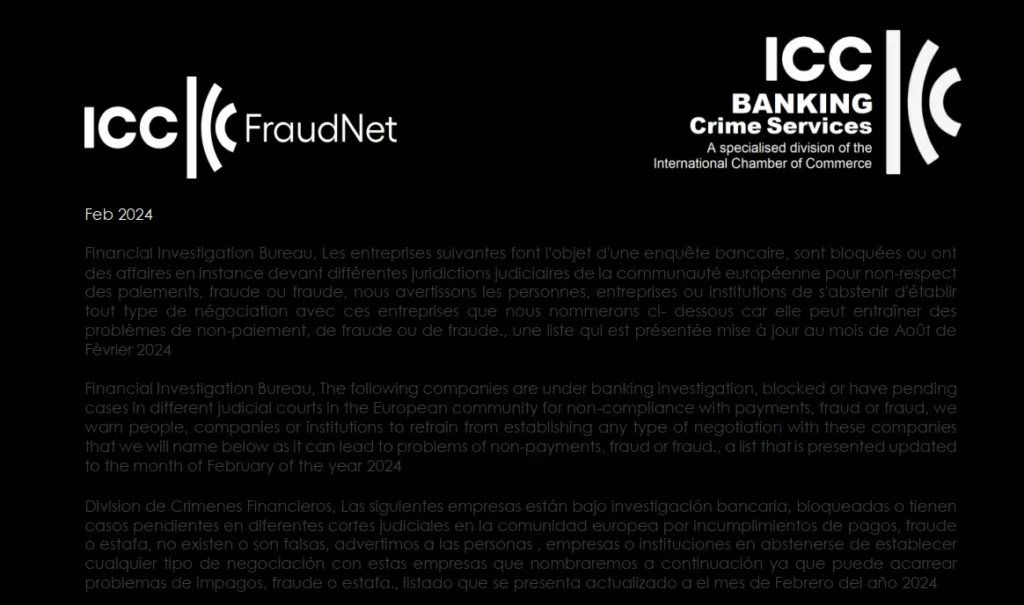
The fraudulent documents are designed to appear official, utilizing the branding and unauthorized imagery associated with the ICC-CCS and the International Hologram Manufacturers Association (IHMA). By mimicking the professional formatting of legitimate industry advisories, the perpetrators have successfully disseminated these lists across various digital channels, including email networks and professional messaging platforms.
At the core of the scheme is the unauthorized use of "The Register," a protective database managed by the IHMA that is designed to safeguard members and their customers against the inadvertent counterfeiting of holograms and intellectual property infringement. By conflating their malicious blacklists with the reputable work of the IHMA, the bad actors behind this campaign are attempting to lend a veneer of authenticity to what is, in reality, a campaign of defamation.
Chronology of the Disinformation Campaign
While the exact origin of these documents remains under investigation, industry experts and the ICC-CCS have traced the emergence of these lists to a period of heightened activity in digital corporate espionage.
- Early Detection: The ICC-CCS first became aware of the circulation of these documents following inquiries from targeted companies who noticed their business details appearing on mysterious "risk assessment" lists.
- Rapid Proliferation: Within days of the initial reports, the documents appeared in multiple jurisdictions, suggesting a coordinated effort to reach a global audience.
- Escalation: The perpetrators began sending these lists to procurement departments, logistics managers, and supply chain partners, implying that the listed companies were involved in illicit activity or failed to meet industry compliance standards.
- Formal Denouncement: Recognizing the potential for widespread reputational damage, Director Michael Howlett issued a formal, public statement on behalf of the organization to clarify the ICC-CCS’s position and stop the spread of the misinformation.
Supporting Data: The Mechanics of Reputational Sabotage
The impact of such lists in a globalized economy cannot be overstated. In an era where due diligence is a prerequisite for any commercial transaction, the appearance of a company on a "blacklist"—even a fabricated one—can trigger immediate and severe consequences.
The Consequences for Targeted Businesses
- Supply Chain Disruption: Procurement managers, acting out of an abundance of caution, may suspend contracts with companies named on these lists, leading to immediate revenue loss.
- Financial De-risking: Banks and credit institutions often utilize third-party risk reports. If these fraudulent lists are scraped by automated risk-monitoring software, the listed companies could face increased insurance premiums or the freezing of credit lines.
- Client Attrition: The psychological impact of being associated with a "blacklist" can lead to the erosion of trust among long-term partners, who may fear "guilt by association."
The "Register" Misappropriation
The unauthorized use of the IHMA’s Register is particularly insidious. The Register is a legitimate, highly respected tool that provides a centralized database for the verification of security holograms. By claiming that their blacklists are linked to the Register, the perpetrators are exploiting the industry’s reliance on verification tools to make their falsehoods seem like "findings" from a standard audit process.
Official Responses and Expert Commentary
The response from the ICC-CCS has been swift and uncompromising. In an official statement, Director Michael Howlett emphasized the organization’s commitment to truth and the integrity of commercial information.
"ICC-CCS would like to make it clear that our organization does not produce lists of this nature," Howlett stated. "The contents are entirely false and should not be relied upon. It appears that these lists have been created by unknown parties and circulated with the intent of damaging the reputations of the listed companies. They should be completely disregarded and given no credence whatsoever."
Legal experts have noted that the distribution of these lists may constitute criminal defamation, libel, and, in some jurisdictions, fraud. By attributing the lists to a reputable organization like the ICC-CCS, the perpetrators have moved beyond simple trolling and into the realm of actionable legal harm.
The IHMA, which maintains The Register, has echoed the concerns of the ICC-CCS. The association has clarified that its functions are strictly limited to the secure management of hologram verification data and that it holds no mandate to "blacklist" entities for the purposes suggested in these fraudulent documents.
Implications for Global Commerce and Due Diligence
The emergence of these fake blacklists highlights a critical vulnerability in modern corporate due diligence: the reliance on unverified digital documentation. As businesses strive to improve their risk management, they are increasingly susceptible to "information injection" attacks.
The Threat of "Verification Fatigue"
In the rush to comply with international regulations, compliance officers often process hundreds of documents daily. The perpetrators of these blacklists are banking on "verification fatigue," hoping that busy professionals will see the ICC-CCS logo and assume the document is legitimate without performing the necessary cross-verification with the official ICC-CCS portal.
The Need for Enhanced Verification Protocols
To combat this, industry leaders are calling for:
- Direct Source Verification: Companies should never rely on third-party documents that appear in their inbox. If a company is mentioned in an advisory, they should contact the issuing body directly through verified channels.
- Digital Signatures and Authenticity Checks: Organizations like the ICC-CCS are increasingly moving toward cryptographically signed digital communications to ensure that any document released can be verified as authentic.
- Public Awareness Campaigns: The business community must be educated on the common indicators of fraudulent documents, such as inconsistent formatting, suspicious email origins, and the lack of a clear, traceable methodology behind the "data" provided.
Conclusion: How to Protect Your Organization
For any business or individual that receives a document purporting to be an "ICC-CCS blacklist," the instruction from the organization is clear: dismiss it immediately. These documents carry no legal or professional weight and are not recognized by any regulatory body.
If you or your organization are targeted by these lists, the following steps are recommended:
- Do Not Circulate: Do not forward these lists to colleagues or partners, as this only aids in the spread of the misinformation.
- Report the Origin: If the document was received via email, report the sender to your IT security department and mark it as a phishing or spam attempt.
- Verify via Official Channels: If you are unsure about the authenticity of any document claiming to originate from the ICC-CCS, visit their official website or contact their offices directly.
- Legal Consultation: If the presence of your company on these lists has caused demonstrable financial or reputational harm, consult with legal counsel regarding the potential for defamation claims against the unknown perpetrators.
The integrity of global commerce relies on the veracity of the information exchanged between partners. By weaponizing reputational risk, the authors of these fraudulent lists seek to create chaos for their own gain. Through collective vigilance and a commitment to verifying information at the source, the business community can effectively neutralize these malicious actors and ensure that the reputations of legitimate companies remain protected from such groundless attacks.
The ICC-CCS remains dedicated to monitoring this situation and will continue to provide updates to the public. In the meantime, the message is unequivocal: trust nothing that does not come through the front door of official verification. The era of the fake blacklist is a challenge to corporate integrity, but it is one that can be overcome through transparency, verification, and unity among industry stakeholders.