

Introduction: From Scalp to Runway
For years, the signature look of Parisian designer Victor Weinsanto has been defined by his meticulously groomed, short-cropped hair, transformed into a canvas of animal prints—zebra stripes, leopard spots, and tiger motifs. Created in collaboration with colorist Kevin Jacotot of L’Oréal Professionnel, Weinsanto’s hair has become a form of performance art that transcends mere personal grooming. It was, perhaps, inevitable that this aesthetic would eventually migrate from the scalp to the silhouette.
During his most recent runway presentation in Paris this past Monday, Weinsanto officially codified his fascination with the animal kingdom, merging it with the nostalgic, hedonistic energy of the late 20th-century club scene. The result was a collection that felt both like a retrospective of his own personal style and a forward-looking manifesto for the modern "club kid."
Chronology of a Spectacle
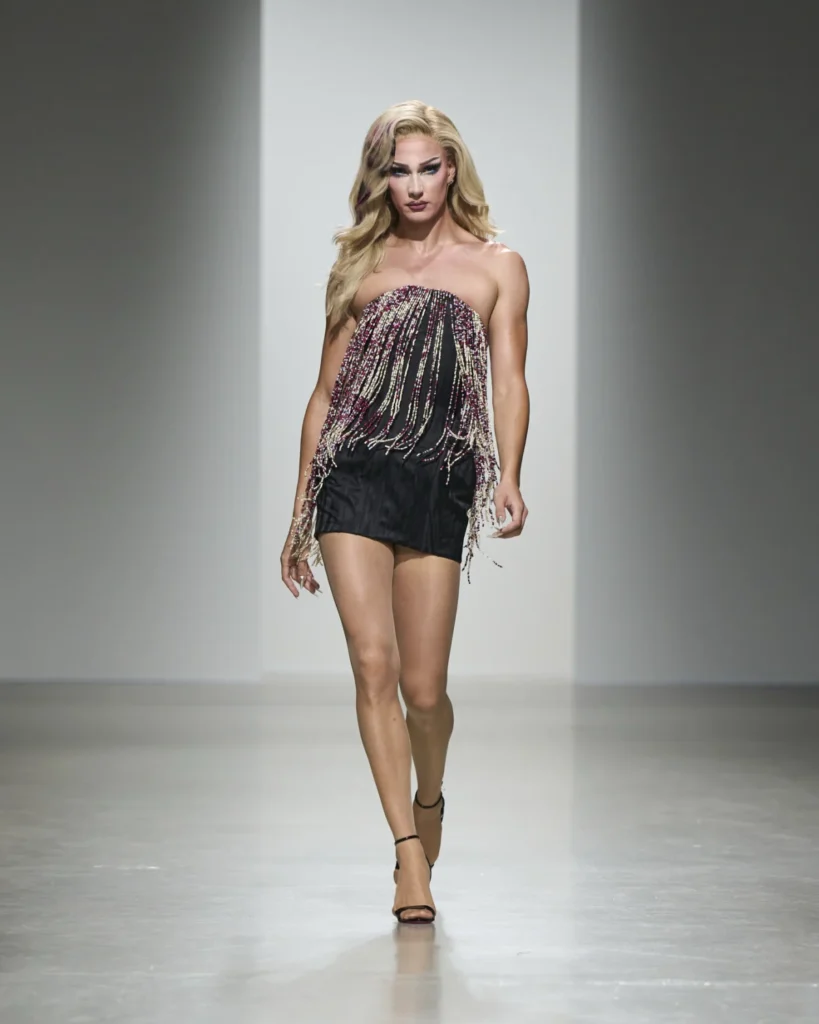
The show began with a high-energy disruption of the typical fashion week stoicism. Opening the presentation was none other than the French drag icon La Grande Dame. With a staggering half-million followers on Instagram, her presence set the tone for the afternoon. As she navigated the long, stark white runway, she performed for a dedicated photographer, spinning with intentional fervor to ensure the beaded fringe of her minidress fanned out like a carnival swing ride.
Following this kinetic opening, the runway transformed into a dialogue between two distinct fashion worlds: the rigid, structured fetishism that has long been a Weinsanto hallmark, and a newfound, fluid ease. As the models progressed, the show unfolded as a deliberate clash between the underground cabaret aesthetic and the practical, street-ready garments of the 2020s.
The pacing of the show was intentional, allowing the audience to pivot from the spectacle of the models to the technical construction of the garments. By paring back some of the theatricality seen in previous seasons, Weinsanto allowed the "hero items" to take center stage. Attendees were treated to a parade of sequin camisoles in blurred, oversized leopard prints, capri pants equipped with functional side zips, and dramatic dressmaker coats cut from bold zebra-printed textiles.
Supporting Data: Deconstructing the Collection
Weinsanto’s latest output is a masterclass in balance, successfully bridging the gap between "fetish" and "functional." His core offering remains deeply rooted in the cabaret tradition—corset-laced skirts, filmy stocking-like dresses, and suggestive bra tops. However, these pieces were juxtaposed with looser, more utilitarian silhouettes that feel distinctly contemporary.
The Anatomy of the Pieces
- The Utility Shift: Snap-away pants and funnel-neck windbreakers provided a street-wear anchor to the collection. These pieces, usually reserved for sportswear, were reimagined in high-fashion contexts, signaling a shift in how the modern consumer views workwear.
- The Animal Motif: Beyond the prints, the collection utilized texture to convey a "wild" energy. A coppery knit fabric used for loose T-shirts and long skirts added a metallic, organic sheen that complemented the more aggressive animal prints.
- The Softening Effect: Recognizing the intensity of his corset-heavy aesthetic, Weinsanto introduced sheer shoulder capes in matching prints. These functioned as a softening agent, "taming" the bolder, more provocative pieces and adding a layer of sophisticated mystery to the ensemble.
- The Silhouette Palette: The collection moved between the ultra-tight and the billowing. Billowing shirts and swinging skater skirts offered a sense of movement that contrasted sharply with the static, structural nature of his corset dresses.
Official Responses and Creative Vision
Backstage, just moments before the chaos of the runway, Weinsanto was found running a hand over his zebra-striped buzzcut, seemingly unbothered by the pre-show jitters. When asked about the inspiration behind the collection, he was clear about his intent to capture a specific moment in time.
"It’s inspired by the Ibiza vibe of the ’90s and 2000s," Weinsanto explained. "It is something that’s both bohemian and sexy."
This "Ibiza" reference is not merely aesthetic; it is a cultural touchstone for a generation that values the intersection of hedonism and freedom. By tapping into the late-night culture of the Mediterranean party capital, Weinsanto is signaling that his brand is no longer just about the construction of clothes, but about the construction of a lifestyle—one where the wearer is as much a part of the decor as the room they occupy.
When questioned about the future of his own hair—which has become as much a brand asset as his logo—Weinsanto laughed. He noted that despite the pressures of the fashion industry and the constant scrutiny of the public eye, he intends to keep his striped hair and simply let it grow out. "I’ve got a week of showroom appointments," he noted with a yelp of laughter, "and after that, I’ll be home all day, so no one’s going to say anything."
Implications: The Future of Club-Inspired Couture
The implications of this collection are significant for the broader Parisian fashion landscape. Weinsanto is one of a handful of designers currently working to dismantle the barrier between "drag" aesthetics and high-fashion ready-to-wear. By integrating the exaggerated proportions of the club scene with the refined craftsmanship of Parisian dressmaking, he is creating a new category of "elevated nightlife wear."
The "Club Kid" Revival
The resurgence of the "club kid" aesthetic in high fashion is not accidental. As the world emerges from a period of relative isolation, there is a renewed hunger for maximalism. Weinsanto’s focus on zebra prints, metallic knits, and sheer layering speaks to a post-pandemic consumer who is looking for clothes that perform.
Technical Craftsmanship
Despite the flamboyant prints and the cabaret origins, the technical prowess of the collection cannot be overlooked. The inclusion of dressmaker coats and the precise tailoring of the capri pants show that Weinsanto is not just a purveyor of "costumes." He is a designer who understands the structural requirements of the garment. The use of side zips, for instance, isn’t just a design flourish; it’s an invitation to customize the fit, reflecting a modern, modular approach to style.
Commercial Viability
From a retail perspective, the move toward "hero items"—the standout camisoles, the versatile windbreakers, and the printed capri pants—is a strategic pivot. By offering pieces that can be styled individually or as part of a total look, Weinsanto is positioning his brand for a broader audience. While the corset dresses will continue to satisfy his core, more adventurous clientele, the inclusion of more "accessible" silhouettes suggests a desire for steady, long-term growth.
Conclusion: The Persistence of the Wild
Victor Weinsanto’s latest runway show was more than just a presentation of garments; it was a cohesive vision of identity. By leaning into his personal obsession with animal patterns and translating them into a sophisticated, wearable language, he has managed to capture the elusive spirit of the Ibiza party scene without sacrificing the elegance expected of a Parisian label.
As he prepares for the upcoming showroom appointments, the designer remains a fascinating study in contrast. He is a man who creates rigid, high-tension fetish wear while advocating for the fluid, bohemian ease of the 2000s. Whether his animal-print hair remains a permanent fixture or eventually fades away, the "wild" spirit of his work is clearly here to stay. In a fashion week often crowded with minimalism and safe choices, Weinsanto’s unapologetic, striped-and-sequined approach is a necessary, vibrant reminder that fashion should, at its core, be a hoot.



