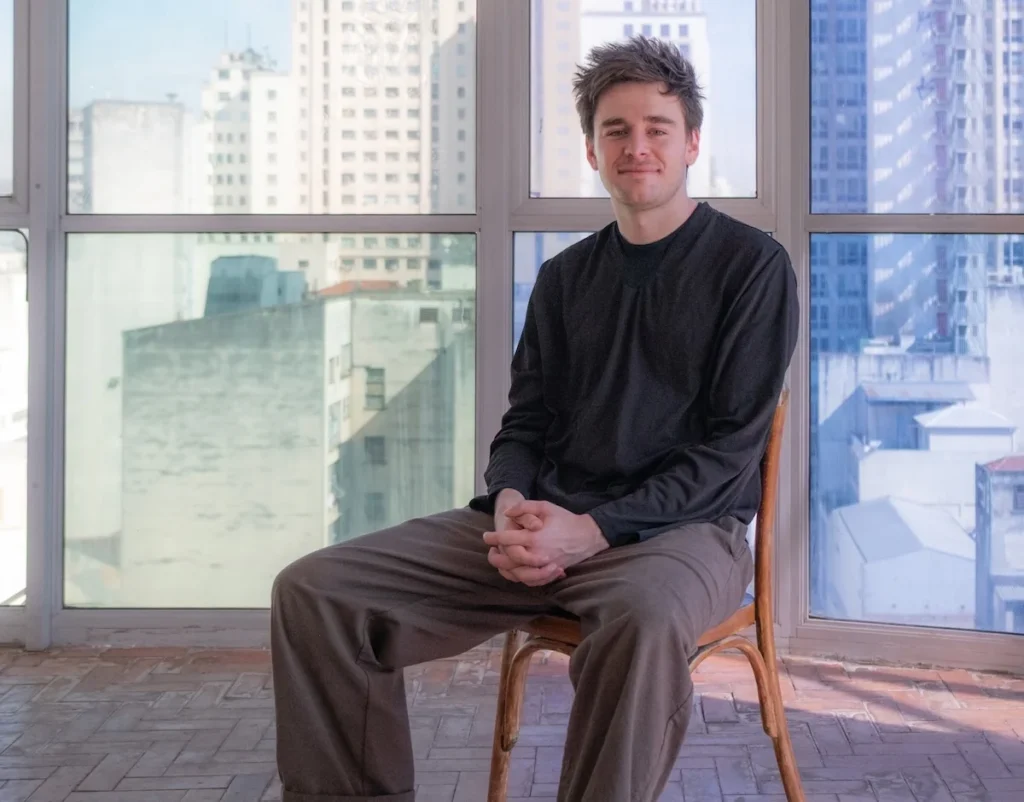
In the volatile landscape of the New York art world, where galleries often shutter as quickly as they open, the meteoric rise of David Peter Francis—a modest Chinatown gallery—stands as a testament to the power of persistence, poetic vision, and the championing of overlooked talent. At the heart of this narrative is the unlikely partnership between a 31-year-old gallerist, David Pagliarulo, and a 79-year-old performance artist, Pat Oleszko, whose brash, inflatable sculptures have transitioned from the fringes of obscurity to the pinnacle of institutional acclaim within a single calendar year.
Main Facts: A Year of Institutional Triumph
The year 2024 has been defined by the "Oleszko Effect." Pat Oleszko, an artist who had not held a solo exhibition in New York since 1990, began the year with a massive retrospective at the SculptureCenter in Long Island City. The show featured her signature "blow-up" sculptures, including provocative, large-scale inflatables that challenged traditional notions of the female form. By spring, her 1995 work Blowhard—a gargantuan green face with a flickering, flaming tongue—became the centerpiece of the Whitney Biennial, drawing both critical praise and viral social media attention.
This institutional embrace culminated in the summer of 2024, when Oleszko was named the recipient of the Whitney Biennial’s prestigious $100,000 Bucksbaum Award. This trajectory, while appearing sudden to the casual observer, was meticulously catalyzed by David Pagliarulo, the founder of David Peter Francis.
Pagliarulo’s gallery, despite its relative infancy, has managed a feat rarely seen among established "blue-chip" institutions: placing artists in both the Whitney Biennial and the Venice Biennale simultaneously. Alongside Oleszko, the gallery represents Emilie Louise Gossiaux, whose sculptures and drawings paying tribute to her late guide dog were a highlight of the Whitney, and Carrie Schneider, whose photo-based installations of oversized chromogenic paper captured international attention at the Venice Biennale.
Chronology: From Tampa Hangouts to Chinatown Visionary
The path to David Peter Francis began far from the white-cube galleries of Manhattan. David Pagliarulo was raised in Tampa, Florida, a city he describes as being far from a "culture capital." However, his exposure to art was organic, rooted in his friendships with local artists whose studios became his primary social hubs. These formative years provided Pagliarulo with an early, unpretentious education in the "studio visit," fostering a comfort level with the creative process that would later define his professional style.
Pagliarulo eventually moved to Europe to study visual culture at the American University in Paris, with a minor in art history. While he initially viewed the field through an academic lens, his return to the United States saw him dive into the practical side of the industry. He secured an internship at Fort Gansevoort, a gallery known for its commitment to un-canonized and outsider artists, before moving on to positions at Chart and later becoming a director at Marinaro.

The turning point occurred in 2021. Following a gallery dinner, Pagliarulo found himself in an Uber with the artist Elaine Reichek. It was Reichek who provided the final push, suggesting that he possessed the acumen and temperament to open his own space.
In June 2024, Pagliarulo officially launched David Peter Francis. The name itself is a tribute to his family, combining the names of his father, Peter, and his grandfather, Francis. "My dad’s not really an art person, my grandfather wasn’t an art person, so I was like, ‘I want to bring you guys into this in some way,’" Pagliarulo noted, jokingly referring to the name’s "weirdly Catholic" resonance.
The collaboration with Pat Oleszko was born of a similar "cold-call" tenacity. After seeing her work in a 2020 group show at the now-defunct JTT gallery, Pagliarulo began a persistent email campaign. Despite initial brush-offs and Oleszko’s claims of being on residency, Pagliarulo’s persistence—and his penchant for puns, such as signing an email "Day Bed" instead of David—eventually earned him an invitation to her Manhattan loft.
Supporting Data: An Ambitious and Eccentric Program
Since its inception, David Peter Francis has distinguished itself through a program that prioritizes conceptual rigor and "poetics" over market trends. This is evidenced by the gallery’s exhibition history:
- "Snake, Turtle, Alligator" (January 2024): A group show centered on the clandestine drawings of Bryan LaPlante, a security guard who doodled while monitoring high-level government meetings regarding atomic weaponry in the postwar era. The show juxtaposed these historical artifacts with works by contemporary figures like Gregg Bordowitz and Lucy Raven.
- William Scott Solo Exhibition (May 2024): A rare New York showing for the self-taught artist known for his "Praise Fiasco" series, which imagines a utopian, majority-Black-and-Brown urban future.
- Carrie Schneider (2024): An exhibition of massive, sculptural rolls of chromogenic paper that challenged the boundaries of photography, coinciding with her participation in the Venice Biennale.
- Unglee (September 2024): An upcoming exhibition for the French filmmaker and photographer, whose work has remained largely unknown to American audiences.
Pagliarulo’s ability to generate sales for such "difficult" or conceptual work has surprised even his own artists. Pat Oleszko remarked on his success with a mix of awe and amusement: "I don’t know how he does it. I’m astonished every time he sells something."
This success is supported by a lean business model. Pagliarulo maintains a minimal staff—currently just himself and one other employee—and is highly selective about art fair participation. This low-overhead approach allows him to take significant risks, such as mounting Oleszko’s solo show across two separate gallery units before she had regained her institutional footing.

Official Responses: A "Refreshingly" Different Approach
The relationship between a gallerist and an artist is often fraught with power dynamics, but the consensus among those working with Pagliarulo is one of mutual respect and a lack of ego.
Pat Oleszko, who has navigated the art world for over five decades, finds Pagliarulo’s demeanor to be a departure from the industry standard. "I don’t see the ego or the testosterone-laced control that you usually see with other gallerists," she stated. "It’s refreshing and delightful to work with him."
Pagliarulo himself views his role as a supportive partner rather than a gatekeeper. He often uses the metaphor of a "sidecar" to describe his relationship with his artists. "I really am motivated to do a good job for the artists," he explained. "They’re trusting me to be the person in the sidecar with a beautiful scarf and a head wrap. I have to make it work."
Regarding his personal life and potential conflicts of interest—such as his relationship with Whitney Biennial co-curator Drew Sawyer—Pagliarulo maintains a professional distance. While the relationship exists, it began after Sawyer’s appointment and after the biennial’s artist list had been finalized, a timeline that underscores the organic nature of his artists’ institutional success.
Implications: Navigating the "Down Market" Blueprint
The success of David Peter Francis arrives at a precarious moment for the New York art market. The industry has been plagued by reports of "doom and gloom," with numerous mid-tier galleries closing their doors due to rising rents and the prohibitive costs of the global art fair circuit.
However, Pagliarulo views the current "down market" not as a deterrent, but as an opportunity. He draws parallels to the post-2008 financial crisis era, which saw the birth of influential galleries like Ramiken Crucible and 47 Canal. These spaces survived by showing work that was intentionally difficult to monetize, building a loyal following of curators and collectors who were exhausted by the hyper-commercialism of the preceding boom years.

"It’s like the gallery opened at the same time that the market went back up," Pagliarulo observed, suggesting that his focus on "poetics" and artist-centric representation may be exactly what the market requires for its next evolution.
The implications of his success are twofold:
- The Validation of the "Slow Burn": By reviving the careers of artists like Oleszko and Unglee, Pagliarulo is proving that there is significant cultural and financial value in the "un-canonized" and the overlooked, provided they are presented with sufficient conviction.
- The Small-Scale Model: By keeping overhead low and maintaining a "Harry Potter-esque" youthful spirit (as he often encourages), Pagliarulo offers a blueprint for how young dealers can survive without the backing of massive capital, provided they have the "fierce" dedication to the work itself.
As David Peter Francis prepares for its next season, the gallery stands as a beacon for a more intimate, less ego-driven art world. In the sidecar of the contemporary art machine, David Pagliarulo is proving that sometimes, the most radical thing a gallerist can do is simply listen to the artist and keep their head down. For Pat Oleszko, the "rock star" of the 2024 season, that support has translated into a $100,000 award and a permanent place in the annals of American art history.