Approximately 201 million years ago, the Earth underwent a violent transformation. As the supercontinent Pangea began to fracture, the planet was rocked by massive volcanic eruptions that pumped gargantuan quantities of carbon dioxide into the atmosphere. This surge in greenhouse gases sent global temperatures soaring by an estimated 5 to 10 degrees Celsius, triggering one of the "Big Five" mass extinctions in Earth’s history: the end-Triassic extinction.
While the role of volcanism in this catastrophe has long been established, new research published in Nature Geoscience on July 21, 2026, reveals a terrifying, previously misunderstood ecological feedback loop. Led by geologists at Utrecht University, an international team has discovered that as forests collapsed under the heat, the world was overtaken by a massive "fern spike." These ferns, rather than simply occupying the landscape, acted as a catalyst for a planetary-scale firestorm, locking the Earth into a cycle of destruction that lasted for hundreds of thousands of years.
The Chronology of a Planetary Crisis
To understand the scope of this prehistoric inferno, one must look at the environmental sequence that unfolded during the Late Triassic. As volcanic activity reached its zenith, the stable, forest-dominated ecosystems that had persisted for millions of years began to crumble. The rapid rise in temperature rendered the climate hostile to established arboreal species, leading to widespread deforestation and massive soil erosion.
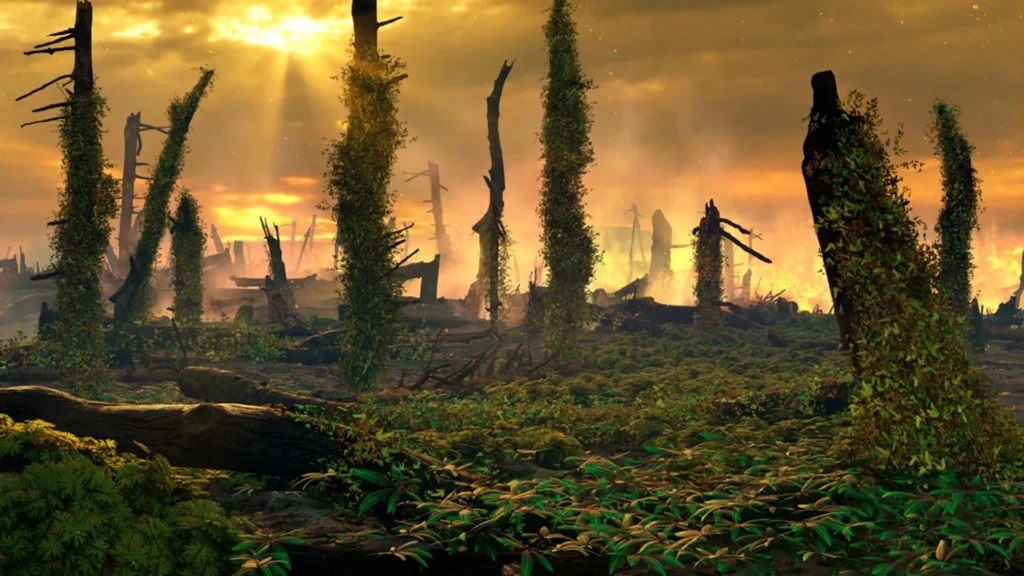
In the void left by these ancient forests, ferns—often considered the "disaster species" of the plant kingdom—began a rapid colonization. These hardy plants, which had survived previous geological crises, thrived in the damaged, nutrient-poor landscapes. However, as the fern-covered savannas expanded across what is now Northwest Europe, they created a biological tinderbox.
The research indicates that this "fiery interval" was not a fleeting event but a prolonged epoch. Estimates suggest that this cycle of climate-driven deforestation and fire-driven fern expansion persisted for at least 40,000 years, and potentially up to 300,000 years. During this time, the Earth was trapped in a self-sustaining loop: greenhouse gases warmed the planet, leading to fires that destroyed vegetation; ferns moved into the burnt remains, dried out, and provided the fuel for the next wave of massive, landscape-altering wildfires.
Investigating the Evidence: The "Dark Zone"
Reconstructing fire activity from over 200 million years ago presents significant challenges for geologists. Traditional proxies, such as fossil charcoal and polycyclic aromatic hydrocarbons (PAHs), have inherent limitations. Charcoal fragments can break down during transport, potentially inflating fire records, while PAHs—chemical markers of wildfire smoke—can migrate across vast distances and are prone to degradation in the geological record.
To overcome these hurdles, the research team, led by Dr. Bas van de Schootbrugge, pioneered a innovative method: the "Palynomorph Darkness Index" (PDI). By analyzing four drill cores—including a pristine, 640-meter-long core from the United Kingdom—the scientists measured the color changes of organic microfossils like pollen and spores.
The Science of Fossil Coloration
Under normal geological conditions, organic microfossils darken as they are buried deeper into the Earth’s crust. This "cooking" process is a function of time, heat, and pressure; the deeper the sediment, the darker the fossil.
"But here we found a very different pattern," Dr. Van de Schootbrugge explains. In the samples collected, the oldest and deepest pollen remained surprisingly light-colored. However, as the team analyzed the fossils corresponding to the extinction interval, they observed a dramatic shift to an extremely dark brown. Once the extinction period concluded, the fossils returned to their original pale yellow.
This "Dark Zone" occurred simultaneously across all four study sites, regardless of their distinct geological histories. By completing 15,000 individual measurements of pollen and spores using an RGB-based microscopic camera, the team confirmed that the darkening was not a result of burial depth or biological variance between plant groups. Rather, it was an external, global phenomenon—the literal soot and thermal signature of an atmosphere choked with smoke.
Supporting Data: Converging Lines of Evidence
The strength of the study lies in the alignment of disparate data streams. When the researchers cross-referenced the Palynomorph Darkness Index with traditional charcoal records and PAH concentrations, a clear picture emerged. The periods of highest darkness—the most intense "cooking" of the microfossils—overlapped perfectly with the peak of the fern spike and the main phase of the end-Triassic extinction.
The comparison between tree pollen and fern spores was particularly revealing. "All plant groups show the same effect," notes Van de Schootbrugge. This universal darkening across all botanical specimens indicates that the heat and smoke were not isolated incidents but were widespread, atmospheric events that impacted every plant in the ecosystem. This confirmed that the "Dark Zone" was not just a biological shift, but a record of an extended period of severe, systemic wildfire activity.
Official Responses and Scientific Context
The publication of these findings has sparked a significant conversation among paleontologists and climate scientists. The concept of "disaster species" is not new, but the notion that ferns acted as an active driver of global fire regimes—rather than just passive victims of climate change—is a significant evolution in our understanding of mass extinction dynamics.
While some experts in the field have noted that the causal link between fern proliferation and fire intensity requires further localized testing in other basins, the consensus is that the methodology provides a robust new tool for climate history. The Palynomorph Darkness Index offers a low-cost, effective, and highly scalable way for researchers to track paleofires in areas where traditional proxies might be missing or compromised.
Dr. Van de Schootbrugge’s team emphasizes that the ferns were not "guilty" in a conscious sense; they were merely following their evolutionary imperative. Their resilience—the ability to regrow rapidly from underground root systems even after the surface vegetation is incinerated—made them the perfect candidate to dominate a world in flames. They thrived on the disturbance that they helped to sustain.
Implications for a Changing World
The implications of this study extend far beyond the history of the Triassic. The "perfect storm" described by the researchers—a volatile mixture of rapid climate change, widespread deforestation, and the dominance of opportunistic species—serves as a cautionary tale for the modern era.
The end-Triassic event illustrates a dangerous, non-linear feedback loop. As the climate warmed, the protective canopy of the forests was lost, leaving the soil exposed and the landscape susceptible to drying. The resulting fire-prone environment, fueled by rapidly colonizing ferns, prevented the forest from recovering. It was a cycle of degradation that locked the planet in a "hellish" state for hundreds of thousands of years, significantly slowing the recovery of life on Earth.
"The lesson we can learn from this," Dr. Van de Schootbrugge concludes, "is that the combination of climate change, deforestation, and the spread of opportunistic species can provide all the ingredients for a perfect storm."
As contemporary scientists grapple with the current climate crisis, the end-Triassic record serves as a stark reminder of the tipping points inherent in the Earth system. When environmental stressors are combined, the biosphere can shift into a state where natural recovery mechanisms are overwhelmed by self-perpetuating, destructive feedback loops. The study of these ancient, charred remnants provides more than just a glimpse into the past; it provides a map of the dangers that arise when the natural order is pushed beyond its capacity to maintain stability.