

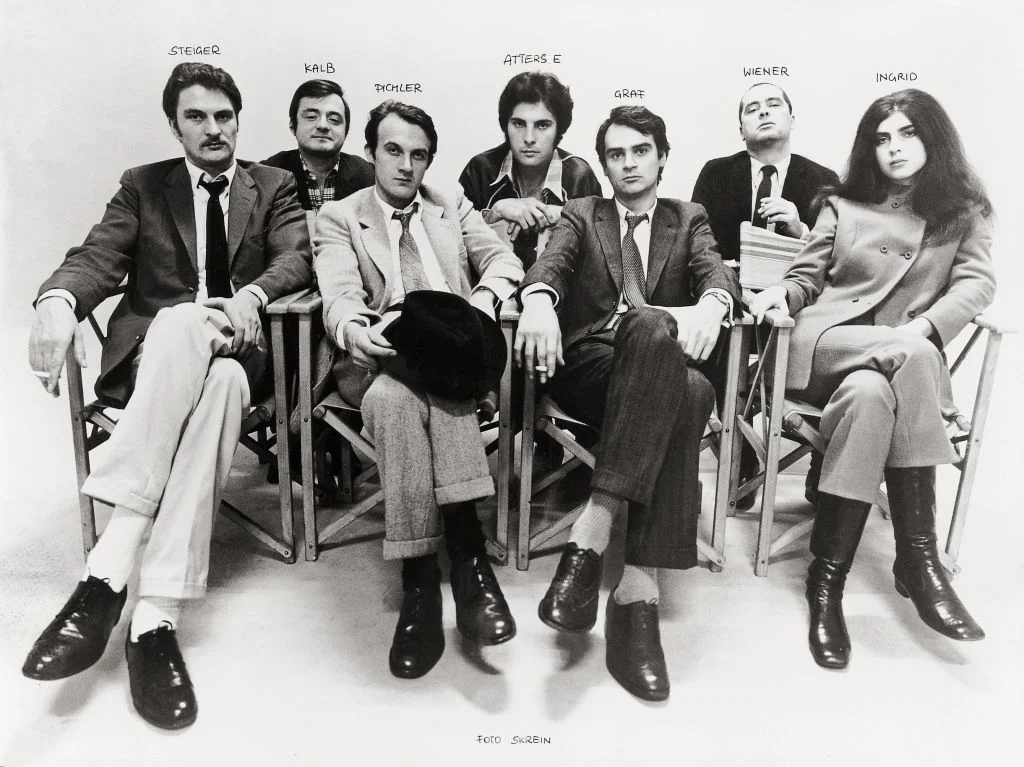
Ingrid Wiener, the multidisciplinary artist whose tapestries, dream-inspired watercolors, and radical collaborations helped define the trajectory of the Austrian avant-garde, has died at the age of 83. Her passing, announced by the Vienna-based Charim Gallery via an Instagram post, marks the end of a prolific career that spanned over six decades, bridging the raw, rebellious energy of Viennese Actionism with a deeply intimate, tactile approach to art-making. While a cause of death was not disclosed, her legacy remains etched in the fabric of contemporary art history.
A Legacy of Threads and Rebellion: The Main Facts
To understand Ingrid Wiener is to understand the fluidity of her mediums. She was not merely a textile artist; she was an investigator of the mundane and the dreamlike. Her signature tapestries were characterized by their refusal to adhere to traditional rigid structures. Instead, she incorporated the debris of daily existence—cucumbers, newspapers, cables, and tattered shopping lists—into her woven compositions. By interweaving these fragments with handwritten narratives and personal observations, Wiener transformed the textile into a living diary.
Born Ingrid Schuppan on October 2, 1942, she emerged from the conservative, post-World War II Austrian climate as a figure of defiance. As a key participant in the Viennese Actionist circle, her work served as a visual counter-narrative to the rigid societal norms of the era. Her contributions extended far beyond the loom; she was a polymath who moved effortlessly between photography, painting, collage, and performance, often acting as a bridge between the disparate worlds of high art and bohemian life.
A Chronology of Creation and Collaboration
The story of Ingrid Wiener is one of deep-seated artistic partnership. Her journey began at a textile school, where she met Waltraud Höllinger—the artist who would later achieve international renown as Valie Export. This meeting was a catalyst for a lifelong exploration of the possibilities of weaving.
The 1960s: Radical Beginnings
In the 1960s, the collaborative spirit of Wiener and Export was already evident. The pair famously created tapestries based on the designs of their friend, the visionary artist Friedensreich Hundertwasser. These pieces were sold under his name, an early exercise in the erasure of individual authorship that would later become a hallmark of conceptual art. This era also saw Wiener participate in the surrealist film Sonne halt! (1959) alongside the writer Konrad Bayer and filmmaker Ferry Radax, cementing her place within the inner circle of the Viennese avant-garde.
The 1970s: The Dieter Roth Era
Perhaps her most iconic period of collaboration began in the mid-1970s when she joined forces with the Swiss artist Dieter Roth. Together, they embarked on an ambitious, almost impossible project: to create tapestries by weaving only what could be perceived behind the warp threads. This was not just a technical challenge; it was a philosophical one. By rejecting the traditional top-down approach to weaving, they sought a "fluid" method that prioritized the process and the hidden layers of reality over the finished, pristine image. Between 1974 and 1997, the duo produced six major collaborative tapestries, a testament to a long-standing intellectual and creative synergy.
The Berlin and Canadian Chapters
In 1969, Ingrid and her husband, the writer and Actionist Oswald Wiener, moved to Berlin. There, she became a cultural catalyst, co-founding the legendary restaurant Exile. The establishment served as a vibrant hub for the international art scene, attracting luminaries such as David Bowie and Peter O’Toole. The restaurant was not just a business; it was a performative space where culinary art merged with the social fabric of the era.
Later, the couple relocated to the vast, quiet landscapes of Canada. It was here that Wiener’s "Traumzeichnungen" (Dream Drawings) flourished. These watercolors captured the surrealist quality of her dreams and internal landscapes, providing a stark contrast to the gritty, object-heavy tapestries of her earlier years.
The Evolution of Her Practice: Supporting Data
Wiener’s work was characterized by a constant tension between the ephemeral and the permanent. Her tapestries, often referred to as "woven archives," are significant because they elevate the domestic and the trivial to the level of fine art.
- The Tapestries: Her technique involved the integration of everyday objects. By weaving in physical artifacts like cutting boards or newspapers, she challenged the boundary between life and art.
- The Dream Drawings: Her Traumzeichnungen serve as a psychological map of her practice. They represent a departure from the "actionist" fervor of her youth toward a more introspective, surrealist inquiry into the human subconscious.
- The Academic and Institutional Re-discovery: After a period of relative quiet, the new millennium saw a surge in interest in her work. Charim Gallery, which began representing her in 2001, played a pivotal role in re-contextualizing her contributions within the history of post-war art, particularly in relation to the work of Jacques Lacan and the broader surrealist movement.
Official Responses and Institutional Reflection
The loss of Ingrid Wiener has been felt deeply by the institutions that championed her work. Miryam Charim, the owner of Charim Gallery, spoke of the artist with profound warmth and professional respect.
"We are deeply saddened by the passing of Ingrid Wiener," Charim said in a statement. "Over the years, our artistic collaboration with Ingrid developed into a close personal friendship. Ingrid was far more to us than an artist represented by the gallery. It is painful to lose Ingrid."
The gallery noted that their introduction to her work came through a serendipitous encounter with August Ruhs, who presented her dream drawings for the 2001 exhibition Diesseits und Jenseits des Traums. The impact was immediate, leading to a decades-long partnership that saw multiple solo exhibitions and a dedicated commitment to preserving her legacy. Plans are currently underway for a major retrospective in early next year, which will highlight her historical collaboration with Valie Export, ensuring that her contribution to the history of feminist and actionist art remains in the public eye.
The Implications of a Life in Flux
Ingrid Wiener’s death leaves a void in the Austrian art scene, but it also prompts a re-evaluation of the "Viennese Actionist" label. Historically, the movement has been dominated by male figures and images of violent transgression. Wiener’s practice offers an essential corrective to this narrative. She brought a sense of softness, domesticity, and psychological complexity to a movement often associated with hard edges and performance-based shocks.
Her ability to weave—both literally and metaphorically—the threads of her life into her work suggests that her influence will continue to grow. She was an artist who refused to be boxed in by a single movement, medium, or geography. From the streets of post-war Vienna to the art-filled rooms of Berlin and the expansive landscapes of Canada, Wiener remained a wanderer and a witness.
Her legacy serves as a reminder that the most radical art often stems from the most personal observations. By documenting her dreams, her meals, and her daily irritations in woven wool and watercolor, she elevated the human experience to something universal. As the art world prepares to honor her with upcoming exhibitions, the focus will undoubtedly shift toward her role as a connector—a bridge between the avant-garde experiments of the 1960s and the introspective, multidisciplinary art of the 21st century.
Ingrid Wiener is survived by a body of work that continues to ask questions about the nature of reality, the stability of memory, and the power of the thread to hold a life together. Her departure is a loss for the international art community, but her work, like the tapestries she so carefully crafted, remains strong, complex, and enduring.



