

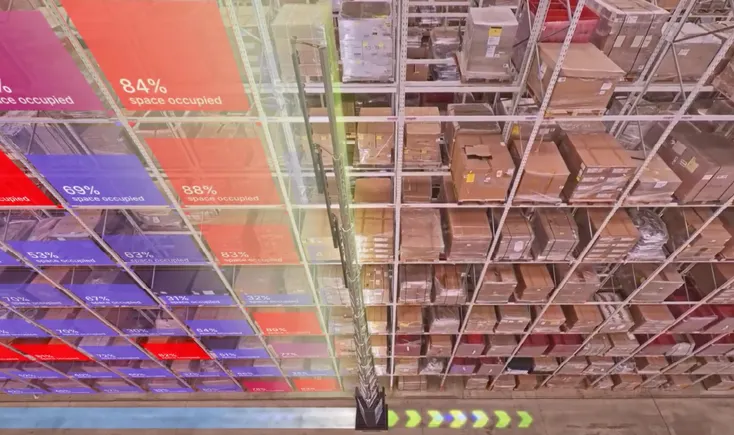
In the modern supply chain, warehouse efficiency is often measured by high-level KPIs: throughput, units per hour, and on-time, in-full (OTIF) delivery rates. Yet, beneath these glossy dashboard metrics lies a silent, pervasive malignancy that erodes profitability from the inside out: the "visibility gap."
The visibility gap is the widening chasm between what a Warehouse Management System (WMS) reports as being on the floor and the physical reality of the inventory. It is a phenomenon that rarely arrives with a warning; instead, it is a byproduct of daily operations—a pallet moved without a system update, a mislabeled put-away, or a short shipment recorded as complete. While these individual anomalies seem minor in isolation, they aggregate into a systemic issue that compromises the entire financial health of an operation.
The Anatomy of the Visibility Gap
Every warehouse, regardless of its level of automation or the sophistication of its software, harbors a visibility gap. It is an insidious, growth-oriented problem that thrives on "normal" activity. When a forklift operator places a pallet in the wrong aisle or a scanner fails to register an item during a high-speed put-away process, the WMS remains blind to the error.
Operations managers often sense the gap before they can quantify it. They observe the softening of OTIF scores, notice an uptick in picker exceptions, or find that the cycle count list never seems to shrink. However, when the time comes to account for these variances on a Profit and Loss (P&L) statement, the trail goes cold. Symptoms—inventory shrinkage, phantom stock, and location drift—are identified, but the underlying cause remains elusive.
The gap is not a failure of personnel or lack of effort; it is a failure of information continuity. Because the cost is embedded in overtime, emergency expediting, and lost service level agreements (SLAs), it never appears as a single line item, effectively hiding in plain sight.
Chronology of a Discrepancy: How Errors Compound
To understand how the visibility gap manifests, one must look at the lifecycle of a single warehouse error.
Phase 1: The Incubation of Error
It begins with a routine task. A put-away task logs 100 cases to a specific location, but the pallet actually contains only 50. The WMS now reflects an "overstated" inventory level.
Phase 2: The Phantom Effect
The system directs a picker to that location to fulfill a high-priority order. The picker arrives, finds the stock insufficient, and is forced to log an exception. This initiates a "chaseback"—a process where the picker must abandon their route to search for the missing inventory or wait for a supervisor to intervene.
Phase 3: The Operational Ripple
The system, still believing the stock is available, continues to allocate that phantom inventory to subsequent orders. This triggers a cycle of over-picking, marshaling rework, and, eventually, incorrect quantities reaching the end customer.
Phase 4: The Financial Erosion
Across a facility operating three shifts and processing hundreds of pallets daily, these thirty-minute anomalies accumulate. Over the course of a week, this single type of error can consume more than 50 hours of wasted labor. By the time management realizes there is a problem, the costs—in terms of extra labor, safety stock inflation, and customer dissatisfaction—are already baked into the budget.
Supporting Data: The High Cost of "Not Knowing"
The financial damage caused by these gaps is substantial and cross-functional. A major U.S. grocery retailer recently quantified the impact, revealing that they were spending approximately $250,000 per site annually solely on "chaseback" activities. Their internal audit found that six percent of total labor costs were essentially being poured into searching for inventory that the system claimed existed but could not be located.
The direct labor cost is only the tip of the iceberg. The "knock-on" effects are far more damaging to the bottom line:
- Safety Stock Inflation: To compensate for uncertainty and phantom stock, planners increase safety stock levels, tying up valuable working capital and consuming limited warehouse square footage.
- Congestion and Throughput: When pickers are forced to traverse aisles looking for missing items, they create bottlenecks, slowing the throughput of the entire facility.
- SLA Penalties: In the highly competitive 3PL (Third-Party Logistics) landscape, contract retention is tethered to consistent performance. Chronic inaccuracies lead to missed SLAs, triggering financial penalties and the slow, steady erosion of client trust.
Industry Response: A Shift Toward Continuous Visibility
The operations that successfully mitigate drift have abandoned the traditional, manual approach to inventory management. For decades, the industry standard for verifying inventory has been the periodic cycle count. However, the data confirms that this method is increasingly obsolete.
The average warehouse spends roughly 6,500 hours per year on manual cycle counts. This is the equivalent of three full-time employees dedicated solely to counting, year-round. Critically, by the time these counts reach decision-makers, the data is already stale, as the warehouse has continued its high-velocity operations throughout the counting process.
Case Studies in Modernization
Leading logistics providers are proving that real-time visibility is the antidote to drift.
Saddle Creek Logistics (Joliet, IL): In a 1.1 million square-foot multi-client facility, Saddle Creek deployed daily autonomous scanning across all storage configurations. By replacing manual, intermittent counts with continuous, automated oversight, they achieved a 10% improvement in inventory accuracy and liberated significant labor capacity previously tied up in counting.
ODW Logistics (Columbus, OH): Kayla Watson, Sr. Inventory Manager at ODW, noted that the transition was transformative. "What used to take weeks now happens in less than 24 hours across our facility," Watson stated. The shift allowed the team to move away from "searching for issues" to "resolving issues," effectively changing the fundamental culture of the operation.
GXO Logistics: By deploying advanced digital platforms across seven sites in the U.S. and Europe, GXO recovered 47 hours per week previously squandered on empty-location checks. This labor was promptly reallocated to higher-value operational tasks, proving that the technology serves not just as a tracking tool, but as a catalyst for labor efficiency.
The Strategic Implication: Managing the Condition, Not the Symptom
The common thread among these success stories is a fundamental change in "operational stance." When inventory data is continuous, real-time, and trustworthy, management teams stop reacting to the symptoms of error and start managing the conditions that create them.
When an operation can see exactly where a drift is occurring—whether it is a specific aisle, a certain shift, or a recurring process failure—they can implement targeted training or process adjustments. Decisions become faster, escalations diminish, and the gap between system records and physical reality stops growing.
Conclusion: Turning Visibility into Value
The visibility gap is the ultimate "hidden cost." It remains off the balance sheet, obscured by the frantic, daily urgency of warehouse management. However, as the logistics sector faces increasing pressure for faster, more accurate fulfillment, the cost of this "drift" has become unsustainable.
Industry leaders are now recognizing that the path to operational excellence is paved with data integrity. Tools such as the "Cost of an Error" white paper and ROI calculators—developed by companies like Dexory—are helping operations model the true financial impact of their visibility gaps.
For the modern warehouse, the message is clear: You cannot manage what you cannot see. By moving from a state of reactive, manual verification to proactive, continuous, and automated visibility, warehouses can finally put an end to the hidden labor drain and turn inventory accuracy from a liability into a competitive advantage. The first step toward fixing the problem is, quite literally, finally seeing it.



