Introduction: A New Front in the Conflict
The Prosecutor’s Office of the Autonomous Republic of Crimea and the city of Sevastopol—a Ukrainian body currently operating in exile—has launched a high-stakes criminal investigation into two prominent researchers. The probe centers on allegations of war crimes, specifically the conducting of unauthorized archaeological excavations within the territory of Crimea, which has been under Russian occupation since 2014.
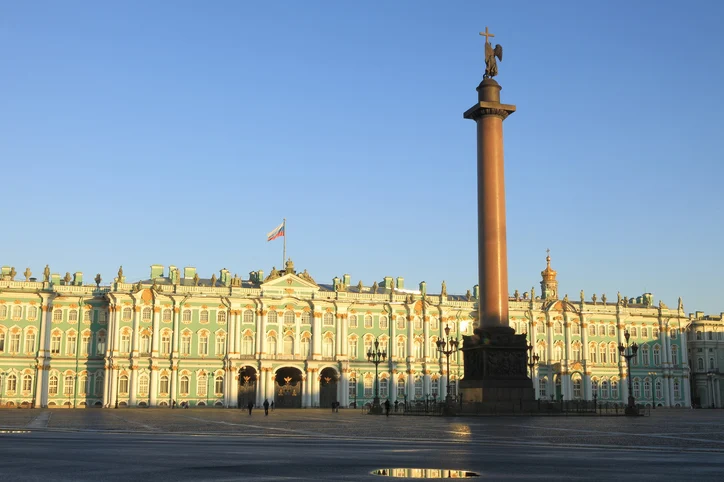
According to the official announcement made by the Ukrainian authorities on Monday, the two individuals, whose identities have yet to be publicly disclosed, are accused of systematically pillaging historical sites. One of the suspects is reportedly affiliated with the world-renowned State Hermitage Museum in St. Petersburg, while the second is identified as a representative of the so-called "Institute of Archaeology of Crimea of the Russian Academy of Sciences." If convicted, the suspects face a potential prison sentence of up to 12 years. This investigation marks a significant escalation in the ongoing legal and ethical battle over the preservation of Ukrainian cultural heritage amidst the backdrop of the broader Russo-Ukrainian war.
Chronology: A Decade of Contested Excavations
2014: The Seizure of Sovereignty
The controversy finds its roots in the events of February and March 2014, when Russian forces seized control of the Crimean Peninsula. From the perspective of international law and the Ukrainian government, this act rendered all subsequent scientific activity in the region conducted by Russian state entities illegal. Ukraine maintains that only the Ministry of Culture of Ukraine has the authority to issue permits for archaeological work on its sovereign soil.
2014–2023: The Systematic "Digs"
Since the occupation, Russian-backed archaeological teams have conducted numerous expeditions across the peninsula. Prosecutors allege that the two suspects have been involved in illicit digs at Medieval Solkhat, located in the city of Old Crimea, consistently since the onset of the occupation. These sites are not merely mounds of dirt; they are the remnants of a once-thriving center of the Golden Horde, holding immense value for the study of medieval history and the cultural evolution of the region.
June 2023: A Shift in Operations
In a move that caught the attention of international observers, the Hermitage Museum announced the suspension of its Crimean expeditions in June 2023. While the official justification cited "fuel shortages" and the escalating security threat posed by Ukrainian drone and missile strikes, many analysts believe the decision was a calculated attempt to distance the institution from mounting international scrutiny regarding the legality of its collection acquisitions.
Supporting Data: The Allegations of Plunder
The evidence presented by Ukrainian prosecutors paints a picture of a calculated effort to strip Crimea of its historical artifacts.
The Solkhat Site
Medieval Solkhat was a prominent urban center during the 13th and 14th centuries. Prosecutors assert that the archaeological methods employed by the Russian-led teams were not only unauthorized but destructive, causing irreparable damage to the structural integrity of the archaeological layers. By removing artifacts without proper oversight or international protocols, the suspects are accused of violating the 1954 Hague Convention for the Protection of Cultural Property in the Event of Armed Conflict.
The Hermitage Connection
The most damning allegation concerns the transfer of cultural assets. Prosecutors claim that one of the suspects actively facilitated the shipment of excavated items—including ancient water supply components, ceramic bowls, and fragments of domestic dishes—directly to the State Hermitage Museum. Once in St. Petersburg, these objects were reportedly cataloged into the museum’s permanent collection. By absorbing these items into the Hermitage’s catalog, the institution effectively legitimized artifacts obtained through what Ukraine defines as a war crime.
Official Responses and Institutional Silences
The Hermitage Museum’s Stance
As of this writing, the press office of the State Hermitage Museum has remained largely silent, failing to provide a formal comment regarding the investigation or the specific artifacts mentioned by the Ukrainian authorities. The museum’s position is complicated by the leadership of its longtime director, Mikhail Piotrovsky.
The Sanctioning of Mikhail Piotrovsky
In April, the European Union imposed formal sanctions on Piotrovsky, who has served as the director of the Hermitage since 1992. The EU Council designated him as a "close associate" of Russian President Vladimir Putin, citing his public statements justifying the war of aggression against Ukraine. The sanctioning of such a high-profile cultural figure highlights how the Russian state has weaponized its museums to promote its geopolitical narratives, including the revisionist history of Crimea.
Internal Dissent
The museum is not a monolith of support for the current Russian state. In 2022, Dimitri Ozerkov, the then-head of the Hermitage’s contemporary art department, resigned his position in a bold protest against the invasion of Ukraine. Ozerkov’s departure underscored a growing divide within the Russian cultural intelligentsia, many of whom have chosen exile or silence over complicity in the state’s militarized cultural policies.
Implications: The Legal and Moral Battlefield
The Question of International Law
The investigation brings the "Crimean Question" to the forefront of international humanitarian law. Ukraine argues that the removal of cultural property from occupied territory is a grave violation of the Geneva Conventions. By formalizing this investigation, the Ukrainian Prosecutor’s Office is seeking to establish a legal precedent that will allow for the eventual repatriation of these artifacts and the prosecution of those responsible.
The Future of Archaeology in Conflict Zones
The case serves as a warning to the global scientific community. Archaeological expeditions conducted in disputed territories are increasingly viewed as tools of "soft power" used to validate annexation. When researchers ignore the legal jurisdiction of the host nation, they risk their professional reputations and, as seen in this case, their personal freedom. The international archaeological community is now grappling with how to monitor and condemn such actions without compromising the safety of researchers on the ground.
Cultural Identity as a Target
For Ukraine, the defense of its archaeological heritage is synonymous with the defense of its national identity. By attempting to "Russify" the history of Crimea—a region with a complex heritage involving Crimean Tatars, Greeks, Genoese, and Ukrainians—the occupying power is accused of engaging in cultural erasure. The investigation by the prosecutor’s office is, therefore, a symbolic act of resistance, asserting that even in times of war, the history of a nation cannot be stolen and repurposed by an aggressor.
Conclusion: A Long Road to Accountability
The investigation into the two researchers is far from reaching a conclusion. Given that the suspects remain under the protection of the Russian state, the prospect of them appearing in a Ukrainian court is currently slim. However, the international community has a long memory, and the documentation of these potential war crimes creates a lasting record that will inform future reparations and international legal proceedings.
As the war continues to grind on, the fate of the artifacts held in St. Petersburg remains a potent symbol of the conflict. The Hermitage, once a beacon of global cultural exchange, finds itself at the center of a moral crisis, forced to confront the reality that its collection may now include the spoils of a modern-day war of aggression. The Ukrainian authorities have made it clear: the pillaging of history will not be forgotten, and those who facilitate the destruction of heritage under the guise of science will be held accountable.