Every Broadway season seems to produce a singular production that transcends the category of "entertainment" to become something of a moral obligation—a cultural touchstone that demands to be witnessed. This fall, that mantle is claimed by the high-octane, star-studded revival of Aaron Sorkin’s A Few Good Men.
Returning to the Lincoln Center Theater for a strictly limited 13-week engagement, this courtroom classic—which famously bridged the gap between stage prestige and cinematic blockbuster status—is once again positioned at the center of the theatrical conversation. With a new generation of talent stepping into roles that defined the careers of Hollywood titans, the revival serves as both a nostalgic homage and a sharp, contemporary interrogation of institutional power.
The Main Facts: A Modern Re-Examination of a Classic
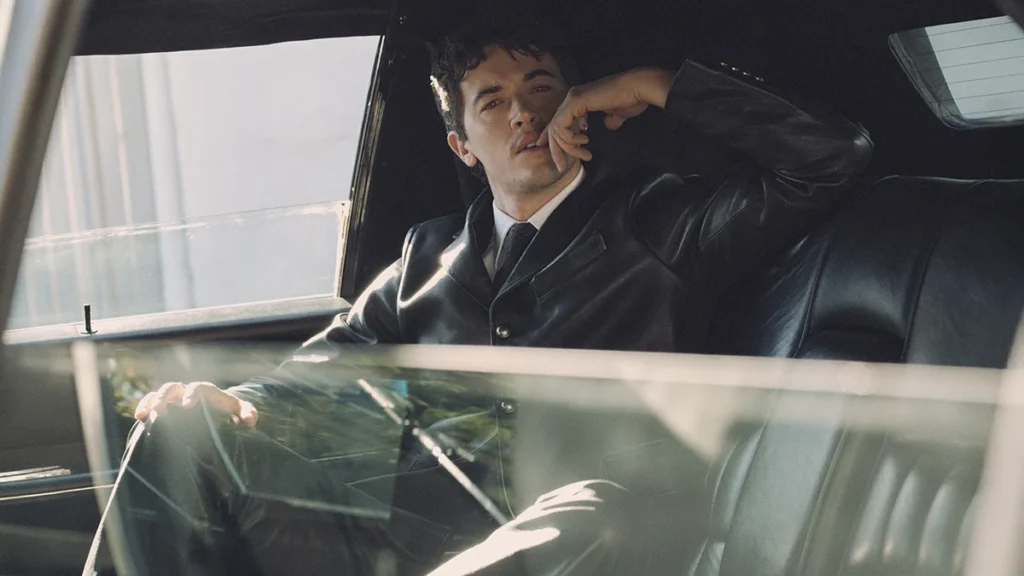
The production features British breakout star Tom Blyth as Lt. Daniel Kaffee, the cynical military lawyer tasked with defending two Marines accused of murder. Blyth, fresh off his meteoric rise in The Hunger Games: The Ballad of Songbirds & Snakes, steps into the boots once filled by Tom Cruise in Rob Reiner’s 1992 film. Opposite him, in the role of the formidable Col. Nathan Jessep—a part immortalized by Jack Nicholson’s vein-popping, scenery-chewing delivery—is Emmy Award winner Bradley Whitford.
The production is helmed by six-time Tony Award winner Michael Arden, a director whose reputation for kinetic, emotionally resonant staging (seen in Spring Awakening, Once on This Island, and Parade) makes him an ideal architect for Sorkin’s rapid-fire, rhythmic dialogue. The limited run, which officially opened on October 29 at the Vivian Beaumont Theater, is scheduled to conclude on January 10, 2027.
A Chronological Perspective: From 1989 to the Present
To understand the gravity of this revival, one must look at the lineage of the text.
- 1989: Aaron Sorkin’s A Few Good Men premieres on Broadway. It is an immediate success, establishing Sorkin as a formidable new voice in American drama. Notably, a young Bradley Whitford is part of the original company, cutting his teeth in the very environment that would eventually define his career.
- 1992: The film adaptation hits theaters, transforming the play into a global phenomenon. The "Code Red" and "You can’t handle the truth!" lines become permanently etched into the American lexicon.
- 2026 (October): After decades of regional revivals and amateur productions, the play returns to the heart of Lincoln Center. The casting of Tom Blyth represents a strategic shift in Broadway’s approach to star power, blending classic dramatic weight with contemporary, youth-driven magnetism.
- 2027 (January): The production is slated to close, marking the end of a brief, intense window where audiences could witness this specific iteration of the Sorkin canon.
Supporting Data: The Economics of the Stage
The "star vehicle" model is currently the most potent engine driving Broadway attendance. By casting Blyth—who brings a massive, younger demographic following from his work on Billy the Kid and The Gilded Age—Lincoln Center Theater has effectively insulated the production against the volatility of the theater market.
However, this accessibility comes at a premium. As of the latest reporting, premium center-orchestra seats for A Few Good Men have consistently been priced above the $300 mark, with secondary market resellers frequently pushing those figures higher as the January closing date approaches. For Lincoln Center, the production is a high-stakes bet that a classic script, paired with a "Hollywood-in-the-flesh" allure, will sustain capacity crowds for the duration of its 90-day run.

The Sorkin-Whitford Connection: An Institutional History
There is a poetic irony in the casting of Bradley Whitford as Col. Jessep. Whitford, who has become a household name through his work on Sorkin’s The West Wing, has a relationship with this script that spans nearly four decades. In the original 1989 Broadway production, Whitford played Lt. Jack Ross before eventually taking on the role of Kaffee himself in other iterations.
Seeing him now inhabit the role of the antagonist—the man who stands for everything the young, idealistic Kaffee fights against—adds a layer of metatextual tension to the performance. It is a masterclass in casting that rewards long-time fans of the Sorkin universe while providing a fresh, grounded performance for those encountering the story for the first time.
Official Responses and Creative Vision
Director Michael Arden has remained vocal about the need to keep Sorkin’s work feeling urgent rather than antiquated. In press statements, Arden has emphasized that the play is not merely a legal procedural, but a meditation on the cost of obedience.
"We are not looking to recreate the movie," Arden noted in a recent interview. "We are looking to uncover the pulse of the play that exists underneath the famous lines. The goal is to make the audience feel the same pressure the characters feel under the weight of the military hierarchy."
The Lincoln Center Theater, which has long served as a bastion for high-brow, thought-provoking drama, has positioned this play as a pillar of their season, emphasizing the "moral obligation" inherent in the narrative. For the producers, the objective was clear: bring in an audience that might know the movie, but keep them engaged with the raw, live energy of the theater.
Implications: What This Means for Broadway
The success of A Few Good Men suggests a significant shift in how Broadway defines its value proposition. We are entering an era where the "Event Play" is becoming more critical than the long-running musical.
1. The Rise of the "Limited Run"
By keeping the engagement strictly limited to 13 weeks, the producers create a "FOMO" (Fear Of Missing Out) effect. It turns a standard production into a rare, transient experience. This strategy, while risky, allows for more expensive, high-profile casting, as actors are more willing to commit to three months than a year-long contract.

2. The Bridge Between Media
Tom Blyth’s involvement demonstrates the symbiotic relationship between streaming platforms and the stage. By pulling talent from high-visibility properties like The Hunger Games and MGM+ series, Broadway is successfully importing audiences who might otherwise never set foot in a theater. This is vital for the longevity of the industry, as it exposes a new generation to the nuances of live performance.
3. The Re-evaluation of "Classic" American Drama
Sorkin’s work, which has been critiqued for its dense, rapid-fire dialogue, is being re-evaluated through a modern lens. The themes of A Few Good Men—the struggle between individual conscience and institutional loyalty—are perhaps more relevant today than they were in 1989. The production challenges audiences to consider who bears the burden of truth in a system designed to protect itself.
The Verdict: A Must-See Moment
For the theater-goer, the question is not whether A Few Good Men is a "good" play—it is a foundational text of modern American drama. The question is whether this specific production succeeds in breathing new life into a story so deeply ingrained in our cultural consciousness.
With Michael Arden at the helm and a cast that bridges the gap between the original Broadway era and the current digital age of stardom, the production is, at the very least, a triumph of logistics and casting. But if the early previews are any indication, it is also a triumph of performance.
As the calendar turns toward January and the final curtain approaches, the competition for seats at the Vivian Beaumont Theater will only intensify. For those looking to see how a legendary story holds up under the scrutiny of 2026, the trial is already underway. Whether you are a devotee of the 1992 film or a newcomer curious about the hype, the verdict is in: this is a production that demands to be seen.
The real trial, of course, is the one you face at the box office. But in the world of high-stakes Broadway, as in Sorkin’s courtroom, the truth is worth the price of admission. Ensure your plans are made, for once this "Code Red" of a season concludes, the silence of the theater will feel all the more profound.