By Stephen Holmes
August 24, 2026
Introduction: The Vanishing Leverage of the Citizen
For centuries, the stability of democratic governance has rested upon a delicate, often unspoken, bargain. The state and the economic elites who drive its growth have historically relied on the populace for the "raw materials" of civilization: labor, tax revenue, military conscription, and the legitimacy granted through the ballot box. Every sanction that ordinary citizens have historically possessed—the ability to withhold their work, their capital, or their political support—presupposes a power structure that actually needs what they can withhold.
However, as artificial intelligence infrastructure sprawls across the American landscape, a profound shift is occurring. Communities are discovering that they are no longer the primary partners in the economic engine; they are merely obstacles to be bypassed or externalities to be managed. As AI infrastructure encroaches on the American heartland, citizens are learning the bitter lesson of the "resource curse" famously observed in petrostates: where the ruling class no longer requires the participation of the public to generate wealth, the foundational necessity of democracy begins to wither.
Main Facts: The Northern Virginia Paradigm
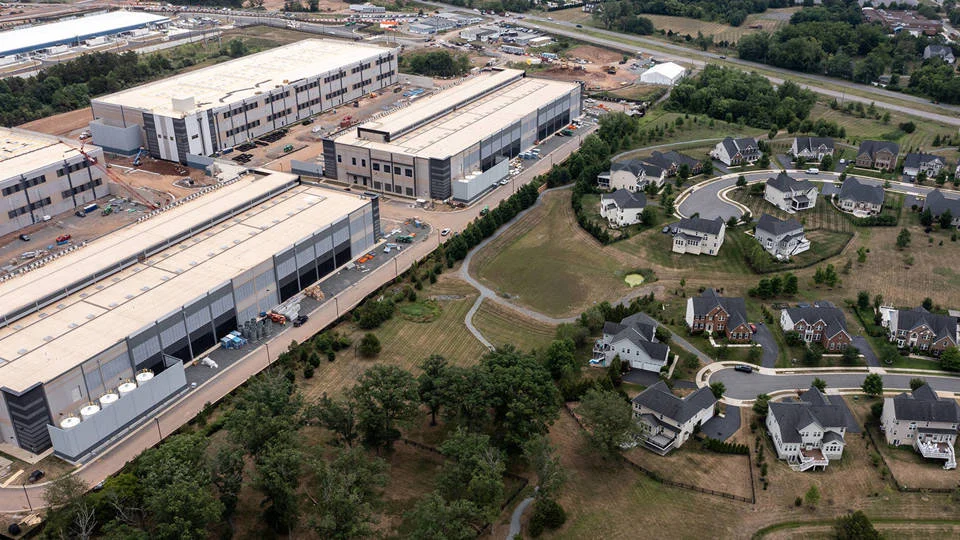
In a nondescript county in Northern Virginia, the physical reality of the AI revolution is stark. Residents have watched their monthly electricity bills double over the past twenty-four months, a direct result of the massive surge in energy demand from hyper-scale data centers. Just a few miles from these residential zones, a windowless, concrete fortress the size of a regional shopping mall hums incessantly through the night.
This facility—one of dozens being erected across the state—is a temple to computational power. It consumes more electricity in a single hour than the surrounding residential community consumes in a week. While the utility companies and local zoning boards frame the ensuing disputes in the dry, bureaucratic language of "rate structures," "transmission corridors," and "zoning variances," the underlying conflict is far more primal. It is a question of existential relevance: Are the people who live in these counties still needed by the entities that constructed these digital citadels?
The answer, increasingly, is no. In the age of automated data processing, the human resident is no longer a productive participant in the economic activity happening behind those windowless walls. They are simply an interference pattern in the supply chain of artificial intelligence.
Chronology: The Rapid Ascent of the "Digital Landlord"
- 2022–2023: The Great Land Grab. Following the public release of generative AI models, the demand for high-density compute capacity skyrocketed. Tech giants moved rapidly to secure land in Northern Virginia, citing the region’s proximity to existing fiber-optic backbones and reliable, albeit finite, power grids.
- 2024: The Infrastructure Standoff. Local municipalities begin to report "grid strain." Residents notice sharp increases in their utility bills, while regional governments approve massive tax abatements for data center operators, arguing that the facilities bring long-term tax revenue.
- 2025: The Energy Crisis. A series of regional brownouts in Northern Virginia forces the state government to prioritize power distribution. Data centers, protected by high-priority contracts, remain fully powered, while residential sectors face rolling outages during peak summer heat.
- 2026: The Political Fallout. Citizen-led opposition groups emerge, challenging the "need" for these centers. Legal battles over eminent domain and local governance reach the state Supreme Court, testing the limits of corporate-driven infrastructure development.
Supporting Data: The Cost of Compute
The sheer scale of the energy consumption required for modern AI training and inference is staggering. According to recent industry reports, a single large-scale AI data center can consume between 100 and 500 megawatts of electricity—enough to power roughly 80,000 to 400,000 homes.
- Financial Impact: Local residents in data-heavy zones have seen a 45% to 110% increase in utility costs since 2024.
- Job Creation vs. Energy Cost: While the construction phase of a data center provides short-term labor, the operational phase employs fewer than 50 permanent staff, most of whom are highly specialized technicians often commuting from outside the county. The "cost per job" created by these facilities is significantly higher than traditional industrial manufacturing, yet the local community bears the full cost of the infrastructure degradation.
- Water Usage: Beyond electricity, these centers utilize massive water-cooling systems, placing an additional strain on local aquifers that have not seen commensurate investment in water-treatment infrastructure.
Official Responses: The Corporate-Government Nexus
The response from industry leaders and government officials has been remarkably consistent. Industry spokespeople argue that the "AI race" is a matter of national security, equating the development of data centers with the Cold War’s space race.
"We are building the foundations of the 21st-century economy," says Marcus Thorne, a representative for a major data infrastructure conglomerate. "The energy transition is difficult, but the alternative—falling behind in AI—is a strategic failure the United States cannot afford."
Local government officials, often captured by the promise of corporate tax revenue, have largely defended these projects. "These data centers provide a tax base that allows us to fund our schools and infrastructure without raising property taxes on families," argues a regional board supervisor. However, critics point out that the tax abatements granted to these companies often neutralize those benefits, leaving the community with higher utility bills and degraded landscapes, but little to show for the disruption.
Implications: The Erosion of the Social Contract
The implications of this shift are profound. When an entire class of people becomes "economically redundant" to the dominant industry in their region, the mechanism of representation fails.
1. The Death of Local Leverage
In a standard industrial model, a company needs a workforce. That workforce can strike, demand better conditions, or vote for politicians who support labor rights. In the AI data center model, the primary requirement is land and electricity. Once the land is zoned and the power grid is tapped, the company has no further need for the local population. They have successfully decoupled their wealth generation from the well-being of the local society.
2. The Rise of "Techno-Feudalism"
We are witnessing the emergence of a new form of geography. The tech giants are not just landlords; they are infrastructure sovereigns. By controlling the flow of electricity and the physical architecture of the information age, they are exerting influence that bypasses traditional democratic oversight. When a utility company is forced to choose between keeping a residential neighborhood lit or keeping a server farm running, the market-driven logic—and the legal contracts—almost invariably favor the server farm.
3. The Crisis of Legitimacy
Democracy relies on the perception that the state serves the people. When the state facilitates the expansion of infrastructure that actively harms the quality of life for its citizens for the benefit of a private, non-participatory entity, the social contract breaks. If the government cannot protect the basic needs of its citizens—affordable power, water, and local autonomy—against the expansion of AI, why should those citizens view the government as legitimate?
Conclusion: Reclaiming the Public Square
The dispute in Northern Virginia is a microcosm of a global trend. As we continue to prioritize the efficiency of artificial intelligence over the sustainability of our communities, we are systematically dismantling the leverage that ordinary citizens have used to check the power of the elite for centuries.
To restore the balance, the language of the debate must shift. It is not enough to talk about zoning variances or energy rates. We must address the fundamental question of the relationship between the citizen and the machine. If AI is to coexist with democracy, it must be subject to the same social constraints as any other industry. It must be forced to internalize its costs—not just in taxes, but in its impact on the local environment and the public trust.
Unless the public reasserts its status as a necessary partner in the economic life of the nation, the "hum" of the data center will continue to grow louder, drowning out the voices of those who, until now, believed they were the ones who mattered.