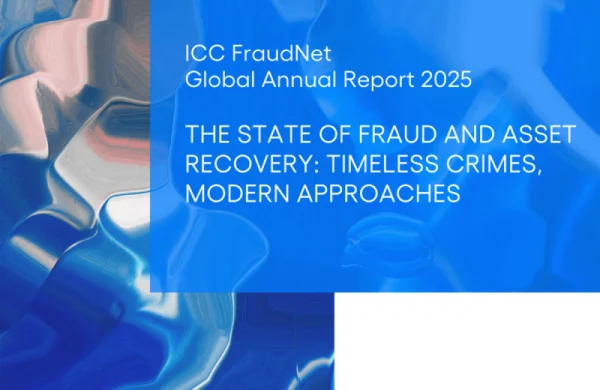
In an era defined by the rapid digitalization of finance and the increasing sophistication of transnational criminal enterprises, the demand for robust legal mechanisms to combat fraud has never been more urgent. ICC FraudNet, the premier global network of specialized asset recovery lawyers under the aegis of ICC Commercial Crime Services, has officially launched its 2025 Global Annual Report on Fraud and Asset Recovery.
Now in its fifth iteration, this landmark publication—titled “The State of Fraud and Asset Recovery: Timeless Crimes, Modern Approaches”—serves as a comprehensive roadmap for legal practitioners, investigators, and policymakers tasked with untangling the increasingly complex webs of international financial crime.
Main Facts: A Global Standard in Asset Recovery
Since its inception in 2004, ICC FraudNet has operated as the gold standard for cross-border fraud litigation. Comprising a meticulously curated network of 125 members and 8 strategic partners spanning 81 countries, the organization provides the specialized expertise necessary to pursue assets across disparate legal jurisdictions.
The 2025 Report represents a significant expansion of the network’s intellectual output. It features 23 original research papers authored by 37 leading legal experts and forensic investigators. These contributors represent a diverse geographical spread, including the United Kingdom, United States, Spain, Hungary, Ghana, Poland, Panama, Cayman Islands, New Zealand, Guernsey, Japan, the British Virgin Islands, China, Singapore, and South Africa. This global collaboration ensures that the report offers more than just theoretical insight; it provides actionable, localized strategies for tackling the most persistent forms of acquisitive misconduct.
Chronology: Building a Legacy of Expertise
The evolution of the ICC FraudNet Global Annual Report reflects the changing face of global crime over the last five years.
- 2021: The inaugural edition established the framework for the series, focusing on the immediate impact of the pandemic on fraud vulnerabilities and the initial surge in remote-work-related cybercrime.
- 2022–2023: As the series progressed, the focus shifted toward the complexities of cryptocurrency, the rise of state-sponsored corruption, and the challenges of recovering digital assets across borders.
- 2024: The report highlighted the intersection of geopolitical instability and financial crime, identifying how sanctions evasion and trade-based money laundering became primary concerns for international investigators.
- 2025: The current edition marks a pivotal maturation of the series. By focusing on "Timeless Crimes, Modern Approaches," it reconciles traditional fraud typologies—such as embezzlement and bribery—with the disruptive influence of Generative AI and Large Language Models (LLMs).
Supporting Data and Thematic Architecture
To ensure the 2025 Report provides a holistic view of the current threat landscape, Nicola Stenhouse, Executive Secretary of ICC FraudNet, has structured the compendium into six core pillars. These pillars function as a taxonomy for modern fraud prevention and litigation:
1. Perspectives on AI
This section investigates the dual-use nature of Artificial Intelligence. While AI offers investigators unparalleled capabilities in data pattern recognition and asset tracing, it is simultaneously being leveraged by criminals to automate phishing campaigns, synthesize deepfake evidence, and bypass traditional AML (Anti-Money Laundering) filters.
2. Enforcement and Regulation
This pillar analyzes the shifting regulatory environment. As governments worldwide update their legal frameworks to handle digital assets, the report offers a critical evaluation of whether current legislative efforts are outpacing or lagging behind the criminal tactics they seek to mitigate.
3. Asset Recovery Investigations: Criminal, Civil, and Technological Perspectives
This technical deep-dive covers the intersection of legal strategy and forensic investigation. It explores how investigators bridge the gap between traditional forensic accounting and the modern digital forensics required to track illicit funds through decentralized finance (DeFi) protocols.
4. Cybercrime
Cybercrime remains the most dynamic threat. The report provides case studies on ransomware-as-a-service, supply chain attacks, and the evolving tactics used by organized crime syndicates to target high-net-worth individuals and corporate entities alike.
5. Tackling Fraud, Corruption, and Money Laundering
This section remains the cornerstone of ICC FraudNet’s mission. It addresses the systemic nature of corruption, emphasizing that money laundering is rarely a victimless crime but rather a corrosive force that undermines the integrity of global financial markets.
6. Practical Perspectives
Perhaps the most valuable section for practitioners, this pillar offers a "toolkit" approach to litigation. It addresses the practical hurdles of serving process, obtaining freezing orders (such as Mareva injunctions), and enforcing judgments across hostile or uncooperative jurisdictions.
Official Perspectives: Expert Commentary
The vision behind this year’s report is rooted in the belief that while the tools of the trade change, the fundamental nature of fraud remains rooted in human deception.
Dr. Dominic Thomas-James, the Editor of the 2025 Global Annual Report, emphasized the critical importance of evaluating AI in the context of legal proceedings. "Tales of caution about AI’s ability as a manipulator, as well as encouragement as to its helpful role in investigations, as well as its competence, or otherwise are all considered in the Global Annual Report," Dr. Thomas-James stated. He noted that the integration of AI-decision making into litigation is no longer a future prospect—it is the current reality that lawyers must master to remain effective.
Nicola Stenhouse added that the report is intended to serve as a bridge between high-level policy and ground-level execution. "Each part offers not only thoughtful analysis but also practical tools and strategies to navigate today’s complex landscape," Stenhouse remarked.
Implications: Preparing for the Future of Litigation
The release of this report comes at a time when the global financial system is facing unprecedented stress. The implications of the findings in the 2025 edition are threefold:
A New Era of "Technological Due Diligence"
Law firms and corporate investigators can no longer treat technology as a secondary concern. The report underscores that failure to understand the technical nuances of a fraud case—whether it involves blockchain analysis or LLM-generated evidence—is now a professional liability. Practitioners must adopt a multidisciplinary approach, blending legal expertise with cybersecurity acumen.
The Erosion of Jurisdictional Barriers
As criminals continue to exploit the "weakest link" in international regulation, the report advocates for stronger cross-border cooperation. The diverse authorship of the report, spanning 15 nations, serves as a blueprint for the kind of international collaboration required to effectively freeze and repatriate stolen assets.
Bridging the Knowledge Gap
The report acts as a repository of "institutional memory." By documenting case studies and best practices, ICC FraudNet is helping to prevent the "reinvention of the wheel" in fraud litigation. The 2025 edition provides a vital resource for emerging markets to adopt established, effective strategies for asset recovery, thereby strengthening the global financial architecture against systemic corruption.
Conclusion: A Call to Action
Ultimately, as Dr. Thomas-James noted, the papers in the 2025 Global Annual Report "draw upon collective and individual experiences, best practices and case studies seen at the cutting edge of the field." By providing real-world solutions to the challenges of international asset recovery, ICC FraudNet is not merely reporting on the state of fraud—it is actively shaping the tools and strategies that will define the next decade of financial justice.
For legal professionals, policy makers, and stakeholders in the financial sector, the 2025 Global Annual Report is an essential resource for navigating the "Timeless Crimes" of the modern age.
The 2025 Global Annual Report on Fraud and Asset Recovery is available for download via the official ICC FraudNet portal here.