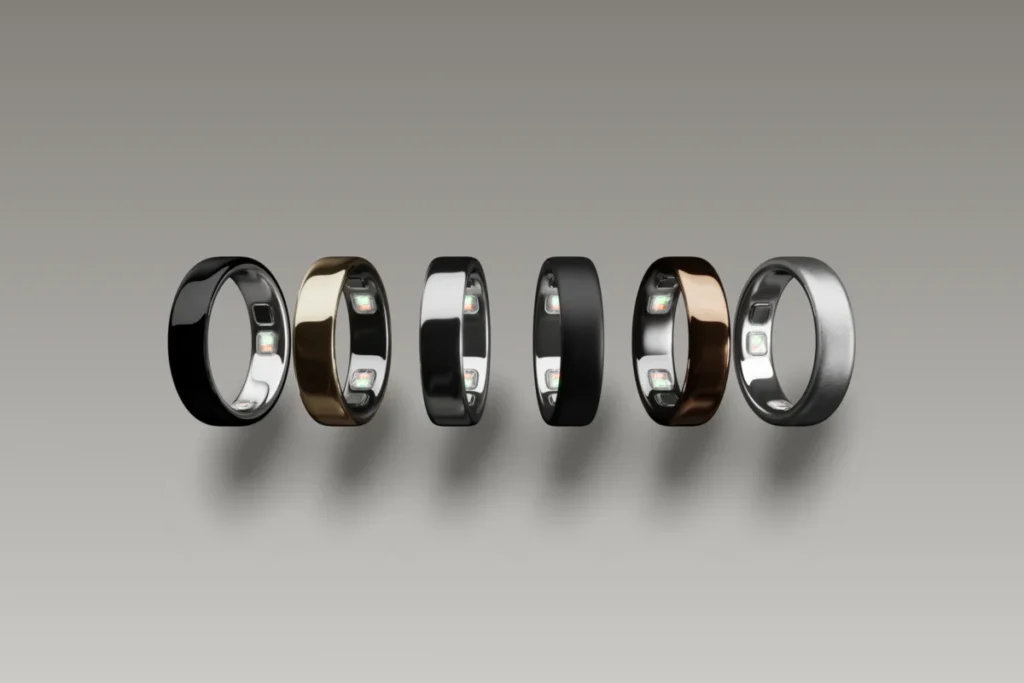
The global wearable technology sector is bracing for a watershed moment. Oura, the San Francisco and Finland-based pioneer of the smart ring form factor, is reportedly preparing for an initial public offering (IPO) that could raise up to $3 billion as early as next month. If successful, the move would catapult the 900-person company into a rarefied tier of tech giants, commanding a valuation north of $16 billion.
This potential valuation represents a staggering leap from the $10.9 billion figure Oura commanded just last year. Following an $875 million Series E funding round in September 2025—backed by heavyweights like Fidelity, ICONIQ, Whale Rock, and Atreides—the company has seen its market confidence skyrocket. However, as Oura prepares to step into the public markets, it faces a complex landscape of fierce competition, rapid scaling, and fresh legal challenges that threaten to complicate its narrative of health-tech dominance.
The Path to Market: A Chronology of Growth
Oura’s trajectory from a niche "biohacking" curiosity to a household name is a testament to the surging consumer appetite for health-data transparency.
- Early Days: Founded with a vision to move health tracking beyond the wrist, Oura carved out a reputation as a luxury status symbol for Silicon Valley executives and elite athletes, focusing on sleep optimization and recovery metrics.
- 2025 Expansion: The company’s growth trajectory accelerated rapidly. By September 2025, a massive $875 million Series E funding round solidified its position as a unicorn, with early backers like Dexcom, The Chernin Group, and Temasek doubling down on their investments.
- May 2026: Oura officially signaled its intent to join the public markets by filing confidentially for an IPO, a move that set the stage for its current push toward a $3 billion offering.
- The Present Day: With reports indicating an IPO window opening as early as next month, the company is now transitioning from a venture-backed startup to a publicly traded entity, with investors expected to offload a significant portion of their holdings during the offering.
Financial Velocity: The Billion-Dollar Trajectory
The numbers behind Oura are as impressive as they are ambitious. The company has demonstrated an aggressive growth curve, transforming from a specialized health device manufacturer into a robust data-driven services company.
According to disclosed financial figures:
- 2024 Revenue: $500 million.
- 2025 Revenue: Approximately $1 billion.
- 2026 Projections: The company expects to generate nearly $2 billion in revenue, a doubling of performance year-over-year.
These figures suggest that Oura has successfully shifted its model from one-time hardware sales to a recurring revenue structure, likely bolstered by its subscription-based app ecosystem. While the upcoming S-1 filing will provide the definitive look at the company’s burn rate, gross margins, and profitability, current revenue data suggests that Oura is capitalizing on a massive "wellness-as-a-service" tailwind.
A Crowded Arena: The Wearables Arms Race
Oura’s journey to a $16 billion valuation is taking place against the backdrop of an increasingly saturated market. The "smart ring" category, once dominated almost exclusively by Oura, has seen significant encroachment.
The Samsung Factor
Samsung’s launch of the Galaxy Ring two years ago represented a major inflection point. As a hardware behemoth with massive distribution channels and an existing Android ecosystem, Samsung introduced the ring form factor to the mainstream, forcing Oura to defend its market share through innovation and brand loyalty rather than sheer exclusivity.
The Whoop Reinvention
Perhaps the most direct competitive threat comes from Whoop. Historically the choice for "gym bros" and professional athletes, Whoop has undergone a dramatic pivot over the last year. By expanding its health metrics to include hormone tracking and blood-panel analysis—specifically targeting perimenopause and thyroid health—Whoop has successfully courted a broader, more diverse demographic. This pivot helped drive Whoop’s valuation to $10 billion as of March 2026, signaling that investors are hungry for "holistic" health solutions that go beyond simple step counting.
Oura has mirrored this shift, moving away from its early biohacking niche toward a comprehensive sleep-and-recovery platform, effectively positioning itself as a "health laboratory on the finger."
Legal Headwinds: The Accuracy Controversy
Despite the bullish outlook from investors, Oura’s path to the IPO has hit a significant snag. Last week, a class-action lawsuit was filed in San Francisco, directly challenging the scientific validity of the company’s marketing claims.
The Nature of the Complaint
The plaintiffs in the case allege that Oura misleads consumers regarding the accuracy of its sleep-tracking technology. Specifically, the lawsuit contends that Oura claims to measure "the exact stage of sleep" a user is in—a feat the lawsuit argues is medically impossible for a ring. The complaint asserts that determining precise sleep stages requires clinical-grade equipment, such as scalp electrodes and eye sensors found in sleep laboratories, rather than the PPG (photoplethysmography) sensors used in wearables.
The Company’s Defense
Oura has responded with a firm, measured rebuttal. In a statement provided to TechCrunch, an Oura spokesperson emphasized the following points:
- Defensive Stance: The company intends to fight the allegations in the appropriate legal forum.
- Validated Methodology: Oura maintains that while it is not a "medical device" or a direct substitute for a hospital study, its sleep-staging technology has been compared favorably to polysomnography—the gold standard of sleep research—in multiple independent, third-party studies.
- Transparency: The company insists it has been open about the technical mechanisms and data measures that inform its algorithms, arguing that the lawsuit mischaracterizes the nature of their consumer-facing product.
Implications: What an IPO Means for the Industry
The success of the Oura IPO will serve as a bellwether for the health-tech sector at large. If the market sustains a $16 billion valuation, it signals that investors are no longer viewing wearables as simple gadgets, but as foundational components of the future healthcare infrastructure.
1. Data as the New Currency
The shift from hardware-centric to data-centric valuations is the primary driver behind this IPO. If Oura can prove that its data is actionable for insurance providers, employers, or medical researchers, the $16 billion valuation may be just the beginning.
2. The Normalization of "Clinical-Lite"
The ongoing lawsuit highlights a tension that will define the next decade of tech: the gap between "wellness" and "medicine." If Oura wins the legal battle, it creates a precedent that allows consumer tech companies to provide health insights that occupy a grey area between lifestyle tracking and medical diagnosis. If they lose, it could trigger a wave of regulatory scrutiny that forces all wearable manufacturers to dramatically soften their marketing claims.
3. Consolidation Pressure
As players like Samsung, Whoop, and Oura reach massive scale, the likelihood of M&A activity increases. A public Oura will have the liquidity to acquire smaller startups specializing in niche health analytics, potentially creating a "super-app" of human health that integrates nutrition, blood chemistry, and sleep data into one dashboard.
Conclusion
Oura sits at a critical juncture. On one side, it has the financial momentum and consumer brand loyalty of a company that has successfully defined a new product category. On the other, it faces the scrutiny of the public market and a legal system questioning the fundamental promises of its technology.
Whether the $16 billion valuation holds will depend on the company’s ability to maintain its growth in the face of Samsung’s scale and Whoop’s tactical expansion, all while navigating the delicate legal minefield of medical claims. For investors and consumers alike, the coming months will be a masterclass in how modern health-tech companies attempt to quantify the human experience—and how much they believe that data is worth.