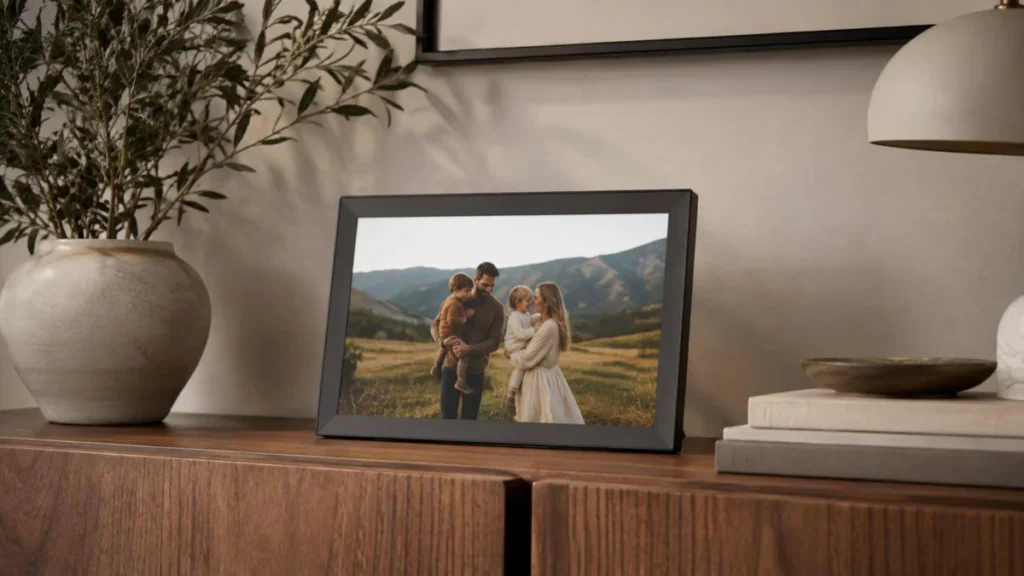
A digital photo frame should be a window into our most cherished memories—not a glaring reminder of the silicon and circuitry that power them. For years, the market has been saturated with devices that prioritize technical specifications over aesthetic harmony. These gadgets, often resembling miniature computer monitors, frequently disrupt the sanctity of a thoughtfully curated home. With their glossy screens, thick, aggressive bezels, and artificial color profiles, they often clash with the warm, organic textures of wood, fabric, and ceramic.
For the design-conscious homeowner, these details are not merely superficial; they are fundamental. The arrival of Amivoframe marks a significant departure from this status quo, offering a solution that treats technology as an invisible facilitator rather than a disruptive centerpiece.
Main Facts: A Paradigm Shift in Display Technology
The fundamental philosophy behind Amivoframe is "technological humility." Unlike conventional digital frames that act like small tablets propped up on a stand, Amivoframe is engineered to mimic the presence of a traditional, physical print.
The device centers on three core pillars:
- The Matte Advantage: By utilizing a low-reflection, matte-finish display, the frame eliminates the harsh glare that plagues standard LCD screens in bright, naturally lit rooms.
- Color Authenticity: Rather than relying on the hyper-saturated, contrast-heavy profiles typical of consumer electronics, Amivoframe employs sophisticated color calibration that mimics the soft, nuanced tones of printed photography.
- Intelligent Composition: Perhaps its most critical feature is its proprietary AI-driven cropping engine. It solves the "black bar" problem by intelligently identifying the subject of a photo and adjusting the frame’s presentation to ensure that faces and key details remain centered, regardless of the original image’s aspect ratio.
Chronology: The Evolution of the Digital Frame
The trajectory of the digital photo frame has been a long and often disappointing road for interior design enthusiasts.
2000s – The Era of Utility: Digital frames were first introduced as high-tech novelties. They were bulky, low-resolution, and largely plastic, designed to show that a household was "connected."
2010s – The Smartphone Influence: As mobile photography exploded, frames became tethered to apps and cloud services. While connectivity improved, the aesthetic regressed; manufacturers leaned into the "gadget" look, favoring high-gloss screens and thin, futuristic bezels that stood out like sore thumbs in a living room.
2024–2026 – The "Invisible Tech" Movement: A growing demand for "calm technology"—devices that serve a purpose without demanding constant attention—has led to a shift. Consumers are no longer asking for more pixels or faster processors; they are asking for frames that look like art. Amivoframe entered this market as a response to this specific demand, moving away from the "mini-monitor" aesthetic to create an object that feels like a permanent, timeless fixture in the home.
Supporting Data: The Anatomy of a Considered Home
When selecting electronic home decor, the technical specifications often tell only half the story. However, for those interested in the engineering that makes this "invisible" experience possible, the data is compelling:
- 10.1-Inch Form Factor: Research into interior spatial dynamics suggests that 10 inches is the "Goldilocks zone." It is large enough to be appreciated from across a room, but small enough to sit comfortably on a console table or bookshelf without overwhelming the surrounding décor.
- Adaptive Luminance: The frame utilizes an ambient light sensor that adjusts not just for brightness, but for color temperature. This ensures that a photo taken on a sunny beach in July doesn’t look like an alien glow when displayed in a dimly lit, warm-toned library in December.
- Cloud-Integrated Intelligence: Amivoframe supports remote updates, allowing family members to share memories across distances. Crucially, the interface is designed for non-technical users, ensuring that Grandma can receive photos without needing to navigate a complex app menu.
Official Perspectives: The Philosophy of Design
According to product developers behind the brand, the design language was dictated by the concept of "The Quiet Object."
"We asked ourselves: why does a photo frame need to look like it’s waiting for a firmware update?" a lead designer noted during the product’s internal development phase. "A photo is an emotional object. If you wrap an emotional object in plastic, glossy borders, and flickering LED light, you strip it of its weight. Our goal was to create a hardware experience that gets out of the way of the memory."
Industry analysts have noted that this approach aligns with a broader trend in the smart home sector. Consumers are becoming "tech-fatigued." They are opting for brands that promise to automate their lives without requiring them to become IT administrators for their own living rooms.
Implications: Why This Matters for Your Living Space
The implications of adopting a device like Amivoframe extend beyond simple aesthetics. It impacts how we interact with our own history.
The Psychological Impact of "Always-On" Memory
When a digital frame feels like a screen, we tend to treat it like a screen—we scroll past it, we turn it off, or we ignore it. When it feels like a physical piece of art, we treat it with more reverence. The matte finish and natural rendering encourage occupants to stop and look, turning a fleeting digital file into a permanent emotional touchstone.
Bridging the Generational Divide
For many families, the biggest barrier to technology is the complexity of the user interface. By incorporating voice interaction, Amivoframe removes the "technological friction" that often prevents older generations from engaging with digital collections. One can simply ask the frame to "show photos from the summer of 2022," and the device responds. This makes the home feel more cohesive and less fragmented by digital barriers.
Sustainability and Longevity
In an era of disposable electronics, the "considered home" philosophy promotes longevity. By designing a frame that fits into various interior styles—from Scandinavian minimalism to mid-century modern—Amivoframe ensures that the device won’t need to be replaced when the homeowner decides to repaint the walls or change their furniture. It is designed to be a permanent fixture, not a seasonal gadget.
Conclusion: Let the Memory, Not the Screen, Define the Space
In the pursuit of the perfect home, we often focus on the furniture we choose, the art we hang, and the colors we paint. We carefully cultivate an environment that reflects our personalities and our histories. Why, then, should our digital memories be relegated to the least attractive screen in the house?
Amivoframe provides a sophisticated alternative. By bridging the gap between high-end digital capability and the aesthetic sensitivity of traditional home decor, it allows homeowners to keep their family stories present without compromising the integrity of their space.
The ultimate test of any home technology is whether it adds value to the room or merely adds to the noise. With its understated geometry, matte display, and intuitive interaction, Amivoframe successfully passes this test. It ensures that when you walk into a room, you aren’t looking at a piece of technology; you are looking at your family, your travels, and your life.
For those ready to move past the era of the glowing, glossy screen, Amivoframe offers a glimpse into a future where technology is finally becoming as quiet, as beautiful, and as personal as the memories it holds.
To explore how this integration can transform your personal living space, visit the Amivoframe website or read their detailed guide on choosing the best electronic photo frame for your unique interior.